Feeders & Seed
How to Keep Rats and Mice Away From Your Bird Feeder Area
Worried about rats at your bird feeder? Learn why spilled seed draws rodents, which mixes spill less, and how to clean up safely without harming birds.
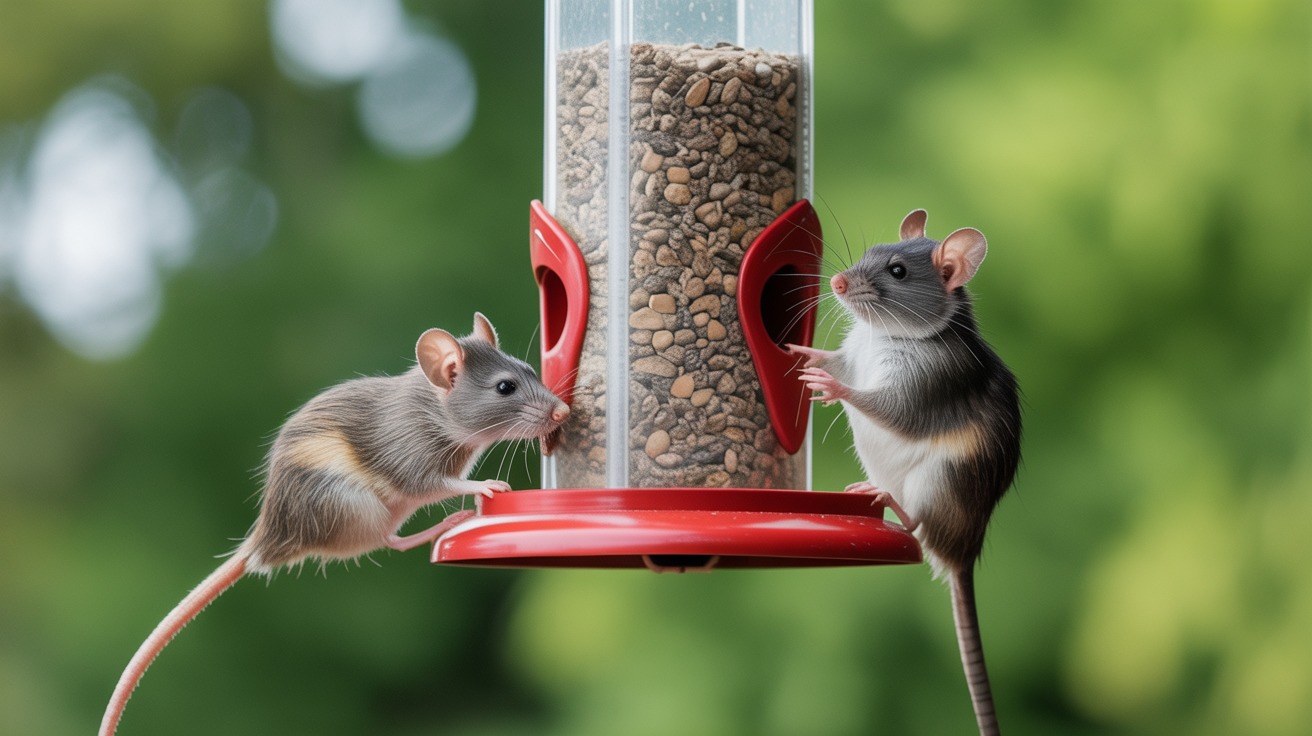
If you've spotted a rat scurrying under your feeder at dusk, your first instinct is probably to take the whole setup down. Before you do, it helps to understand what's actually happening. Rats at a bird feeder are almost never after the feeder itself. They're after the buffet of spilled seed piling up underneath it, night after night, free for the taking. Fix the ground, and you fix most of the problem.
You don't have to choose between feeding birds and keeping rodents off your property. You just have to change a few habits about how and where you feed.
Why Rodents Show Up Under a Feeder, Not In It
Mice under a bird feeder and rats working the same patch of ground are responding to the same signal: a reliable, repeating food source with no effort required. A feeder that gets visited by chickadees, finches, and sparrows all day is going to drop seed. Birds are messy eaters. They kick out husks, drop whole seeds they don't want, and knock loose hulls to the ground while they pick through a mix looking for the pieces they like.
Over a few days, that debris builds into a shallow layer of cracked corn, millet, and sunflower fragments sitting right on the soil, a rodent's idea of a well-stocked pantry. Rats are cautious and mostly nocturnal, so you may never see one at the feeder in daylight. What you notice instead is a worn path through the grass, small burrow openings near a fence or shed, or droppings near the base of the pole. Mice are bolder and sometimes feed at dusk or right after dark.
The point is that this is attracting rodents to bird seed on the ground, not attracting them to your yard out of nowhere. Remove the ground seed and you remove the reason they keep coming back to that exact spot.
Seed Types That Spill Less vs. Mixes That Pile Up
Not all seed creates the same mess. Cheap mixed bags padded with filler grains are the biggest offenders because birds dig through them to find the sunflower seed and toss the rest overboard. Husk-heavy seed, and seed still in the shell, also builds up a thicker litter layer since every bird leaves a shell behind.
| Seed type | Waste on the ground | Notes |
|---|---|---|
| Black oil sunflower (in shell) | Moderate to high | Popular with most species, but shells accumulate fast |
| Sunflower hearts / chips (no shell) | Very low | No hulls to drop; birds eat the whole thing |
| Cheap mixed seed with milo, wheat, red millet | High | Birds pick through and discard filler grain |
| Nyjer (thistle) seed | Low | Tiny seed, less kicked out, needs a mesh feeder |
| Suet cakes | Very low | No loose seed to fall; some crumb debris only |
Switching from a filler-heavy mix to sunflower hearts or another hulled seed is one of the simplest changes you can make. Birds eat almost all of it, so there's far less left behind to feed anything else. It costs more per pound, but you'll go through less of it since none gets rejected and thrown to the ground.
If you're still deciding what to fill your feeders with in the first place, it's worth reading through how to choose the right bird feeder, since the feeder style and the seed type work together. A feeder with small ports and short perches for finches paired with nyjer seed, for instance, wastes very little compared to an open tray piled with a cheap mix.
Use a Seed Catch Tray or Platform
A catch tray, sometimes sold as a seed hoop or feeder skirt, is a simple ring or tray that clips underneath the feeder and collects what falls before it hits the ground. It keeps the area tidier, and it gives you an easy way to reclaim seed that birds knocked loose but didn't actually reject, since a good amount of what falls is still perfectly usable.
Trays aren't a complete fix on their own. Wind still blows lighter husks off the edge, and a tray that's never emptied just becomes a smaller, more concentrated pile of the same debris. Paired with the other habits here, though, a catch tray meaningfully cuts down how much ends up on the soil.
A ground or platform feeder can work against you if it's not managed carefully, since it's already at ground level and more accessible to rodents than a hanging feeder is. If you use one, keep portions modest and clean it daily rather than letting seed sit out overnight.
Clean Up Spillage on a Schedule
This is the least glamorous fix and also the most effective one. Rake or sweep the ground under your feeders every few days, more often in wet weather when spilled seed mats down and hides under grass. A shop vac works well on gravel or a paved patio; a stiff rake or leaf blower works better on grass or mulch.
Don't let seed sit under the feeder overnight if you can help it, since that's exactly the window nocturnal rodents are active. If the pile builds up faster than you can manage, that's usually a sign you're overfilling the feeder or offering more capacity than the local birds actually use in a day.
Regular cleaning does double duty, since it also cuts down on mold and bacteria that build up in wet, sitting seed, which matters for the birds' health too. Pair this habit with a look at how often to clean a bird feeder and how to do it, since the feeder itself needs the same routine attention as the ground beneath it.
Move Feeders Away from Structures
Rats and mice don't like to cross open ground where they're exposed to hawks, cats, and other predators. They travel along walls, fences, and dense plantings that give them cover the whole way. A feeder mounted a few feet from your house, garage, or a woodpile gives rodents a direct, sheltered route from their burrow to the food.
Where you can, position feeders out in the open, at least 10 to 15 feet from the house, sheds, fences, and thick shrubs. Trim back low vegetation and stacked wood near the feeding area so there's less cover for a rodent along the way. This is also good general placement advice for keeping squirrels at bay, since the same open sightline discourages a squirrel from launching onto the pole. If squirrels are part of your problem too, how to keep squirrels off your bird feeder covers pole placement and baffles in more depth.
Storage matters just as much as placement. A bag of seed left in a garage or shed is an even easier target than what's spilled outdoors, since it's a large, undisturbed food source in one place. Keep bulk seed in a metal or thick plastic bin with a tight lid, off the ground, and see our guide on how to store bird seed and keep pests out for containers and storage spots that hold up over time.
Skip the Rat Poison
It's tempting to reach for rodenticide bait stations once you've confirmed rats are around, but this is a case where the fastest fix creates a bigger problem. Rodenticide works slowly, and a poisoned rat or mouse often keeps moving and feeding for days before it dies. In that window it becomes an easy, slow-moving meal for an owl, hawk, or neighborhood cat, and the poison passes up the food chain with it. This secondary poisoning is a well-documented risk with anticoagulant rodenticides in particular, and it can affect exactly the kind of wildlife a backyard birder is trying to attract in the first place. Pets that catch a sick rodent are at risk too.
A plain caveat: this isn't a call to leave a genuine infestation to fix itself. If exclusion and cleanup aren't enough and you have a serious problem near your home's foundation, that's a job for a licensed pest control professional who can use enclosed bait stations correctly and advise on safer options. For the ordinary case of rodents showing up because of feeder spillage, though, cleanup and exclusion should be your first move, not poison.
Frequently Asked Questions
Will rats stop birds from coming to my feeder?
Generally no. Birds and rats aren't competing for the same feeder access, since rats work the ground and most feeder birds don't seem bothered by rodent activity nearby. The bigger risk is what a persistent rat problem might attract next, like a hawk or an outdoor cat drawn to easy prey near the feeding area.
Should I stop feeding birds entirely if I see rats?
Not usually. Removing feeders for a couple of weeks can help break the pattern if rodents have gotten established, but most of the time you can keep feeding birds and solve the rodent issue with cleanup, a seed switch, and better placement instead.
Do squirrel baffles also work against rats?
A baffle mounted on a pole can slow a rat's climb the same way it slows a squirrel, but it won't solve the problem if there's still spilled seed piling up on the ground beneath it. Treat baffles as one part of a placement strategy, not a fix on their own.
How do I tell rat damage from mouse damage?
Rat droppings are noticeably larger, roughly the size of a grain of rice or bigger, while mouse droppings are smaller and more scattered. Rats also tend to leave more obvious burrow openings and worn paths through grass, since they're heavier and travel the same route repeatedly.
Is it normal for some seed to fall on the ground no matter what I do?
Yes. The goal isn't zero seed on the ground, it's keeping the amount low enough, and cleaning it often enough, that it never turns into a standing food source for rodents.