Feeders & Seed
How to Keep Squirrels Off Your Bird Feeder
Practical, tested strategies to keep squirrels off your bird feeder: baffles, caged feeders, seed choices, and placement tricks that actually work.
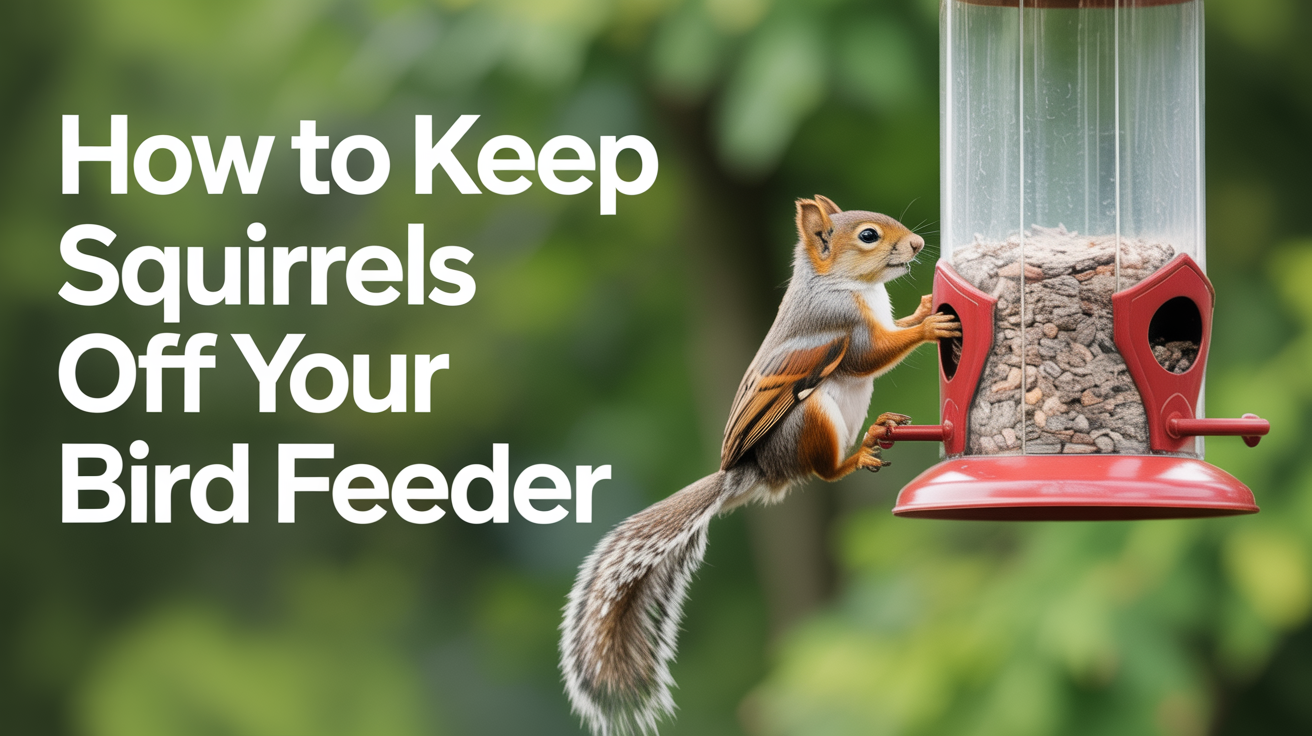
If squirrels are draining your feeder before the birds get a turn, you're not alone—and you don't have to accept it. The most reliable way to keep squirrels off a bird feeder is a combination of proper pole placement (at least 10 feet from any launching point) and a working baffle. Either one alone often isn't enough; together, they stop the vast majority of squirrel raids.
Why Squirrels Are So Hard to Stop
Eastern gray squirrels can jump roughly 5 feet straight up and 10 feet horizontally from a standstill. They're also patient: they'll sit and watch a feeder for days, testing it from different angles, until they find a gap in your defenses. Red squirrels are smaller and even more persistent. Flying squirrels are nocturnal and rarely the daytime culprit, but they'll empty a feeder overnight in wooded areas.
The good news is that squirrels are not trying to outsmart you. They're just following food. Change the physical environment so the food is genuinely out of reach, and they'll move on to easier targets.
The Pole-and-Baffle Setup: The Most Reliable Method
A smooth metal pole with a quality baffle is the closest thing to a permanent solution for most yards.
Pole placement rules:
- At least 5 feet off the ground to the bottom of the feeder
- At least 10 feet from any fence, tree trunk, deck railing, or other surface a squirrel could leap from
- Away from overhead branches (squirrels drop down, not just jump up)
Baffle types:
| Baffle Type | How It Works | Best For |
|---|---|---|
| Torpedo (wrap-around) | Smooth cylinder on the pole, tilts under weight | Poles, shepherd's hooks |
| Dome (hanging) | Concave disc above the feeder, squirrel slides off | Hanging feeders from a hook or branch |
| Cone (wrap-around) | Flared cone on the pole below feeder | Poles in open areas |
Torpedo baffles in the $18–$35 range work well on smooth metal poles. Avoid wooden or textured poles; squirrels grip them easily. PVC pipe is an inexpensive alternative if you already own a feeder mount; squirrels can't grip the slick surface.
A dome baffle above a hanging feeder also works if your setup is truly away from jump-off points, but a dome alone won't help if the feeder is close to a fence.
Squirrel-Resistant Feeder Designs
Some feeder designs add a second layer of protection on top of placement.
Caged feeders surround the seed ports with wire mesh sized to let small birds through (typically 1.5-inch grid) while physically blocking squirrels. They're especially good for mixed seed or safflower. The tradeoff: larger birds like Northern Cardinals and Blue Jays also can't get in, which may or may not matter depending on what you want to attract.
Weight-sensitive feeders use a perch that collapses under the weight of a squirrel (roughly 12–16 oz) but holds for a sparrow or chickadee (under 1 oz). Brome and Droll Yankees both make popular versions in the $45–$75 range. They work well but require a battery or well-maintained spring mechanism. Check the spring tension every season.
Motorized spinners spin the perch when a heavy animal grabs it. They work, and they're entertaining, but they require batteries, can malfunction in cold weather, and are louder than other options. If you have neighbors nearby, it's worth considering.
See Tube, Hopper, Platform, and Suet: Feeder Types Explained for a full breakdown of feeder styles and their tradeoffs for different birds.
Seed Choices That Discourage Squirrels
No seed choice will stop a determined squirrel, but some seeds are significantly less appealing to them.
Safflower is the most useful option. Most squirrels dislike its bitter taste, while Cardinals, House Finches, and Chickadees eat it readily. It works in tube feeders, hoppers, and platform feeders. The first few days after switching, bird traffic may drop as the birds adjust to the new seed; give it a week before concluding it doesn't work.
Nyjer (thistle) is mainly ignored by squirrels, which is one reason finch sock feeders tend to stay squirrel-free. American Goldfinches, Pine Siskins, and Common Redpolls love it. The catch: nyjer is expensive (often $1.50–$2.50/lb), goes rancid quickly in heat and humidity, and needs a sock or tube feeder with tiny ports.
Hot pepper additives are sold as squirrel deterrents. The active ingredient (capsaicin) doesn't affect birds, which lack the capsaicin receptor, but does irritate squirrel mouths. Results are mixed: some squirrels seem unbothered after an initial reaction. More importantly, hot pepper dust can irritate your own eyes and skin during handling, and there are open questions about respiratory effects on birds at high concentrations. It's not harmful at normal feeder levels, but it's not a reliable solution on its own.
What to avoid if squirrels are a problem: mixes with lots of corn, millet, or sunflower chips. Squirrels love all three. If you're using a blend, check whether it includes those; a straight black-oil sunflower or safflower fill is easier to manage. For more detail on what each seed draws in, The Best Bird Seed Types and What Each One Attracts is a good reference.
What Doesn't Work (And Why)
A few common approaches consistently fail or backfire:
Greasing the pole. Petroleum jelly or cooking spray on poles can coat birds' feathers if they land on the pole, which interferes with insulation and waterproofing. It also wears off quickly and needs constant reapplication. Skip it.
Fake owls and plastic snakes. Squirrels habituate to stationary decoys within days. Moving decoys (like spinner owls) work somewhat longer but still lose effectiveness. They're not worth the expense compared to a baffle.
"Squirrel-proof" mixes with cayenne alone. As above: inconsistent, and the handling issue is real.
Relocation trapping. Trapping and relocating squirrels is legal in most U.S. states without a permit, but it rarely solves the problem. New squirrels from neighboring territories move in quickly. Some states regulate squirrel relocation; check your state's wildlife agency before trapping. Trapped squirrels should be released at least 5 miles away to prevent return.
Managing the Ground Below the Feeder
Spillage from feeders creates a ground-level squirrel buffet even if the feeder itself is squirrel-proof. A few habits help:
- Use a seed catcher tray under the feeder to intercept spilled seed and serve it to ground-feeding birds (Mourning Doves, White-throated Sparrows, Dark-eyed Juncos) rather than squirrels
- Rake or sweep under the feeder regularly in warmer months, when wet seed piles can also grow mold
- Consider a no-waste mix (hulled seeds, no shells) so there's less debris to accumulate
If squirrels are getting most of their calories from the ground scatter, fixing the feeder's physical setup may matter less than managing the spill.
A Practical Setup for Most Yards
If you're starting from scratch or rethinking your setup, here's a straightforward configuration:
- Set a smooth metal pole in open ground, at least 10 feet from any fence, tree, or structure
- Mount a torpedo-style baffle 4 feet up the pole (below the feeder)
- Fill with safflower or a safflower/black-oil sunflower blend
- Add a seed tray beneath to catch spills
- Rake the ground below every week or two
This setup costs roughly $40–$70 total (pole: $20–$30, baffle: $18–$35, feeder: $15–$30 depending on type) and handles the majority of squirrel problems without ongoing effort. For a guide to feeder selection that fits this kind of setup, see How to Choose the Right Bird Feeder.
Frequently Asked Questions
Do squirrel-proof feeders actually work?
Weight-sensitive and caged feeders work well when used correctly, but "squirrel-proof" is a marketing claim, not a guarantee. A caged feeder hung from a tree branch over a fence will still get raided. The feeder design matters less than the overall setup, particularly placement distance from jumping surfaces.
How far away from trees does a feeder need to be?
At least 10 feet horizontally from any branch, trunk, fence, or deck rail. Squirrels can jump farther than most people expect, and they'll also approach from overhead if a branch hangs close enough. If your yard doesn't have a spot that far from everything, a caged feeder with a working baffle is your best alternative.
Will feeding squirrels separately stop them from raiding the feeder?
Sometimes, but not reliably. Some birders put out dried corn or sunflower heads on a separate squirrel feeder 20–30 feet away as a distraction. It works for some individuals but often just attracts more squirrels overall. If you enjoy watching squirrels, a dedicated corn feeder is a reasonable coexistence strategy; if your goal is fewer squirrels, it's counterproductive.
Is it safe to use hot pepper (capsaicin) in bird seed?
It's generally considered safe for birds at normal feeder concentrations (birds lack the capsaicin receptor mammals use to detect heat). The concern is more for humans handling the treated seed (wear gloves, avoid touching your face) and the inconsistent deterrent effect on squirrels. Some squirrels seem to adapt to it.
What if squirrels are chewing through my plastic feeder?
Gray squirrels can and do chew through thin plastic, especially if they can reach the feeder directly. Switch to a metal or heavy polycarbonate feeder, and fix the placement problem (baffle + distance) so they aren't reaching it at all. Chewing typically means the squirrel has enough grip and time to work on it, which means the physical barrier isn't working.