Feeders & Seed
Tube, Hopper, Platform, and Suet: Feeder Types Explained
Learn the four main types of bird feeders, which birds each one attracts, and how to pick the right style for your yard.
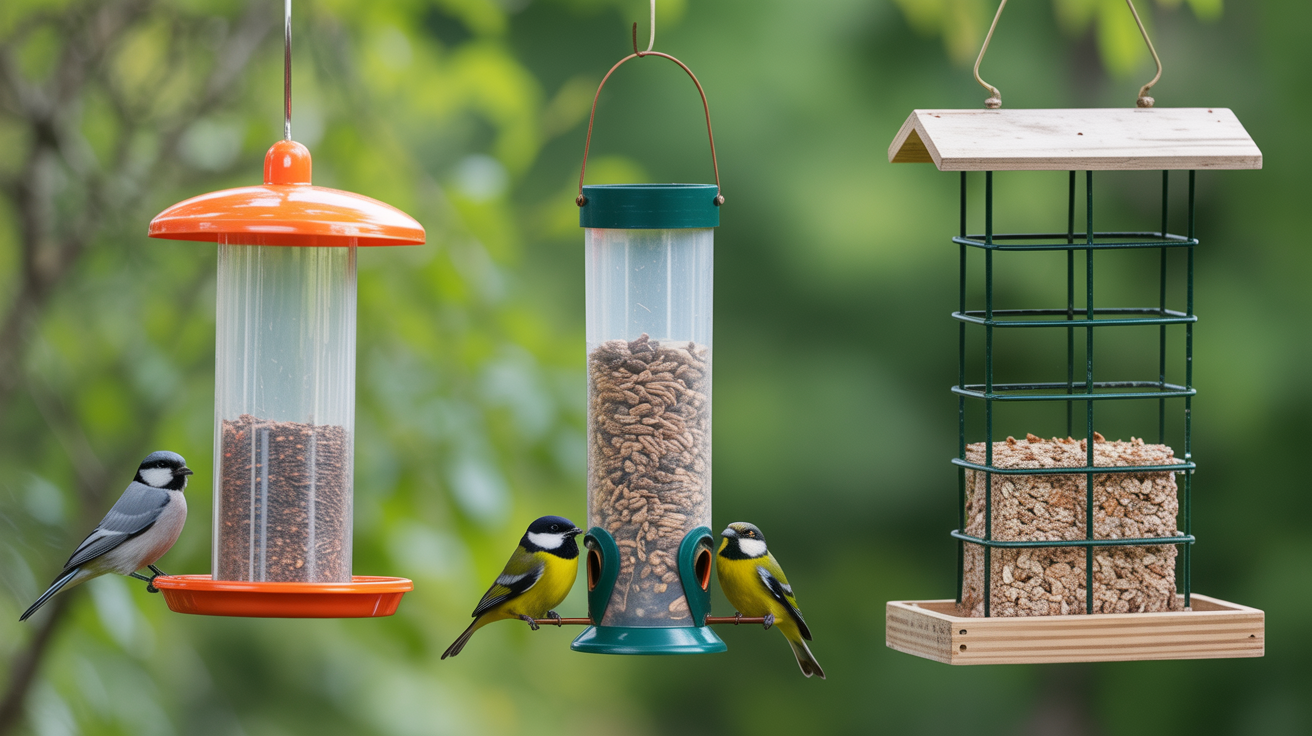
The four main types of bird feeders (tube, hopper, platform, and suet) each draw a different mix of species, and putting up the wrong style can leave a feeder standing empty for weeks. Once you match feeder shape to the birds already moving through your yard, traffic picks up quickly.
Tube Feeders
A tube feeder is a clear or opaque cylinder, usually 12–24 inches tall, with small ports spaced along its length and a perch peg below each one. The narrow ports are sized for small seed: black-oil sunflower, Nyjer (thistle), or a mixed safflower blend.
What visits: American Goldfinches, House Finches, Purple Finches, Pine Siskins, and Black-capped or Carolina Chickadees are the regulars. Nyjer-only tubes with tiny mesh ports (sometimes sold as "finch socks" or "finch feeders") pull goldfinches and siskins almost exclusively and actively discourage House Sparrows, which struggle to grip the mesh.
Practical details:
- Ports that point outward at a slight downward angle shed rain better than flush-cut ports.
- Plastic cylinders discolor after a season in UV light; powder-coated steel lasts longer.
- Expect to pay $18–$45 for a durable tube; bargain-bin versions crack at the seams and dump seed.
- Clean every 2–3 weeks: soak in a 9:1 water/bleach solution, rinse, and dry fully before refilling. Wet Nyjer compacts and birds will stop visiting.
Tradeoff: Tube feeders don't work well for mid-sized birds like Northern Cardinals, which prefer a wider perch. If cardinals are a priority, add a separate feeder with a tray attachment or choose a hopper instead.
Hopper Feeders
A hopper feeder looks like a small house: a seed reservoir sits between two sloped side panels that gravity-feed seed down onto a tray ledge where birds land and pick. Most hold 2–6 pounds of black-oil sunflower or mixed seed.
What visits: Northern Cardinals, Dark-eyed Juncos, Song Sparrows, Mourning Doves (if the tray is wide enough), and Carolina Wrens show up regularly. The wide perch makes the hopper the most broadly attractive single feeder you can put out.
Practical details:
- Wood hoppers look attractive but soak up moisture, especially at the seed-to-tray joint. Look for untreated cedar or a metal roof overhang that keeps rain off the seed.
- Plastic hoppers with UV-stabilized resin outlast painted wood in most climates.
- Capacity is the main advantage: a 4-pound hopper needs refilling every 2–3 days rather than daily.
- Squirrels find hoppers easy to grip and can empty a reservoir in an afternoon. A pole-mounted hopper with a baffle 5 feet off the ground is more defensible than a hung version.
If you only want to put out one feeder, a cedar or powder-coated-metal hopper filled with black-oil sunflower seed covers the widest range of common backyard species.
Platform (Tray) Feeders
A platform feeder is exactly what it sounds like: a flat tray, usually 12x16 to 18x24 inches, sometimes with a low lip and a screen or mesh bottom for drainage. No housing, no ports: seed sits in the open.
What visits: Ground-feeding species that feel exposed or crowded on smaller perches. White-throated Sparrows, Song Sparrows, American Tree Sparrows, Dark-eyed Juncos, and Mourning Doves all prefer open tray access. Native sparrows that rarely visit tube or hopper feeders will show up on a tray stocked with white millet.
Practical details:
- The open design means seed gets wet, fouled by bird droppings, and spoiled faster than in any enclosed feeder. Mesh-bottom trays drain better but still need daily debris checks in damp weather.
- Place a tray feeder 2–4 feet off the ground on a baffled pole, or hang it at eye level. Setting it directly on the ground works but concentrates droppings and invites rats and raccoons.
- Seed choice matters: white proso millet is the top draw for native sparrows; black-oil sunflower pulls the generalists.
- Skip tray feeders in consistently wet climates unless you can commit to dumping and rinsing the tray every day or two. Moldy seed is a health hazard for birds.
A tray is the simplest and cheapest option (some are under $10), but it requires the most hands-on maintenance to keep seed in good condition.
Hanging vs. Pole-Mounted Platform Feeders
Hanging trays sway in the wind, which some skittish birds dislike. A pole-mounted tray stays still and is easier to pair with a squirrel baffle. If your yard has deer, mount the tray above 5 feet; deer will browse seed at lower heights.
Suet Feeders
Suet feeders hold rendered beef fat, plain or mixed with seeds, nuts, berries, or insects, usually formed into a 3.5x4-inch cake. The feeder itself is a simple wire cage, and most cakes snap in without tools.
What visits: Woodpeckers are the headline act: Downy, Hairy, Red-bellied, and Pileated Woodpeckers all take suet. Nuthatches, Brown Creepers, Carolina Wrens, and (in some regions) Yellow-rumped Warblers also come regularly. Many of these species don't visit seed feeders at all, so suet is the fastest way to add new birds to your yard list.
Practical details:
- Suet goes rancid quickly above 50°F. During summer, switch to "no-melt" or "heat-tolerant" suet formulas, which have a higher melting point. Standard suet cakes will turn greasy and drip by mid-morning on a warm day.
- Tail-prop or "upside-down" suet cages force birds to cling below the feeding surface. Starlings, which are flat-footed and aggressive, can't manage the position, making it a useful deterrent in areas with heavy European Starling pressure.
- A basic wire suet cage costs $3–$8. Suet cakes run $1.50–$4 each depending on brand and seed mix; plain rendered suet without additions is cheapest and works just as well for most woodpeckers.
- Mount the cage on a tree trunk or the side of a wooden post to mimic the bark-foraging behavior these birds are wired for.
For a guide to which seed types pair well with each feeder style, read our breakdown of seed types and the species they attract.
Feeder Type Comparison at a Glance
| Feeder type | Best seed | Top birds attracted | Squirrel risk | Maintenance |
|---|---|---|---|---|
| Tube (standard ports) | Black-oil sunflower, safflower | Chickadees, finches, nuthatches | Medium | Clean every 2–3 weeks |
| Tube (Nyjer/mesh) | Nyjer (thistle) | Goldfinches, siskins, redpolls | Low | Weekly check for compaction |
| Hopper | Black-oil sunflower, mixed | Cardinals, juncos, sparrows, wrens | High | Refill every 2–3 days; clean monthly |
| Platform/tray | White millet, sunflower | Native sparrows, doves, juncos | High | Daily debris check; rinse often |
| Suet cage | Suet cake (rendered beef fat) | Woodpeckers, nuthatches, creepers | Low | Replace cake when empty; swap formula by season |
Combining Feeder Types
Running two or three different feeder types draws meaningfully more species than loading up multiples of the same style. A typical starter combination that performs well across most of North America:
- A tube feeder with black-oil sunflower on a baffled pole (draws finches, chickadees, nuthatches)
- A suet cage on a nearby tree or wooden post (draws woodpeckers and creepers)
- A small tray or hopper near a shrub or brush pile (draws cardinals, sparrows, and juncos)
You don't need all four types on day one. Start with whatever style fits the birds you're already seeing, then add as your yard population grows. If you're starting completely fresh, read how to choose the right bird feeder for a longer look at matching feeder style to your specific situation.
Frequently Asked Questions
Which feeder type is easiest to maintain?
Suet cages are the lowest-maintenance option: the wire cage rarely needs cleaning beyond an occasional wipe, and you simply swap the cake when it's gone. Tube feeders with sunflower seed run a close second, needing a deep clean every few weeks. Tray feeders require the most daily attention because exposed seed spoils quickly.
Do I need all four feeder types?
No. Most active backyard setups run two or three types. Tube plus suet covers a wide range of species and stays manageable. Adding a tray or hopper introduces ground-feeding sparrows and doves. A fourth type is worth it only if there's a specific species you're trying to attract that the first three aren't pulling.
Can I put a tube feeder and a hopper right next to each other?
You can, but spacing them 6–10 feet apart reduces crowding and competition. Some birds, particularly American Goldfinches, are easily displaced by larger visitors and feed more comfortably when they have their own feeder away from the hopper traffic.
Why do birds empty my tray feeder so fast?
Mourning Doves are the usual culprits; they eat in volume and scatter seed with their feet. Switching to a smaller tray, or using a feeder with closely spaced mesh ports that make mass scooping harder, slows them down. Tray feeders inherently invite all comers; if selective feeding matters to you, a tube or suet cage is a better fit.
Is it safe to use a suet feeder in summer?
Yes, with the right formula. Standard beef-fat cakes go rancid above about 50°F and can make birds sick. No-melt suet uses a harder fat blend (often coconut or palm oil mixed with beef fat) that holds its shape through warm days. Most bird-supply stores stock them seasonally. If you see the suet turning dark, greasy, or soft before it's half eaten, that's a sign it's time to switch formulas or remove it on hot days.
If you're troubleshooting a feeder that birds have been ignoring since you put it up, the problem is often location or seed freshness rather than feeder type. Why birds aren't coming to your feeder covers the most common causes.