Feeders & Seed
Why Birds Aren't Coming to Your Feeder, and How to Fix It
No birds at your feeder? Discover the most common reasons birds ignore feeders and get practical fixes to bring them back fast.
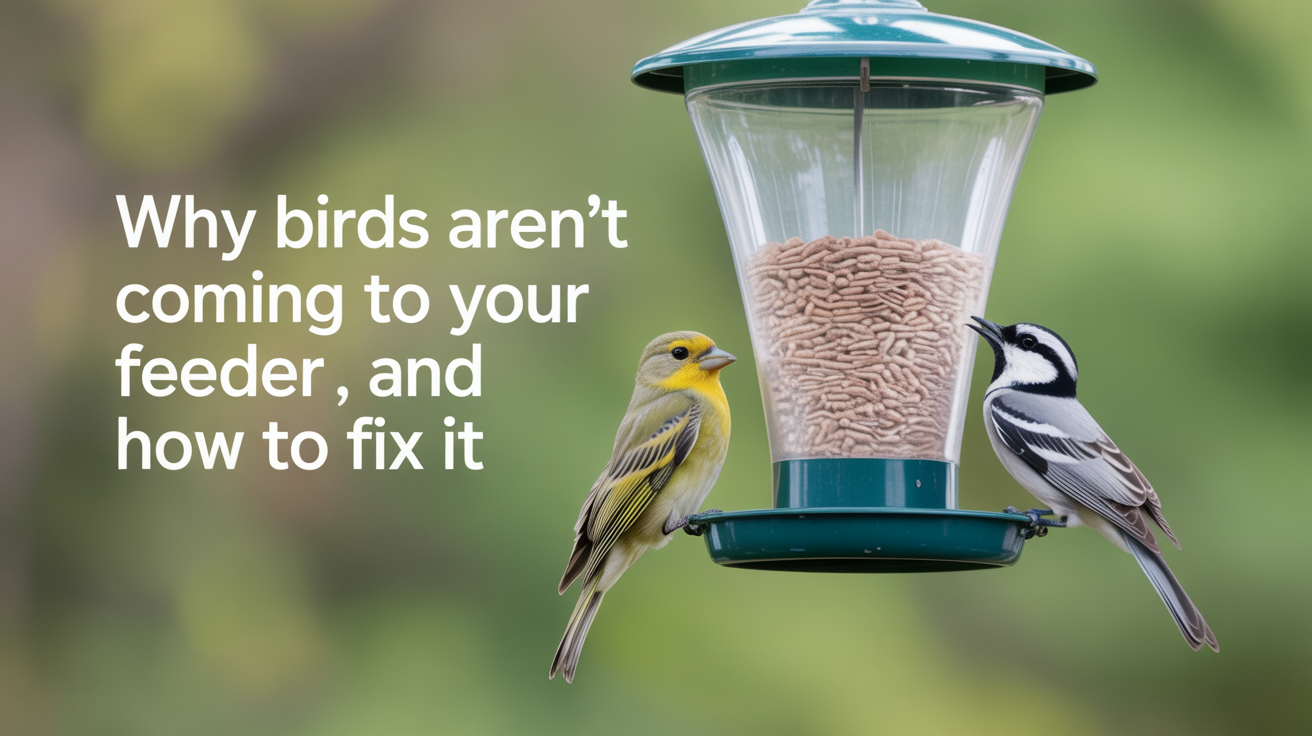
If you've hung a feeder, filled it with seed, and then waited — and waited — you're not alone. No birds at your feeder is one of the most common complaints among backyard birders, and almost every case has a fixable cause. The short answer is usually one of four things: the location is wrong, the food has gone bad, there's a safety problem nearby, or local birds simply haven't found the feeder yet.
Working through this checklist systematically will get you birds in most cases within a week or two.
The Food Is Old, Wet, or the Wrong Type
Stale or moldy seed is the single most frequent culprit. Wild birds have a good sense of smell and will skip feeders where the seed has clumped, smells sour, or has gone rancid. Millet and sunflower kernels can begin to mold in as little as two or three days after a heavy rain if your feeder lacks adequate drainage or a roof.
Pull a small handful of seed and check it. Fresh black-oil sunflower seed is dry, uniform, and slightly nutty-smelling. Seed that crumbles into a paste, shows any white fuzz, or smells musty should be discarded entirely. Dump the feeder, scrub it with a 10% bleach solution (1 part bleach to 9 parts water), rinse thoroughly, and let it dry before refilling.
Beyond freshness, wrong seed type matters more than most people expect. A tube feeder filled with cheap "wild bird mix" often contains large amounts of milo (red sorghum) and oats, which most songbirds in the eastern and western US avoid. The mix ends up sitting untouched or getting knocked to the ground. Switching to straight black-oil sunflower seed will attract chickadees, nuthatches, goldfinches, house finches, cardinals, and most sparrow species. Safflower seed is a strong alternative if you have squirrel pressure, since squirrels tend to dislike it while cardinals and House Finches eat it readily.
For a full breakdown of which seed pulls which species, see The Best Bird Seed Types and What Each One Attracts.
Seed Storage Tips
- Store seed in a metal can with a tight-fitting lid, away from moisture and heat.
- Buy in quantities you'll use within four to six weeks.
- Never top off an old batch with fresh seed; empty and refill each time.
The Location Is Working Against You
Where you hang a feeder shapes whether birds feel safe using it. The two most common placement mistakes are opposite problems: too close to the house (within 3 feet), where window reflection causes strikes, or too far from any cover (more than about 15 feet from shrubs or trees).
Birds need a quick escape route. If a Cooper's Hawk or Sharp-shinned Hawk appears, a bird on a feeder in the middle of an open lawn has nowhere to go. Siting the feeder within 10 to 15 feet of a dense shrub or small tree lets birds retreat fast, and it makes them far more willing to visit in the first place. They'll often perch in the shrub and watch for a minute or two before dropping to the feeder.
The 3-foot rule on the other end is about window collisions. Feeders placed less than 3 feet from glass mean any bird startled off the perch hits the window at low speed and usually survives. Feeders 10 to 30 feet away are in the danger zone: birds have enough runway to build speed and a collision at that distance can be fatal. Either mount the feeder within arm's reach of the window, or move it to beyond 30 feet.
Also consider sun exposure. A feeder baking in full afternoon sun in July causes seed to spoil faster and can overheat suet cages. Morning sun with afternoon shade is the most comfortable position.
Predators and Disturbances Are Keeping Birds Away
If you have an outdoor cat that roams the yard, or a neighbor's cat that visits, that is likely the dominant reason. Cats hunt by ambush, and birds recognize the threat. A cat sitting under a feeder does not even need to catch anything to suppress feeder visits for hours — the birds simply will not come down. The only reliable fix is keeping cats indoors or removing their access to the yard.
Other disturbances that suppress feeder activity:
- Recent installation. A brand-new feeder in a location birds haven't visited before can take one to three weeks to be discovered, especially in late spring and summer when natural food is abundant. Patience is often the answer.
- Loud or frequent human activity nearby. A feeder on a heavily used deck or near a frequently-opened door will see less traffic than one set back in a quieter corner.
- Hawk presence. If a Cooper's Hawk or accipiter has taken a bird from the feeder recently, activity will drop sharply for several days. This is normal; it resolves on its own.
- Reflective or spinning feeders. Some decorative feeders have shiny surfaces or move in the wind. Birds find these unsettling until they've had repeated safe exposures.
The Feeder Design Doesn't Match the Birds You're Trying to Attract
Not all feeders work for all birds, and the mismatch is often invisible until you think it through. A tube feeder with small ports and short perches is designed for clinging birds like finches and chickadees. Cardinals won't use it comfortably because they need a large flat surface to perch and turn seed. A platform or tray feeder at or near ground level is what cardinals, towhees, juncos, and doves prefer.
| Feeder Type | Best Seed | Primary Species |
|---|---|---|
| Tube (small ports) | Nyjer (thistle) | American Goldfinch, Pine Siskin |
| Tube (standard ports) | Black-oil sunflower | Chickadees, Nuthatches, House Finch |
| Hopper | Sunflower, safflower blend | Cardinals, Finches, Sparrows |
| Platform / tray | Millet, sunflower, mixed | Cardinals, Juncos, Doves, Sparrows |
| Suet cage | Suet cake | Woodpeckers, Nuthatches, Starlings |
| Sock feeder | Nyjer | Goldfinches, Siskins |
If you're not getting any finches, check whether your tube feeder has actual small nyjer ports or just standard sunflower-sized holes. Nyjer (sometimes sold as thistle) works best in a dedicated sock or tube designed to hold the tiny seeds in. Standard holes let nyjer fall through and waste quickly.
For a detailed comparison of feeder styles, Tube, Hopper, Platform, and Suet: Feeder Types Explained walks through the tradeoffs of each.
Seasonal Lulls Are Normal
There are predictable times of year when feeder traffic genuinely drops, and it has nothing to do with something being wrong.
Late spring and summer (May through August) is when feeder activity is naturally slowest. Insects are abundant, berries are ripening, and wild seeds are available everywhere. Birds raising young often switch to high-protein insect diets and simply need feeders less. This is also when most migratory species have moved on. You might go from a dozen species in winter to three or four in July.
Late summer molt (July and August) makes birds look ragged and they tend to stay low in vegetation rather than visiting exposed feeders.
Early fall arrival lag happens when summer residents have departed but winter residents haven't yet moved in. September can feel quiet in some yards even as October will bring a burst of new birds.
The fix for seasonal lulls isn't changing the feeder; it's adjusting expectations and keeping fresh seed available so you're ready when birds return. Adding water in the form of a bird bath often pulls more species during summer than any food addition.
A Diagnostic Checklist Before You Change Anything Else
Work through this before buying new feeders or seed:
- Smell and inspect the seed. Is it fresh and dry?
- When did you last clean the feeder? More than two weeks ago in warm weather is overdue.
- Is the feeder within 10 to 15 feet of shrubs or trees?
- Have you seen a cat in the yard this week?
- Is the feeder in a low-traffic area of the yard?
- What time of year is it? Mid-summer lulls are normal.
- Have you given a brand-new feeder at least two weeks?
If you've checked all of the above and birds still aren't coming, consider adding a second feeder style or moving the existing one to a completely different spot. Sometimes a particular corner of a yard simply has more natural traffic, and a 20-foot repositioning makes a significant difference.
For a deeper look at matching feeder to seed to species, How to Choose the Right Bird Feeder covers the specifics.
Frequently Asked Questions
How long does it take for birds to find a new feeder?
In winter, when natural food is scarce, birds can discover a new feeder in as little as one to three days. In spring and summer, with insects and wild food abundant, it can take two to four weeks. Position the feeder near existing shrubs where birds already perch, and use high-quality seed like black-oil sunflower to speed the process along.
Do birds stop coming to feeders in summer?
Yes, and that is completely normal. Summer offers insects, berries, and wild seeds in ways winter cannot. Feeder traffic drops naturally between May and August for most yards, then picks back up as fall migrants arrive and winter residents move in. Keeping the feeder clean and stocked means you'll be ready when activity increases.
Could the feeder itself be scaring birds away?
Sometimes, yes. Spinning or reflective feeders can unsettle birds, especially when newly installed. Feeders that sway excessively in wind are harder for birds to perch on. If the feeder is very new or looks different from surrounding objects, give birds two weeks to habituate to it before concluding something is wrong.
Why do birds come to my neighbor's feeder but not mine?
The most likely reason is feeder placement. Your neighbor's feeder may be closer to dense shrubs or in a quieter part of the yard. Seed type matters too. If they're using straight black-oil sunflower and you have a mixed seed blend with a lot of milo, birds will choose the better food. Visit the neighbor's setup and compare it to yours honestly.
Is it okay to stop feeding birds if they're not coming?
Yes. Stopping is fine, particularly in summer. Wild birds are not dependent on any single feeder for survival in warm months when food is naturally available. If you stop for a vacation or a season, birds will return quickly once you start again. Feeders are a supplement, not a lifeline, for most backyard species.