Feeders & Seed
The Best Bird Seed Types and What Each One Attracts
A practical guide to bird seed types — from black-oil sunflower to nyjer — so you know exactly which seeds bring which birds to your feeder.
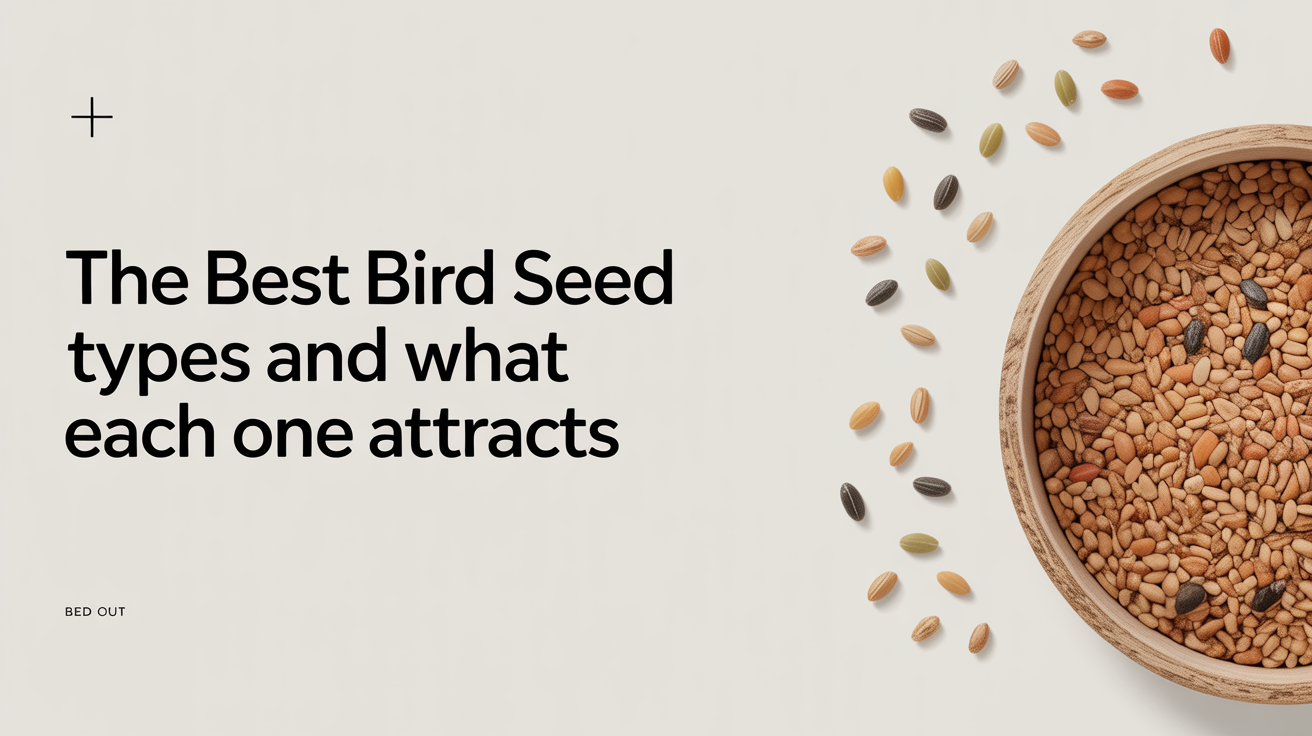
Walk down the bird-supply aisle at any hardware store and you'll find a shelf full of bags labeled "Premium Wild Bird Mix" or "Songbird Blend," all promising to attract every bird in the neighborhood. The honest truth about the best bird seed is simpler and cheaper than those blends suggest: most backyard birds have clear preferences, and once you match seed to species, you stop wasting money on filler.
Black-Oil Sunflower Seed: The One Seed Worth Buying First
If you only stock one seed, make it black-oil sunflower (Helianthus annuus seed, the small black variety, not the striped kind you eat). The shell is thin enough for small birds to crack, the kernel is large relative to the shell, and the fat content runs about 28% by weight, which matters a lot in cold weather.
Birds that reliably eat black-oil sunflower seed:
- Northern Cardinal: Pairs will visit repeatedly; males are especially conspicuous feeders.
- Black-capped and Carolina Chickadee: They grab one seed, fly to a branch, crack it, and come back for another.
- House Finch and Purple Finch: Both will sit at the feeder and shell seeds on the spot.
- Tufted Titmouse: Wedges seeds into bark to hammer them open.
- Downy and Hairy Woodpecker: Will pick sunflower from tray feeders.
- White-breasted Nuthatch: Typically takes seed and caches it elsewhere.
- Dark-eyed Junco: Prefers dropped seed on the ground beneath the feeder.
Striped sunflower seed works too, but the thicker hull excludes smaller-billed birds. Hulled sunflower (chips or hearts) attracts the same species without any shell debris beneath the feeder, though it spoils faster in wet weather and costs roughly 30–50% more per pound.
Nyjer (Thistle) Seed: The Finch Magnet
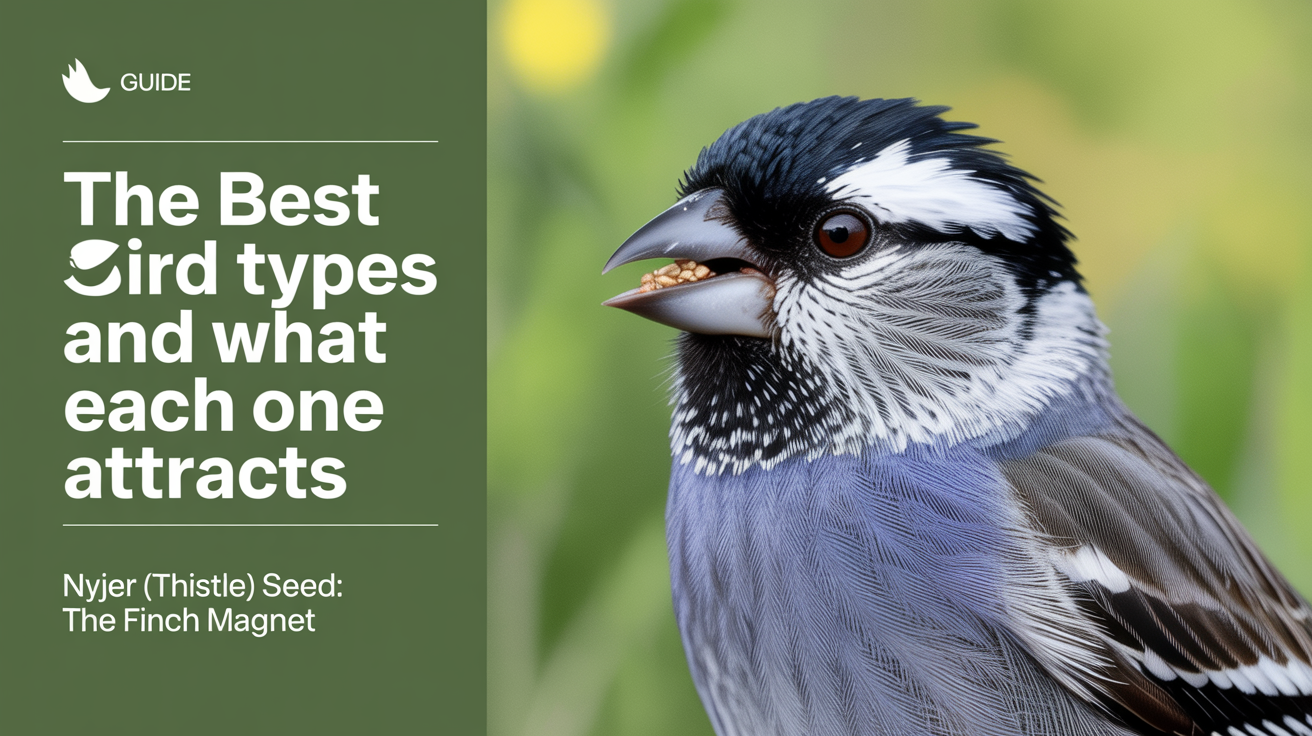
Nyjer is the tiny black seed often marketed as "thistle," though it's actually from Guizotia abyssinica, an African plant. It's heat-sterilized before import so it won't germinate and spread. The seed is almost exclusively popular with finches.
American Goldfinch will visit a nyjer feeder year-round; in winter they look drab olive-yellow, not the brilliant gold of summer. Common Redpoll and Pine Siskin show up in irruption years when northern seed crops fail. You may get none one winter, then 40 of them the next. House Finch and Purple Finch eat nyjer but strongly prefer sunflower.
The catch: nyjer requires a tube feeder with small ports (roughly 1/16-inch diameter), or a mesh sock feeder. It's one of the more expensive seeds, typically $1.50–2.50 per pound. Keep the feeder clean and dry, because nyjer goes rancid and moldy fast, and finches will abandon a feeder that smells off. Shake the feeder every few days to keep seed from clumping at the base.
White Millet: Ground-Feeder Staple
White proso millet is a small tan sphere that looks like a BB pellet. It's soft-shelled and easy for small birds to eat whole. It does almost nothing for perching feeder birds, but it's the preferred seed for a whole guild of ground-feeding species:
- Dark-eyed Junco: The most consistent consumer; will scratch through snow to find millet.
- White-throated and White-crowned Sparrow: Both scratch ground litter looking for fallen millet.
- Song Sparrow: Prefers millet on a low platform or scattered directly on bare ground.
- Eastern Towhee: Scratch-forages under feeders; less common at feeders proper.
- Mourning Dove: Will eat almost unlimited quantities if you let them.
Platform feeders, tray feeders set low, and simply scattering millet on bare soil or a patio all work well. If you want to limit doves, raise your platform feeder 5-plus feet off the ground and scatter less millet; doves prefer feeding at or near ground level.
Most "wild bird mixes" are 50–80% white millet by weight, which is why they attract mainly sparrows and doves. If a mix looks pale tan, you're mostly paying for millet. That's not necessarily bad if ground feeders are your goal, but it's not a broadband solution.
Safflower Seed: The Squirrel Workaround
Safflower is a white, somewhat bitter seed from Carthamus tinctorius. The bitterness deters European Starlings, Common Grackles, and most squirrels, which makes it useful when those species are monopolizing your feeders.
Northern Cardinal takes to safflower readily, sometimes preferring it over sunflower. House Finch and Black-capped Chickadee will eat it, though less enthusiastically than sunflower. Many birds simply ignore it at first; give it two to three weeks before concluding it doesn't work at your feeder.
The tradeoff: safflower costs about the same as black-oil sunflower or slightly more, and the list of species that prefer it over sunflower is short. It's most useful as a primary seed in a feeder that grackles or squirrels are destroying, or as a blend component to diversify what you offer.
Peanuts: For Woodpeckers, Jays, and Nuthatches
Peanuts (unsalted, raw or roasted, in shell or out) hit a different niche than small seeds. They're high-protein and high-fat, which makes them particularly attractive to birds that cache food for later.
| Form | Best feeder type | Primary visitors |
|---|---|---|
| In-shell whole peanuts | Open tray or ground | Blue Jay, Common Crow, Red-bellied Woodpecker |
| Shelled peanut halves | Wire mesh peanut feeder | Downy Woodpecker, Hairy Woodpecker, White-breasted Nuthatch, Tufted Titmouse, Carolina Chickadee |
| Peanut pieces (loose) | Tube feeder with large ports | Carolina Wren, House Sparrow, most finches |
Blue Jays will carry off whole peanuts several at a time, wedging them into their throat pouch. A tray feeder with whole peanuts in a visible, open location will pull jays that might otherwise skip your yard. Carolina Wren is drawn to shelled peanut pieces and will investigate feeders at lower heights, including hanging feeders near shrubs.
One caveat: peanuts attract squirrels as reliably as anything you can put out. If squirrel pressure is already a problem at your setup, add peanuts only in a feeder that's on a well-baffled pole, not hanging from a branch or deck railing.
Suet: The Winter Calorie Pack
Suet isn't a seed, but it belongs in any bird seed guide because it fills a gap seeds don't. Rendered beef suet (or commercial suet cakes made from suet plus seed and sometimes fruit) is almost pure fat, which is exactly what insect-eating birds need when their natural food supply disappears in winter.
Downy Woodpecker and Hairy Woodpecker are the most consistent suet visitors. Red-bellied Woodpecker will hit suet cakes regularly where it's present. Northern Flicker prefers ants in summer but takes suet in winter. Carolina Wren is a suet enthusiast, especially in cold snaps. European Starling will also eat suet aggressively; caged suet feeders that only open from the bottom partially deter them.
In summer, suet goes rancid quickly above 80°F (27°C). Either switch to "no-melt" suet cakes (reformulated to withstand heat), or take suet down from roughly May through September in warm climates.
What to Skip: Common Filler Seeds
Most birds won't touch these, but they show up in cheap mixes:
- Milo (grain sorghum): Round reddish seed. Eaten mainly by doves and House Sparrows in the Southwest; birds in eastern North America largely ignore it.
- Canary seed (Phalaris canariensis): Eaten by House Sparrows and some finches, but rarely worth paying for separately.
- Wheat and oats: Ground feeders like doves will eat them, but most feeder birds skip them entirely. They also mold quickly when wet.
If your bag of "wild bird mix" has a lot of red-brown spheres and flat oat-looking pieces, most of it will end up under your feeder rotting.
Putting It Together: A Practical Seed Strategy
A simple two-feeder setup covers the majority of backyard species:
- A tube or hopper feeder stocked with black-oil sunflower seed
- A nyjer tube or sock feeder, placed a few feet away
Add a low platform or tray with white millet if you want to target sparrows and juncos. Add a suet cage in fall and winter. If squirrels are a persistent problem, swap sunflower for safflower in your main feeder and see if activity holds up — it often does.
For more on matching seed to feeder type, see Tube, Hopper, Platform, and Suet: Feeder Types Explained. And if you've put out the right seed but birds still aren't showing up, Why Birds Aren't Coming to Your Feeder, and How to Fix It covers the usual culprits: location, cleanliness, nearby cover, and timing.
Frequently Asked Questions
What is the single best bird seed for most backyard birds?
Black-oil sunflower seed. It attracts the widest range of common feeder species, including cardinals, chickadees, finches, titmice, and nuthatches. If you can only stock one seed, start there.
What bird seed do sparrows and juncos prefer?
White proso millet, scattered on the ground or offered in a low platform feeder. Dark-eyed Juncos, White-throated Sparrows, and Song Sparrows all scratch for millet beneath feeders where it has fallen from above.
Is mixed bird seed worth buying?
It depends on the mix. Mixes that are mostly black-oil sunflower, nyjer, and white millet are genuinely useful. Mixes heavy in milo, wheat, or oats are mostly filler that birds in most regions won't eat. You pay for it, it piles up under the feeder, and it rots. Read the ingredient list before buying.
Does nyjer seed attract squirrels?
Rarely. Squirrels have little interest in nyjer, which is one of its practical advantages. The mesh feeders required for nyjer also offer poor footing for squirrels.
How do I keep my bird seed from molding?
Store seed in a sealed metal or hard plastic container rather than the original paper or mesh bag. At the feeder, don't fill more than a few days' worth at a time in wet weather, and dump and dry the feeder before refilling if you find damp or clumped seed at the base. Hulled seeds like sunflower chips spoil faster than whole seeds, so check them more often.