Feeders & Seed
How Often to Clean a Bird Feeder, and How to Do It
Learn how to clean a bird feeder properly, how often to do it, and which supplies to use to keep your backyard birds healthy.
Clean your feeder every one to two weeks during warm weather, and at least once a month in winter. That schedule prevents mold, bacterial growth, and the spread of disease among the birds that visit your yard.
At a Glance
- Wet seed and droppings breed Aspergillus mold and bacteria like Salmonella, both of which can be fatal to feeder birds.
- Baseline schedule: every 1-2 weeks in warm, humid weather; every 3-4 weeks in cold, dry winter; immediately after any visible mold, clumping, or heavy rain.
- A 10% bleach solution (1 part bleach to 9 parts water), soaked for two to three minutes and rinsed thoroughly, is the most reliable disinfectant.
- Hummingbird feeders need far more frequent attention: every 2-3 days in warm weather, since sugar water ferments fast.
- Running several smaller feeders instead of one large one spreads birds out and measurably reduces disease transmission between individuals.
- If you see a sick or dead bird at a feeder, take it down, clean it, and consider a one to two week break to let the local flock disperse.
Why Feeder Hygiene Matters
A dirty feeder is more than unappealing. Wet seed clumps together, and that damp mass is a perfect breeding ground for Aspergillus mold, which can cause a fatal respiratory disease in birds. Fecal droppings accumulate on perches and ports, and when birds touch those surfaces before eating, illness can spread quickly through a flock.
Salmonella outbreaks at feeders tend to happen in exactly the situations backyard birders inadvertently create: feeders that go weeks without cleaning, seed that sits damp, and platforms caked with droppings. Wildlife biologist Travis Wilcoxen, quoted in a National Wildlife Federation piece on feeder disease, recommends taking feeders down and soaking them in a bleach solution on a weekly basis, a stricter schedule than many backyard birders realize is worth the extra effort. The same reporting notes finch trichomoniasis, a parasite that has already spread through feeder birds in Canada, as a disease worth watching for as it moves south.
Consistent bird feeder hygiene is one of the most effective things you can do to protect the birds visiting your yard. The cleaning itself takes less than 15 minutes once you have a routine.
| Disease | What causes it | What to watch for |
|---|---|---|
| Aspergillosis | Fungal spores in wet, moldy seed | Labored breathing, weight loss, lethargy |
| Salmonellosis | Salmonella bacteria from droppings | Fluffed feathers, lethargy, birds found dead near feeders |
| House finch eye disease | Mycoplasma bacteria spread at shared perches | Swollen, crusty, or closed eyes, most common in finches |
| Avian pox | Virus spread through contact or biting insects | Wart-like growths on the face, legs, or feet |
| Trichomoniasis | Protozoan parasite spread at shared water and feeders | Difficulty swallowing, drooling, birds sitting fluffed near feeders |
If you notice several sick-looking birds at once, the safest response is the same regardless of which disease is involved: take the feeder down, clean it thoroughly, and give the area a break for one to two weeks so the flock disperses and the disease loses its concentrated host population.
How Often to Clean a Bird Feeder
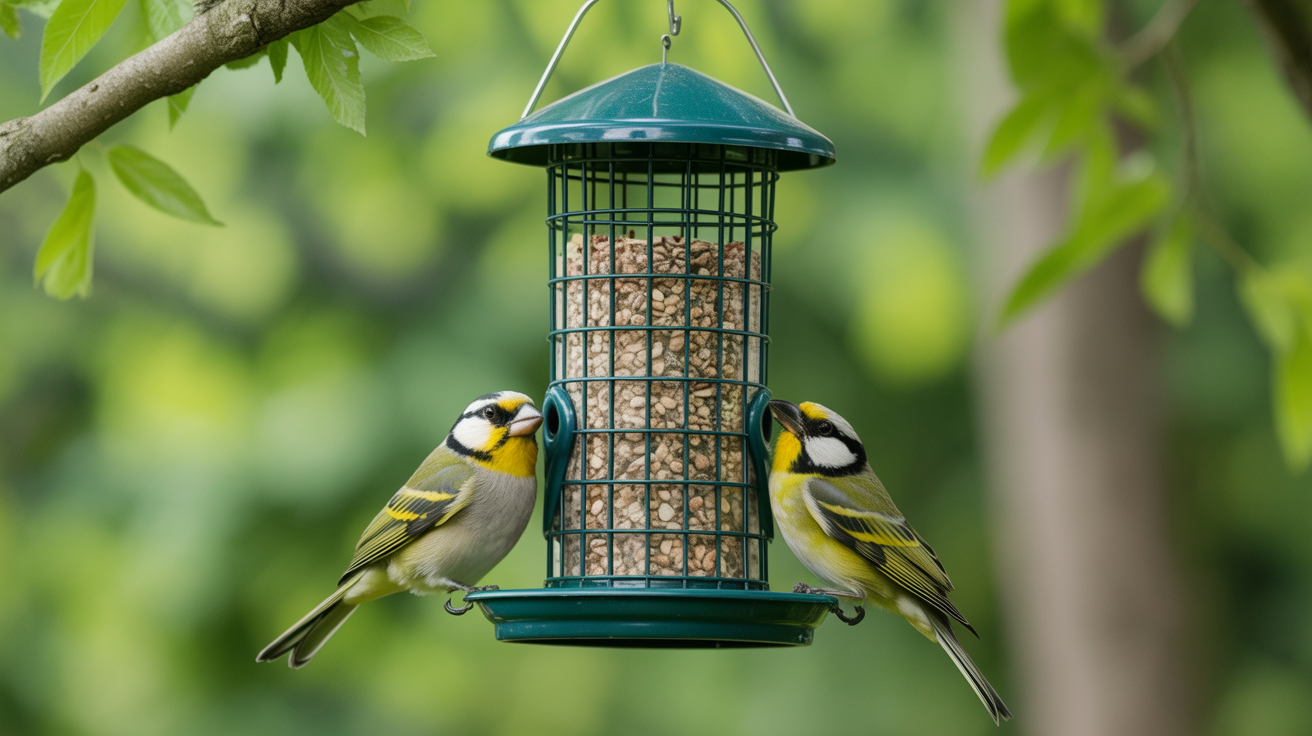
The right frequency depends on your climate and the type of feeder:
| Condition | Recommended Cleaning Frequency |
|---|---|
| Hot, humid summer weather | Every 1 to 2 weeks |
| Mild spring or fall weather | Every 2 weeks |
| Cold, dry winter | Every 3 to 4 weeks |
| Heavy rain or prolonged wet spell | Immediately after, regardless of schedule |
| Visible mold or clumped seed | Clean right away, do not wait |
Hummingbird feeders are a special case. Because they hold sugar water, they need to be emptied and rinsed every two to three days in warm weather, and every five to seven days in cool weather. Sugar water ferments and grows mold far faster than dry seed.
Platform feeders and open trays pick up the most debris and droppings, so they need attention more frequently than covered tube or hopper styles. If you are choosing a feeder with maintenance in mind, that is worth factoring into your decision. Our guide to how to choose the right bird feeder covers what makes a feeder easy or difficult to keep clean.
One more habit worth adopting: instead of running a single large feeder, spread the same amount of food across two or three smaller ones, placed a reasonable distance apart. Fewer birds cluster at any one station, which directly limits how many birds a single sick individual can expose before you notice a problem.
What You Need to Clean a Bird Feeder
You probably already have most of what you need:
- A bucket or basin large enough to submerge the feeder
- Dish soap (unscented is fine)
- A dilute bleach solution: 1 part household bleach to 9 parts water
- A stiff brush, old toothbrush, or bottle brush
- Rubber or latex gloves
- A drying rack or a clean towel
A few notes on supplies: avoid soap that contains strong fragrances or antibacterial additives beyond the bleach step below. Some birders use white vinegar instead of bleach, but vinegar does not disinfect as reliably. A 10% bleach solution (roughly 1.5 tablespoons of bleach per cup of water) kills most of the pathogens that spread at feeders.
Keep a dedicated brush set for feeder cleaning and do not use those brushes on kitchen items. This protects your family from any pathogens that may be on the feeder. Label the bucket, brushes, and gloves clearly, or store them somewhere separate from household cleaning supplies, so nobody mixes them up by accident.
How to Clean a Bird Feeder, Step by Step
1. Empty the feeder completely.
Remove all old seed, even if it looks fine. Dump it in your trash or compost rather than spreading it on the ground, where it could expose ground-feeding birds to whatever contamination was in the feeder. Check for any seed that is caked or discolored and note how bad it looks, that tells you whether you are cleaning on the right schedule.
2. Disassemble the feeder.
Take apart every piece you can: ports, perches, trays, lids, and any baffles. Most tube feeders have a removable base and top. Tube, hopper, platform, and suet feeders all have different assemblies, so spend a moment figuring out how your feeder comes apart before you start scrubbing.
3. Wash with soap and water.
Scrub every surface with dish soap and warm water. Use the stiff brush to get into ports and corners, and the toothbrush for small crevices and perch holes where seed hulls and droppings lodge. Rinse thoroughly. Soap residue left behind can deter birds and may be harmful in larger amounts.
4. Disinfect with a bleach solution.
Soak the feeder parts in your 10% bleach solution for two to three minutes. You do not need a longer soak. If you cannot submerge the whole feeder, pour the solution into the reservoir and let it sit, then wipe down the exterior with a cloth dampened in the solution.
5. Rinse again very thoroughly.
Bleach must be completely rinsed off before you refill the feeder. Any residue can harm birds. Rinse each part under running water for at least 30 seconds, and rinse the interior reservoir two or three times. When in doubt, rinse again.
6. Let it dry completely before refilling.
This step matters. A feeder refilled while still damp will cause seed to clump quickly and can introduce moisture that speeds up mold growth. Leave the parts on a drying rack or a clean towel for at least an hour, or longer if the pieces are thick plastic or wood. On a warm, sunny day you can leave them outside to air-dry faster.
7. Refill with fresh seed.
Once dry, reassemble the feeder and fill it with seed. Choosing the right seed type for the birds you want to attract makes a difference; see our overview of the best bird seed types and what each one attracts if you are not sure where to start.
Cleaning Tips for Specific Feeder Types
Tube feeders: The narrow tubes are where mold typically starts. A long bottle brush with a bendable head makes it much easier to scrub the full length. Check the feeder ports carefully; seed hulls and debris pack into those holes and are easy to miss.
Hopper and house feeders: Pay attention to the seams and any internal ledges where the seed reservoir meets the base. These corners stay damp and are a common place for mold to take hold. If your hopper has a wooden base, check it for soft spots or darkening that might indicate rot.
Platform and tray feeders: These are the most exposed to droppings and weather. Scrub the entire tray surface, and if there are drainage holes, make sure they are clear so water does not pool. Many tray feeders are simple enough to run under a hose with a strong spray nozzle as a quick mid-week refresh between full cleanings.
Suet cages: Metal suet cages are among the easiest feeders to clean. Remove the cage basket, scrub it with a brush and soapy water, rinse, and let it dry. The wire mesh dries quickly and resists mold better than plastic or wood.
Hummingbird feeders: Do not use bleach on hummingbird feeders unless you rinse with extraordinary care. Hot water, a bottle brush, and plain dish soap are sufficient for most cleanings. Only reach for bleach if you see black mold spots, and rinse repeatedly afterward.
A Note on the Area Around Your Feeder
Cleaning the feeder itself is only part of the job. The ground directly below a feeder collects seed husks, droppings, and the shells from cracked sunflower seeds. Rake or sweep that debris every week or two, especially in damp weather. A buildup of rotting seed on the ground can harbor the same mold and bacteria you are scrubbing out of the feeder, and it can also draw rodents, which brings its own problems separate from bird disease.
If you use a seed tray or catch tray mounted below the feeder, clean it on the same schedule as the feeder above. Consider moving your feeder location every year or two if the ground beneath it never seems to recover between cleanings; a patch of bare, contaminated dirt under a permanent feeder is a known hot spot for disease buildup that scrubbing the feeder alone cannot fully fix.
Frequently Asked Questions
Can I clean a bird feeder with just vinegar instead of bleach?
Vinegar is better than nothing, but it does not disinfect as reliably as a dilute bleach solution. White vinegar at full strength is acidic enough to break down light grime and inhibit some mold, but it will not kill the bacterial pathogens that spread diseases like salmonellosis. For a thorough cleaning, the bleach soak step is worth the extra minute.
How do I know if my bird feeder has mold?
Look for black, gray, or greenish patches on the inside walls of the seed reservoir, or clumps of seed that appear darker than normal. Mold often starts in corners and at the seams where moisture collects. A musty smell when you open the feeder is another clear sign. If you see any of these, clean immediately and consider whether your feeder design makes it too hard to keep dry.
Is it safe to clean bird feeders at the kitchen sink?
It is better to clean feeders outdoors or in a utility sink, not your kitchen sink. Bird feeders can carry Salmonella and other pathogens, and you do not want those near food preparation surfaces. If you must use an indoor sink, clean the sink with a disinfectant immediately afterward.
Do I need to clean a new feeder before using it?
A light rinse before the first use removes any dust or manufacturing residue, but a full bleach disinfection is not necessary for a brand-new feeder straight from the box. Save the deeper cleaning routine for after the feeder has been in use.
What should I do if I find a dead bird near my feeder?
Remove any remaining seed from the feeder and clean and disinfect it before refilling. Do not handle the bird with bare hands; use a plastic bag or disposable gloves to dispose of it. If you see multiple sick or dead birds at the same time, consider taking the feeder down for a week to disperse the flock and reduce the risk of further spread. For an injured or visibly ill bird, contact a licensed wildlife rehabilitator rather than attempting to care for it yourself.
Does running multiple feeders really lower disease risk, or is one big feeder easier to manage?
Multiple smaller feeders, spaced well apart, generally do lower risk. A single crowded feeder concentrates birds shoulder to shoulder on the same perches and ports, which is exactly the contact pattern that spreads eye disease, salmonellosis, and other feeder-borne illness fastest. Spacing feeders out means fewer birds share the same surfaces at once, even though the total number of birds visiting your yard may be similar. The tradeoff is more cleaning stations to keep up with, so only add feeders you can realistically clean on schedule.
My feeder looks clean. Do I really need to bleach it every time?
Yes, on the schedule for your season and climate. Visible cleanliness is not the same as being pathogen-free. Mold spores, bacteria, and viruses are not visible to the naked eye, and a feeder that looks fine can still be carrying enough of a pathogen load to sicken birds that share its perches. The bleach soak is the step that actually kills what soap and water leave behind.