Identifying Birds
Woodpeckers at Your Feeder: A Field Guide
Learn to identify the backyard woodpeckers most likely to visit your yard, from tiny Downies to bold Red-bellieds, with tips on food and feeders that bring
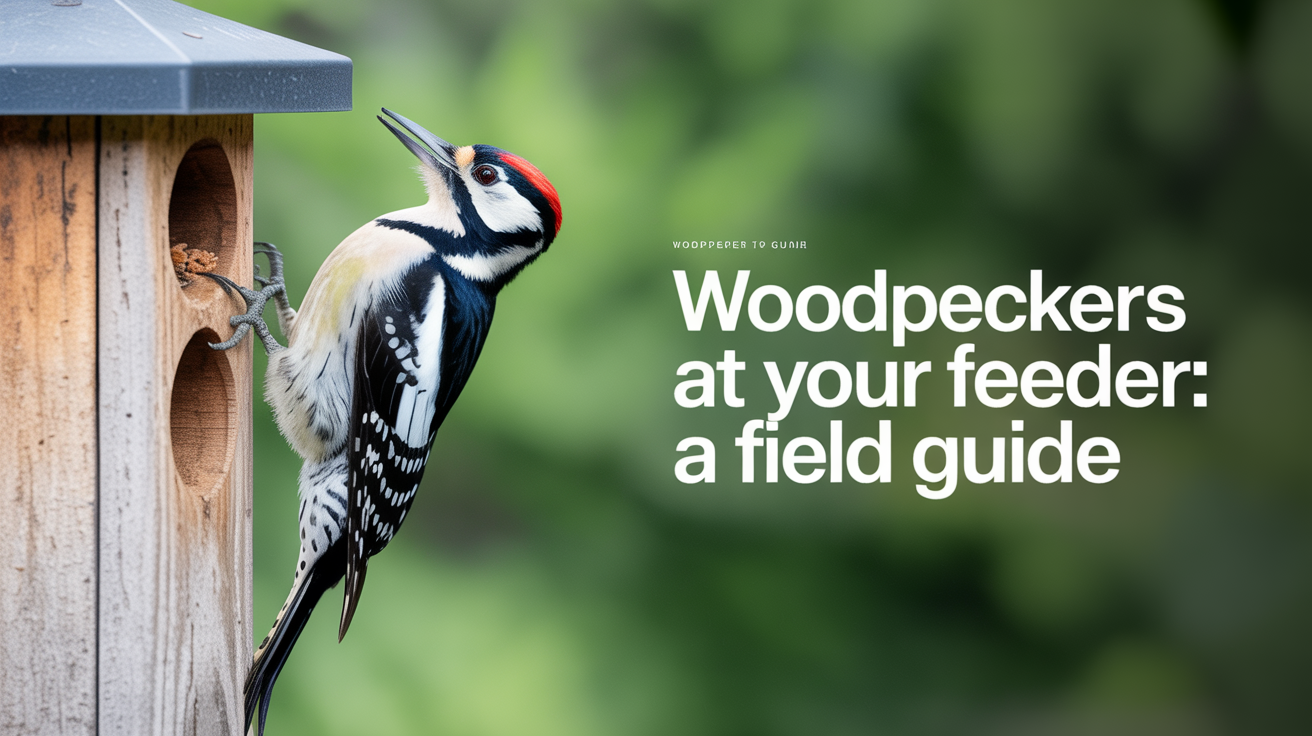
Backyard woodpeckers are some of the most reliably identifiable birds that show up at a suet cage. Once you know what to look for, you can sort out the half-dozen species that visit North American yards without much difficulty. The key features for woodpecker identification are body size, bill length relative to head depth, head pattern, and back pattern. Most visits happen at suet feeders, but several species will also take shelled peanuts, sunflower seeds, or even grape jelly.
This guide covers the six woodpeckers you're most likely to see at or near a suburban feeder in the contiguous U.S., with the details that actually separate them in the field.
The Big Two: Downy and Hairy
These are the woodpeckers most people see first, and they look strikingly similar — black-and-white laddered backs, white underparts, a bold white stripe down the center of the back, and (on adult males) a red patch at the back of the head. The real separator is proportion, not color.
The Downy Woodpecker (Picoides pubescens) is sparrow-sized, roughly 6–7 inches long. Its bill is noticeably short, shorter than the depth of its head from crown to chin. If you see a small, compact woodpecker with a stubby little bill pecking at a suet cage, it's almost certainly a Downy.
The Hairy Woodpecker (Leuconotopicus villosus) is closer to robin-sized at 9–11 inches, and its bill is long, roughly equal to or longer than the head is deep. Side by side the size difference is obvious, but when one bird is alone the bill-to-head ratio is your best check. Hairies also tend to be shyer at feeders and will often perch on a tree trunk nearby before committing to the suet cage.
One marking worth noting: the Downy often has small black spots on its outer tail feathers; the Hairy's are clean white. You won't always see those tail feathers at the feeder, but it's a useful confirmer when the bird fans its tail.
Both species are year-round residents across most of the U.S. and southern Canada. Both eat suet readily, and both will take shelled sunflower seeds from a tube feeder.
Red-bellied Woodpecker
The Red-bellied Woodpecker (Melanerpes carolinus) is the big, boldly patterned woodpecker common in eastern yards. It's about 9–10 inches long with a zebra-striped black-and-white back, a pale buff-white face and underparts, and (on adults) a bright red cap. Males have red from the bill base all the way to the nape; females have red only on the nape (the cap is gray).
Despite the name, the red belly is almost never visible. It's a faint pinkish wash on the lower abdomen, usually hidden by the perch.
Red-bellieds are loud and assertive at feeders. They'll visit suet, shelled peanuts, sunflower seeds, and fruit. They're particularly fond of tucking food into bark crevices for later; watch for one carrying a sunflower seed away from the feeder to wedge into a nearby tree.
Range: primarily the eastern half of the U.S., year-round. If you're in the Southeast or Mid-Atlantic, this is often the most common woodpecker at the feeder.
Northern Flicker
The Northern Flicker (Colaptes auratus) breaks the mold. It's a large woodpecker (12–14 inches) that forages mostly on the ground for ants and beetles, so it doesn't come to suet cages as consistently as the others. But it does visit feeders, especially platform feeders with suet crumbles or shelled peanuts, and it's unmistakable when it does.
Eastern birds ("Yellow-shafted" form): brown-barred back, spotted buff underparts, a black bib across the chest, a red crescent on the nape, and brilliant yellow under the wings and tail that flashes when the bird flies. Males have a black "mustache" stripe.
Western birds ("Red-shafted" form): same pattern but salmon-pink under the wings and tail, no red nape crescent, and males have a red mustache instead of black.
You're most likely to see flickers on the ground under your feeders scratching for spilled seed, or pausing on a suet log feeder. Year-round across most of the country, though northern populations move south in winter.
Pileated Woodpecker
The Pileated Woodpecker (Dryocopus pileatus) is the crow-sized woodpecker that looks almost prehistoric. At 16–19 inches it's the largest woodpecker in North America, with a flaming red triangular crest, white stripes on the face and neck, and an entirely black body otherwise. Males have a red forehead and red "mustache"; females have a black forehead and black mustache with a red crest.
Pileateds are birds of mature forest; they need large trees for the carpenter ant colonies they excavate. If your yard borders woods with big oaks, beeches, or conifers, you have a reasonable chance. They do visit suet feeders, particularly log-style or large cage feeders attached to a tree, and they'll occasionally take shelled peanuts. But don't count on regular visits the way you would a Downy.
The rectangular or oblong holes they chisel in dead snags are a good sign that one is working the area even if you don't see it at the feeder.
Red-headed Woodpecker
The Red-headed Woodpecker (Melanerpes erythrocephalus) is striking: entirely blood-red head, white body and inner wing patches, black back. Unlike most woodpeckers it catches insects in the air and also eats berries and acorns. It's declined significantly since the mid-20th century, primarily from loss of open woodland habitat and nest snags.
Range is patchy: common in some parts of the eastern and central U.S., absent from much of the Northeast and the coasts. It will visit suet and platform feeders with peanuts or sunflower seeds, but it's less feeder-dependent than Downy, Hairy, or Red-bellied.
If you get one, note the fully red head. Immatures have a brown head that molts to red in their first fall.
Woodpecker Quick-Reference
| Species | Length | Key Mark | Common Feeder Food |
|---|---|---|---|
| Downy Woodpecker | 6–7 in | Short bill, small body | Suet, sunflower |
| Hairy Woodpecker | 9–11 in | Long bill = head depth | Suet, sunflower |
| Red-bellied Woodpecker | 9–10 in | Zebra back, red cap | Suet, peanuts, fruit |
| Northern Flicker | 12–14 in | Spotted breast, colored wing flash | Suet crumbles, peanuts |
| Pileated Woodpecker | 16–19 in | Crow-sized, red crest | Suet (log feeder) |
| Red-headed Woodpecker | 8–9 in | Entirely red head | Suet, peanuts |
What to Feed Woodpeckers
Suet is the most reliable attractant for the species that visit feeders regularly. Rendered beef suet in a wire cage (or commercial suet cakes) works well in cool weather. In summer, straight suet can go rancid within a few days; look for "no-melt" formulations made with peanut butter or rendered fat mixed with cornmeal that hold up above 80°F.
A few other options worth trying:
- Shelled peanuts (no shell) in a mesh feeder or platform draw Downies, Hairies, and Red-bellieds reliably. Whole peanuts in the shell work too but take longer to crack.
- Black-oil sunflower seeds are taken by most woodpecker species, though they'll work at the feeder with a bill rather than cracking like finches do, so expect some wasted husks.
- Grape jelly attracts Red-bellieds in spring and summer. A small dish works fine; you don't need a special feeder.
- Suet logs (short sections of log drilled with 1–1.5 inch holes and packed with suet or peanut butter) are worth trying for Pileateds; they prefer a more natural foraging surface than a wire cage.
One thing that doesn't help: seed mixes with lots of milo, wheat, or red millet. Woodpeckers ignore those fillers. If you want to bring woodpeckers in without attracting large sparrow flocks, suet and peanuts are the cleaner choice. For more on pairing the right seed with the right feeder, see The Best Bird Seed Types and What Each One Attracts.
Feeder Placement and Setup
Woodpeckers feel more comfortable landing on a feeder that's attached to or very close to a tree trunk rather than hanging free in the open. A suet cage wired directly to a tree or a wooden post at trunk level gets more woodpecker traffic than the same cage on a shepherd's hook a few feet out in the open, all else equal.
Height matters less than proximity to cover. Downies and Hairies will use a feeder at 5 feet or 15 feet; what makes them hesitant is exposure. If your yard has mature trees within 20–30 feet of the feeder, that's usually sufficient. Pileated Woodpeckers are more demanding; they generally won't approach a feeder in a wide-open lawn.
A dead standing tree (snag) left in or near the yard is one of the best long-term investments for woodpecker habitat. Snags provide foraging sites for wood-boring beetle larvae year-round and nest cavities in spring. If safety isn't a concern, leaving a dead trunk standing pays off more than any feeder placement tweak.
For a broader look at identifying the other visitors that show up alongside woodpeckers, How to Identify Common Backyard Birds walks through the full range of feeder regulars by group.
Downy vs. Hairy: Getting It Right in the Field
This is the ID challenge beginners ask about most often, and it's worth spelling out the practice. When you see a small black-and-white woodpecker at the suet:
- Estimate body size against a known reference. Is it sparrow-sized (Downy) or robin-sized (Hairy)?
- Look at the bill. Does it look stubby relative to the head (Downy) or long and dagger-like (Hairy)?
- If the bird fans its tail, check the outer tail feathers for black spots (Downy) or clean white (Hairy).
- Listen. The Downy's call is a soft, descending whinny; the Hairy's whinny is sharper, flatter in pitch, and louder. The Hairy also gives a sharp "peek!" note that's distinctively loud for a bird that size.
Most of the time steps 1 and 2 settle it. The tail and voice are helpful when you've seen one from a distance and aren't sure.
It's also worth knowing that Hairies visit feeders less frequently than Downies in most suburban yards. If you're getting a small woodpecker at the suet cage multiple times a day, it's probably a Downy. Hairies tend to forage on larger trunk sections and may only visit once or twice before moving on.
If you enjoy the challenge of separating look-alike species, How to Tell Common Sparrows Apart applies the same step-by-step approach to another notoriously tricky group.
Frequently Asked Questions
Why do woodpeckers drum on my house?
Woodpeckers drum on resonant surfaces to establish territory and attract mates, typically in late winter through early spring (February through May in most of the U.S.). Wood siding, aluminum gutters, and chimney caps are all common targets because they carry sound well. The bird isn't foraging for insects in most cases; it's broadcasting. Deterrents that work include hanging reflective tape or flash tape near the drumming spot, attaching hardware cloth or foam padding over the area, and filling any existing holes with wood filler before the behavior becomes habit. Persistent drumming on a wooden surface sometimes does indicate carpenter bee or beetle activity underneath, so probe the wood to check.
Are woodpeckers cavity nesters?
Yes. All North American woodpeckers excavate their own nest cavities in dead or dying wood, and they typically dig a new cavity each year rather than reusing old ones. Those abandoned cavities then become nest and roost sites for other species: Eastern Bluebirds, Tree Swallows, Carolina Chickadees, and small owls all depend on woodpecker holes. This is part of why dead trees have ecological value out of proportion to their appearance.
What time of day do woodpeckers visit feeders?
Woodpeckers are most active in the first few hours after sunrise and again in the late afternoon, roughly 3–5 p.m. They generally avoid the midday heat in summer. On cold winter mornings they may start very early to refuel after a cold night. Suet is especially important in winter because its fat content provides quick calories; a Downy or Hairy will often visit a suet cage within 30 minutes of first light on a cold day.
Can I put out nesting boxes for woodpeckers?
Yes, for some species. Downies and Hairies will occasionally use a nest box if the diameter and entrance hole size are right: a 4×4-inch interior floor, 8–10 inches deep, with a 1.25-inch (Downy) or 1.5-inch (Hairy) entrance hole, mounted at 10–20 feet on a wooden post or tree. Fill the box loosely with wood shavings; woodpeckers expect to excavate and will toss the shavings out, but it simulates a natural cavity start. Red-headed and Red-bellied Woodpeckers also accept boxes with a 2-inch entrance hole and a 6×6-inch floor.
What should I do if I find a woodpecker on the ground and it can't fly?
A grounded woodpecker that can't fly is likely injured or ill. Do not try to feed it or keep it in a box for more than a few hours. Contact a licensed wildlife rehabilitator in your area; in the U.S. you can find one through the Wildlife Rehabilitators directory at wildliferehab.org or by calling your state's fish and wildlife agency. Rehabilitators have the permits and training to care for wild birds; well-intentioned home care usually makes things worse.