Identifying Birds
How to Tell Common Sparrows Apart
Sparrow identification made practical: learn the field marks that distinguish House, Song, White-throated, Chipping, and other common backyard sparrows.
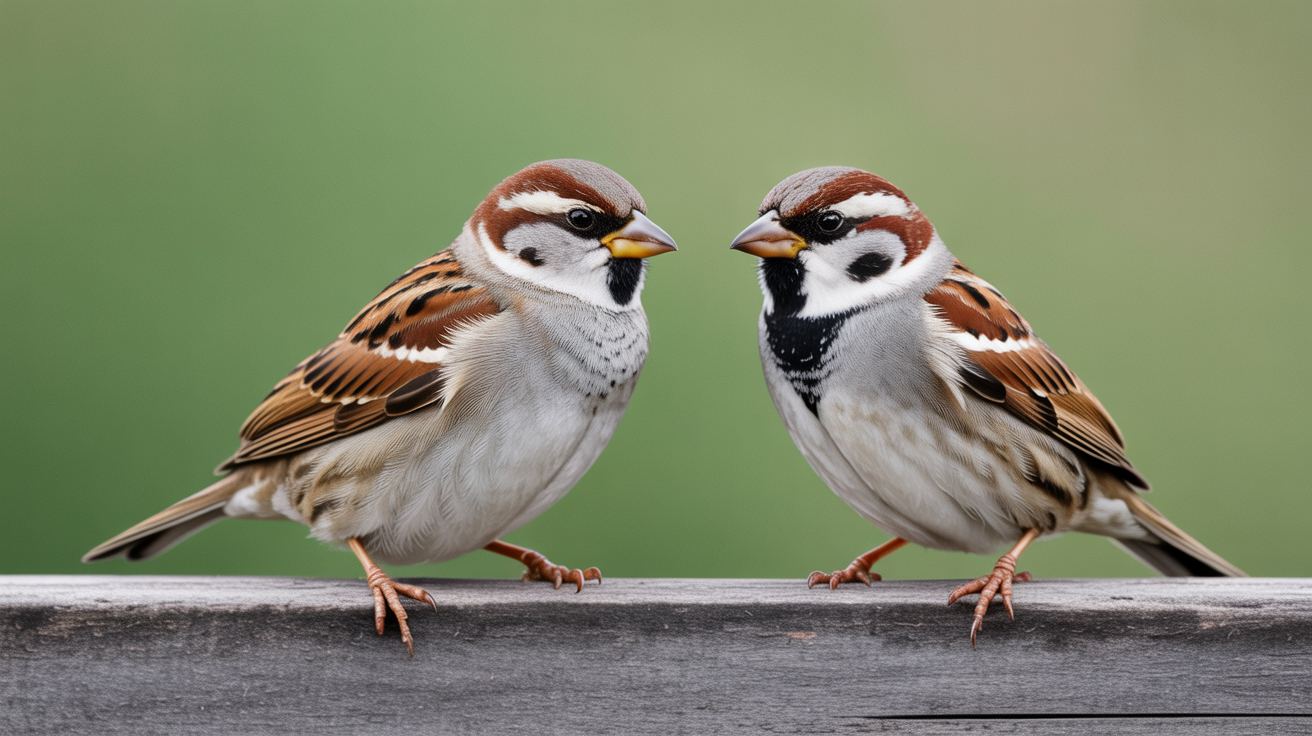
Sparrow identification trips up a lot of birders because the birds themselves resist being pinned down: streaky brown, perpetually skulking in brush, gone before you get a clean look. With a handful of reliable field marks, though, sparrow id becomes genuinely satisfying. The five species below cover the vast majority of what you'll find at a North American feeder or yard, and learning to separate them is mostly a matter of knowing which features to check first.
Start With the Head, Not the Streaks
Most beginners try to sort sparrows by breast pattern, but the head is faster and more reliable. Cap color, facial stripes, and eye rings vary sharply between species and hold up even in poor light.
Run through this quick checklist whenever you're looking at an unfamiliar sparrow:
- Cap color: rusty/chestnut, gray, brown, or striped?
- Face pattern: bold stripes, plain, or a distinctive spot behind the eye?
- Throat and malar area: clean white? streaked? any color patch?
- Breast: solid smudge, central spot, fine streaks, or clean?
- Bill shape: small and conical (seed eater) vs. slightly longer and curved?
Body size matters less than you'd think because all five species are within a few grams of each other, but tail length and posture (upright vs. hunched) help when you have two species side by side.
The Five Species You're Most Likely to See
House Sparrow (Passer domesticus)
House Sparrows are not native to North America. They were introduced from Europe in the 1850s and are now among the most widespread birds on the continent. Males are unmistakable with a gray crown, chestnut nape, black bib that expands in breeding season, and a stout seed-cracker bill. Females are plainer: buffy-brown with a pale supercilium (eyebrow stripe) and no bib.
Key marks that separate House Sparrows from native sparrows:
- Females lack the crisp facial stripe patterns of most native sparrows
- Both sexes have a noticeably thicker bill than Song or Chipping Sparrows
- Males in breeding plumage have that distinctive black throat patch
House Sparrows are almost always close to human structures: buildings, eaves, dense shrubbery near parking lots. They're gregarious and will mob a feeder in noisy groups.
Song Sparrow (Melospiza melodia)
The Song Sparrow is probably the most variable bird in North America, with roughly 24 recognized subspecies ranging from pale desert birds in Arizona to dark, heavy-streaked birds in coastal Alaska. The backyard version most people encounter, across the central and eastern US, shows:
- Heavy brown streaking on a white or buffy breast
- A distinct central breast spot where the streaks converge into a smudge
- A long, rounded tail that the bird pumps in flight (a useful flight character)
- A gray-brown face with a broad gray supercilium and a dark "mustache" stripe
The central breast spot is the clincher for most observers. If you see a heavily streaked sparrow with a dark smudge in the middle of the chest, Song Sparrow is the first call. Song Sparrows stay low in dense vegetation but will come to ground feeders for millet and cracked corn.
Chipping Sparrow (Spizella passerina)
Chipping Sparrows are slender and small, and in spring breeding plumage they're one of the easiest sparrows to name: a bright rusty cap, a clean white supercilium with a crisp black line running through the eye, and a plain gray unstreaked breast. Fall and winter birds lose some of that contrast (the cap dulls toward streaked brown), but the overall slim shape, tiny bill, and unstreaked underparts still point to Chipping.
They nest in ornamental conifers and shrubs in suburban yards across most of the continent and often forage in loose flocks on the ground beneath feeders, picking up fine millet and seeds. You can separate them from other Spizella sparrows (Field and Clay-colored) by the rufous cap in season and the clean unmarked face compared to the more buffy tone of Clay-colored.
White-throated Sparrow (Zonotrichia albicollis)
This one announces itself. White-throated Sparrows have a clean white throat patch that stands out against a gray breast, a bold yellow spot between the eye and bill (the lore), and a striped crown in either white-and-black or tan-and-brown forms. The two crown-stripe color forms are a genetic polymorphism, and birds tend to mate with the opposite form, but both are easy to ID as White-throated.
They're winter visitors to most of the lower 48, arriving from October and leaving for Canadian breeding grounds by late April or May. You'll find them scratching in leaf litter under shrubs and at the base of feeders. Their song, a clear whistled phrase often described as "Oh sweet Canada Canada Canada," carries well and is one of the more recognizable sparrow vocalizations.
White-crowned Sparrow (Zonotrichia leucophrys)
White-crowned Sparrows share the same genus as White-throated and similarly winter across the US before heading north or to mountain elevations. The bold black-and-white crown stripes are clean and graphic, more strongly contrasting than the White-throated's pattern, and the face and breast are plain gray with no yellow lore spot. The bill is pinkish-orange, which is distinctive when the light is good.
Immature birds have brown-and-tan crown stripes rather than black-and-white, but the same head pattern structure is visible. They're a bit larger than Chipping Sparrows and forage similarly on the ground, favoring open areas with brushy edges.
Quick Comparison Table
| Species | Cap | Breast | Key Mark | Season |
|---|---|---|---|---|
| House Sparrow (male) | Gray, chestnut nape | Plain gray | Black bib | Year-round |
| House Sparrow (female) | Streaked brown | Plain buffy | Thick bill, plain face | Year-round |
| Song Sparrow | Gray-brown streaked | Heavy streaks + central spot | Breast spot, pumping tail | Year-round |
| Chipping Sparrow | Rufous (breeding) | Unstreaked gray | Rusty cap, black eye line | Spring-fall (most areas) |
| White-throated Sparrow | Black-and-white or tan striped | Plain gray | White throat, yellow lore | Fall-spring |
| White-crowned Sparrow | Bold black-and-white | Plain gray | Graphic crown, orange bill | Fall-spring |
Tricky Pairs and How to Separate Them
House Sparrow (female) vs. Song Sparrow. Both are streaky and brown, but look at the face. A Song Sparrow has a defined gray supercilium and a dark malar stripe that make the face look patterned. A female House Sparrow has a paler, more washed-out face with a faint buffy eyebrow and less contrast overall. Song Sparrows also show that central breast spot.
Chipping Sparrow (fall/winter) vs. other Spizella. When the rufous cap fades to streaked brown in fall, Chipping Sparrows get confused with Clay-colored and Field Sparrows. Clay-colored has a buffy wash on the breast and a brown lateral crown stripe with a pale median stripe; Field Sparrow has a rufous crown, a plain face with a narrow white eye ring, and a pink bill. Chipping in fall retains cleaner gray on the rump (no buffy wash) and the black eye line, even when faded.
White-throated vs. White-crowned. Both are striped-crown Zonotrichia sparrows, but White-throated shows a yellow lore spot and a white throat patch set off against a gray breast. White-crowned has no yellow, no obvious white throat patch, and a noticeably orange or pinkish bill. If you can see the face clearly, these two are not difficult to separate.
For a broader framework on sorting your yard birds by group before diving into species, see How to Identify Common Backyard Birds, which covers posture, size, and behavior cues that work before you've even focused your binoculars. Once you've got sparrows sorted, the same head-first approach transfers well to Identifying Backyard Finches: Goldfinch, House, and Purple, another group where subtle plumage details separate very similar species.
What to Feed to Attract Different Sparrows
Seed choice will influence which sparrows visit. All five species eat small seeds, but preferences differ:
- White millet is the top choice for White-throated and White-crowned Sparrows; they'll scratch for it on the ground under a feeder rather than perching on it.
- Song Sparrows take millet and cracked corn from platform or ground feeders and don't use tube feeders much.
- Chipping Sparrows like fine millet and nyjer (thistle) and will use platform feeders.
- House Sparrows eat almost anything (millet, sunflower chips, cracked corn) and are persistent enough to displace shier species if you're not careful about feeder design.
Ground-feeding sparrows in general respond to a low platform feeder or simply scattering seed on bare earth. Tubes and hoppers full of sunflower seed attract fewer sparrows than finches and chickadees, so if sparrows are your target, a low open tray with white millet is the best setup.
Frequently Asked Questions
How do I tell a House Sparrow from a native sparrow?
Female House Sparrows are the most likely to cause confusion. The reliable separation is the face: native sparrows like Song and Chipping have defined stripes and patterns on the face (supercilium, malar stripe, eye line). Female House Sparrows have a plain, washed-out face with minimal contrast and a noticeably thick conical bill. Male House Sparrows are usually straightforward once you've seen the gray crown, chestnut nape, and black bib.
Why do so many sparrows look the same?
Streaky brown camouflage is a shared solution to the same problem: ground-nesting birds in grass and shrubs need to blend in from above. The differences that matter for identification are mostly on the head, which birds use in social signaling, and on the face and throat, which other sparrows read clearly even when we struggle to. Training yourself to go to the head first, rather than trying to read body streaks, makes sparrow id considerably faster.
Are there sparrows that don't look streaky and brown?
Yes. Several have clean unstreaked underparts: Chipping Sparrow (plain gray breast), White-throated Sparrow (plain gray breast with clean white throat), and White-crowned Sparrow (plain gray breast and face). The American Tree Sparrow, a winter visitor to the northern half of the US, has a rufous cap, a plain gray breast with a single central spot, and a two-toned bill (dark above, yellow below), making it look almost as clean as a Chipping Sparrow.
What time of year will I see the most sparrow diversity?
October through April is the peak window for sparrow variety in most of the country, when winter visitors like White-throated, White-crowned, Fox, and Swamp Sparrows arrive from northern and mountain breeding grounds and overlap with year-round residents. During fall migration, from late September through November, you can sometimes find five or six species in a yard on the same morning.
Do sparrows sing? Is song useful for identification?
Song is one of the best identification tools for sparrows, and it's worth learning a few. Song Sparrows sing a variable but recognizable phrase that usually starts with two or three clear notes then breaks into a trill. White-throated Sparrows whistle a pure, plaintive series of notes. Chipping Sparrows give a long mechanical trill on a single pitch that sounds almost like an insect. House Sparrows produce monotonous chirping rather than true song. Free apps like Merlin (Cornell Lab) can identify sparrow songs from a recording and are genuinely useful for confirming a visual ID or making one when the bird won't sit still.