Nest Boxes & Nesting
Where to Place a Nest Box for the Best Results
Learn the best nest box placement by species, height, direction, and habitat so cavity-nesting birds actually move in this season.
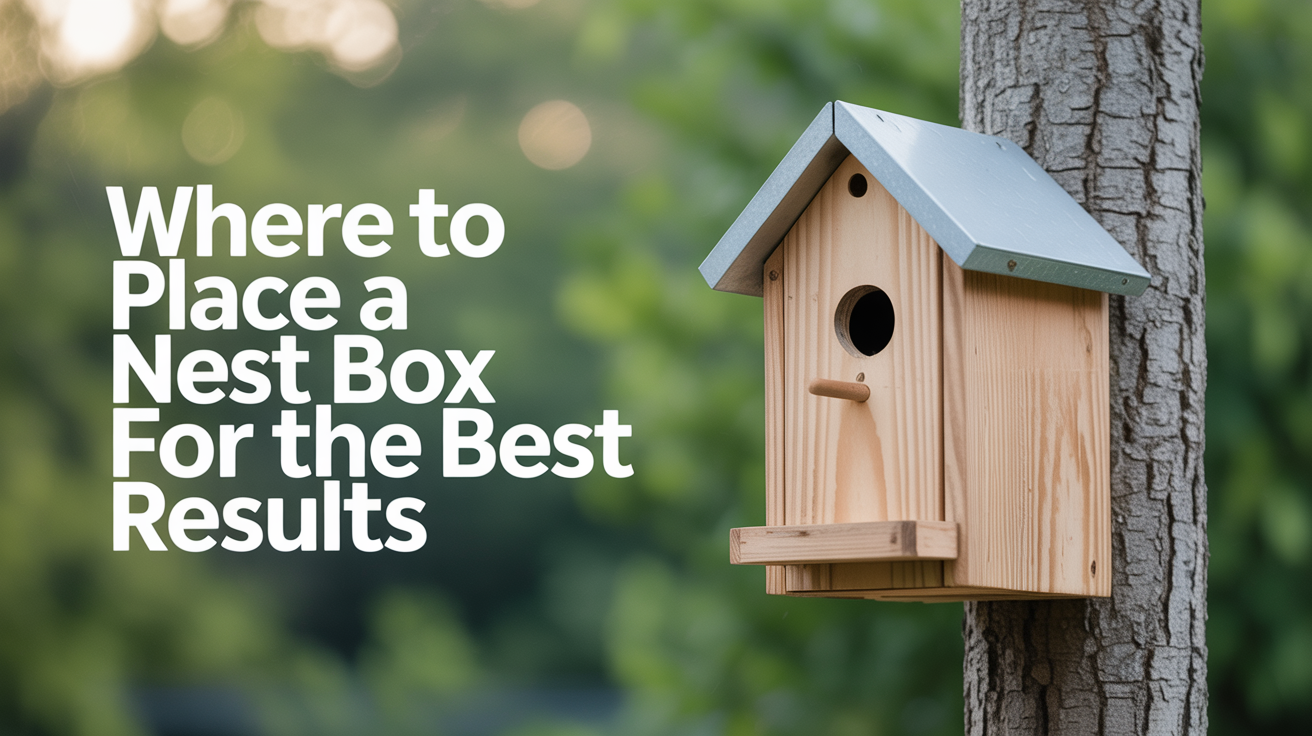
Getting a nest box occupied comes down almost entirely to where you put it. Birds are selective about real estate, and a well-built box in the wrong spot will sit empty season after season while a plain pine box in the right location fills up by mid-April. The key factors are height off the ground, compass orientation, habitat type, and distance from competing boxes, all of which vary by species.
At a Glance
- Match the box to the species first. A perfect box in the wrong habitat (a bluebird box surrounded by trees, for instance) will sit empty no matter how well it's built.
- Height: 4 to 6 feet for most open-field species; up to 20 feet for woodpeckers, nuthatches, and screech-owls in mature trees.
- Direction: face the entrance north to east in most of the U.S.; southeast if you want extra morning warmth in cooler climates.
- Spacing: at least 100 yards between boxes of the same species to avoid territorial standoffs.
- Predator protection: a stovepipe or cone baffle on a metal post blocks more predators than any other single upgrade.
- Timing: mount boxes by January or February so they've weathered in before birds start scouting in March.
Height Requirements by Species
There is no single "correct" birdhouse height. The figure you want depends on which bird you're trying to attract, because each cavity-nester evolved to nest at the height where it feels most secure from predators and competition. Cornell's NestWatch program, which runs the largest citizen-science nest box monitoring effort in North America, maintains species-specific box recommendations for exactly this reason: the wrong height for a given species measurably lowers occupancy rates.
| Species | Recommended Height | Notes |
|---|---|---|
| Eastern/Western Bluebird | 4–6 ft | Open field or meadow edge; low enough to monitor |
| Tree Swallow | 4–8 ft | Needs open airspace below for aerial insect hunting |
| House Wren | 5–10 ft | Adaptable; shrubby areas near wood edges |
| Carolina Wren | 4–8 ft | Prefers dense cover close to the ground |
| Chickadee (Black-capped, Carolina) | 5–15 ft | Woodland edge; excavates own cavities naturally |
| White-breasted Nuthatch | 12–20 ft | Mature deciduous trees |
| Downy/Hairy Woodpecker | 8–20 ft | Dead snags or mature trees |
| Wood Duck | 10–20 ft | Over or within 100 ft of water |
| Eastern Screech-Owl | 10–30 ft | Open woodland, orchard, or suburban trees |
| American Kestrel | 10–30 ft | Open farmland or field edge on a dead tree or post |
Heights above are measured to the floor of the box, not the roof. A bluebird box at 3 feet is more vulnerable to cats and raccoons; one at 9 feet makes monitoring and cleaning harder without a ladder. Four to five feet is the practical sweet spot for most open-field species.
Entrance Direction and Sun Exposure
Point the entrance hole away from prevailing winds and driving rain. In most of North America that means facing the opening somewhere between north and east. Southeast is a common recommendation for bluebirds because it catches morning sun (warming the box early) while avoiding the hot afternoon sun of a western exposure. In consistently hot climates (southern Texas, Arizona, much of California), a north- or northeast-facing entrance can prevent the box from becoming an oven in July and August.
Avoid full southern and western exposures in warm regions. Interior temperatures in a dark box facing southwest on a 95°F afternoon can reach 115°F or higher, which kills eggs and nestlings.
Shade from a single leafy branch overhead can moderate temperature without creating dampness. A few drill holes in the floor and below the roof overhang for ventilation matter more than many people realize; check that any box you buy or build has both.
Direction by climate
| Region type | Recommended entrance direction | Why |
|---|---|---|
| Cool, wet spring climates (Pacific Northwest, upper Midwest) | Southeast | Extra morning sun helps warm eggs and nestlings |
| Moderate climates (most of the eastern and central U.S.) | North to northeast | Balances warmth with protection from afternoon heat and storms |
| Hot, dry climates (Southwest, interior California) | North or northeast, avoid west | Prevents interior overheating on afternoons above 95°F |
| Coastal, high-wind areas | Away from the prevailing onshore wind, regardless of compass point | Wind-driven rain does more damage than sun exposure in these spots |
Habitat Matching: Putting the Right Box in the Right Spot
Height and direction only work if you've matched the box to habitat. Bluebirds need open grassland or mown field with short vegetation for foraging; they almost never nest in dense woodland. Tree Swallows need open sky for aerial feeding and won't nest in a yard surrounded by tall trees on all sides. Chickadees and nuthatches want woodland edge with mature trees. Wrens thrive in brushy tangles and shrub-heavy gardens.
Before you mount anything, walk your yard and ask: what cavity-nesters are actually present in this area? If bluebirds have never passed through, a bluebird box probably won't change that. A local bird club or the eBird species map for your county is the fastest way to confirm which cavity-nesters are realistic targets. NestWatch's own Right Bird, Right House tool exists for the same reason: it matches box design to the birds actually likely to nest in your region and habitat rather than a generic one-size-fits-all box.
For a yard with mixed habitat (some open lawn, some trees), consider putting out two box types on opposite sides of the property. A bluebird box on a post at the lawn's edge and a chickadee box on a tree at the wood line serve different birds and don't compete.
Spacing, Competition, and the House Sparrow Problem
Two nest boxes of the same species should be at least 100 yards apart (roughly the length of a football field) for most songbirds. Bluebirds and Tree Swallows are territorial, and a pair will actively drive off competitors. Place boxes closer than that and you'll often end up with one occupied box and one defended-but-empty box.
House Sparrows and European Starlings are an ongoing problem for anyone running a nest box program. Starlings can't enter a hole smaller than 1.5 inches, so boxes built for wrens (1.125 in), chickadees (1.25 in), and bluebirds (1.5 in) automatically exclude them. House Sparrows fit through anything 1.125 inches or larger, which means they compete directly with most songbirds. If House Sparrows take over a box, removing their nest material repeatedly during the building phase (before eggs are laid) often discourages them. Siting boxes away from buildings and dense human activity also helps, since House Sparrows are closely associated with structures. The North American Bluebird Society's fact sheets on house sparrow control walk through the full escalation ladder, from repeated nest removal up through sparrow-specific trapping where local regulations allow it.
For more detail on hole sizes and which dimensions suit each target species, see Nest Box Hole Sizes for Different Birds.
Mounting Methods and Predator Guards
How you mount the box matters almost as much as where you put it. A wood screw into a tree works, but a post-mounted box is easier to position precisely, move if needed, and protect with a baffle. Metal electrical conduit (half-inch EMT, available at hardware stores for $2–3 per 10-foot section) makes an excellent post: it's too slippery for raccoons to climb bare, and it accepts a standard stovepipe or cone baffle easily.
A stovepipe baffle (a section of 8-inch metal duct mounted around the post about 4 feet up) is the most effective predator deterrent available without resorting to traps or exclusion zones. Cone baffles work too, but they need to be at least 24 inches in diameter to prevent a determined raccoon from reaching over the edge. For tree-mounted boxes where a baffle isn't practical, a metal hole guard (a steel plate around the entrance) at least prevents enlargement of the entrance by squirrels, though it does nothing about snakes or raccoons climbing the trunk.
Predator guard comparison
| Guard type | Blocks | Best mounting | Rough cost |
|---|---|---|---|
| Stovepipe baffle | Raccoons, cats, most climbing predators | Metal post | $15–30 |
| Cone baffle (24 in.+) | Raccoons, cats | Metal post | $20–40 |
| Hole guard (metal plate) | Squirrel gnawing, minor entrance enlargement | Tree or post | $5–10 |
| Snake guard (greased pole or PVC sleeve) | Rat snakes, black snakes | Metal post | $10–20 |
| No guard | Nothing | N/A | Free, and the least reliable option by a wide margin |
Keep the box at least 10 feet from any fence, roof edge, or overhanging branch that a predator could use to bypass a post-mounted baffle. The full case for each guard type is covered in How to Keep Predators Off a Nest Box.
When to Put Up a Box and How to Monitor It
Put boxes up in late winter, ideally January through February in most of the U.S., so they've been in place and weathered slightly by the time scout birds check territory in March. A brand-new, fresh-paint-smelling box that appears in April sometimes gets ignored the first year.
Check boxes every one to two weeks during the nesting season (March through August for most species). Record the date, number of eggs, and species on a monitoring card tacked inside the lid or in a small notebook. This data is genuinely useful: bluebird monitoring programs like the North American Bluebird Society's trail monitoring initiative collect it, and patterns across trails have shaped nest box design improvements over decades.
After the breeding season ends, open the box and remove old nest material. This reduces mite and blowfly loads the following year. Leave boxes up through winter; chickadees and other small birds roost in them on cold nights, and a weathered box is already broken in for next spring.
If you're building from scratch rather than buying, How to Build a Birdhouse: Plans and Tips covers dimensions, wood choices, and ventilation design for the most common species.
Frequently Asked Questions
Which direction should a birdhouse face?
For most of North America, facing the entrance between north and northeast works well. This avoids afternoon heat in summer and shields the opening from prevailing south and southwest winds that bring rain. In climates with mild summers and cold, wet springs (Pacific Northwest, upper Midwest), a southeast-facing entrance that catches more morning sun can help keep eggs and nestlings warm. Exact compass degree matters less than avoiding full west and south exposures.
How high should a bluebird box be mounted?
Four to six feet above ground is the standard range for Eastern and Western Bluebirds. At that height the box is accessible for monitoring with no ladder, predator baffles are effective, and the birds seem comfortable. Some trail managers go up to 8 feet to clear taller grass, but above that height, checking and cleaning becomes inconvenient enough that boxes get neglected.
Can I put a nest box in a tree?
Yes, and some species prefer it: chickadees, nuthatches, screech-owls, and Wood Ducks naturally nest in tree cavities. The tradeoff versus a post-mounted box is that tree mounting makes a baffle impractical, which means predators can reach the box by climbing the trunk. A metal predator guard around the trunk can help, but a post with a stovepipe baffle is more reliably safe for species like bluebirds that would also accept a post.
How far apart should nest boxes be placed?
At least 100 yards between boxes intended for the same species. For bluebirds and Tree Swallows, some trail monitors go to 150 yards, especially where House Sparrow pressure is high. Boxes for different species can be placed closer together because they're not in direct territorial competition. A wren box in a shrubby border 20 feet from a bluebird box on an open post is fine.
Why isn't anyone using my nest box?
The most common reasons are wrong habitat (a bluebird box in a wooded yard), wrong height, House Sparrow takeover, an entrance hole too large for the target species, or the box simply being new and unfamiliar. Give any new box at least one full season before drawing conclusions. If the habitat is right and the box remains empty after two seasons, try repositioning it 50–100 feet in a direction that changes sun exposure or proximity to cover.
Does box color matter?
Somewhat. Light, natural wood tones or pale earth colors reflect more heat than dark paint, which matters most in hot climates where interior temperature is already a risk. Avoid bright colors and heavy varnish or paint on the interior, since strong fumes and glossy surfaces can deter nesting birds and make it harder for nestlings to grip the walls when they're ready to fledge. Unpainted or lightly stained cedar and pine are the safest default almost everywhere.