Nest Boxes & Nesting
How to Build a Birdhouse: Plans and Tips
Learn how to build a birdhouse with simple plans, species-specific dimensions, and practical tips that give cavity-nesting birds a safe place to raise their
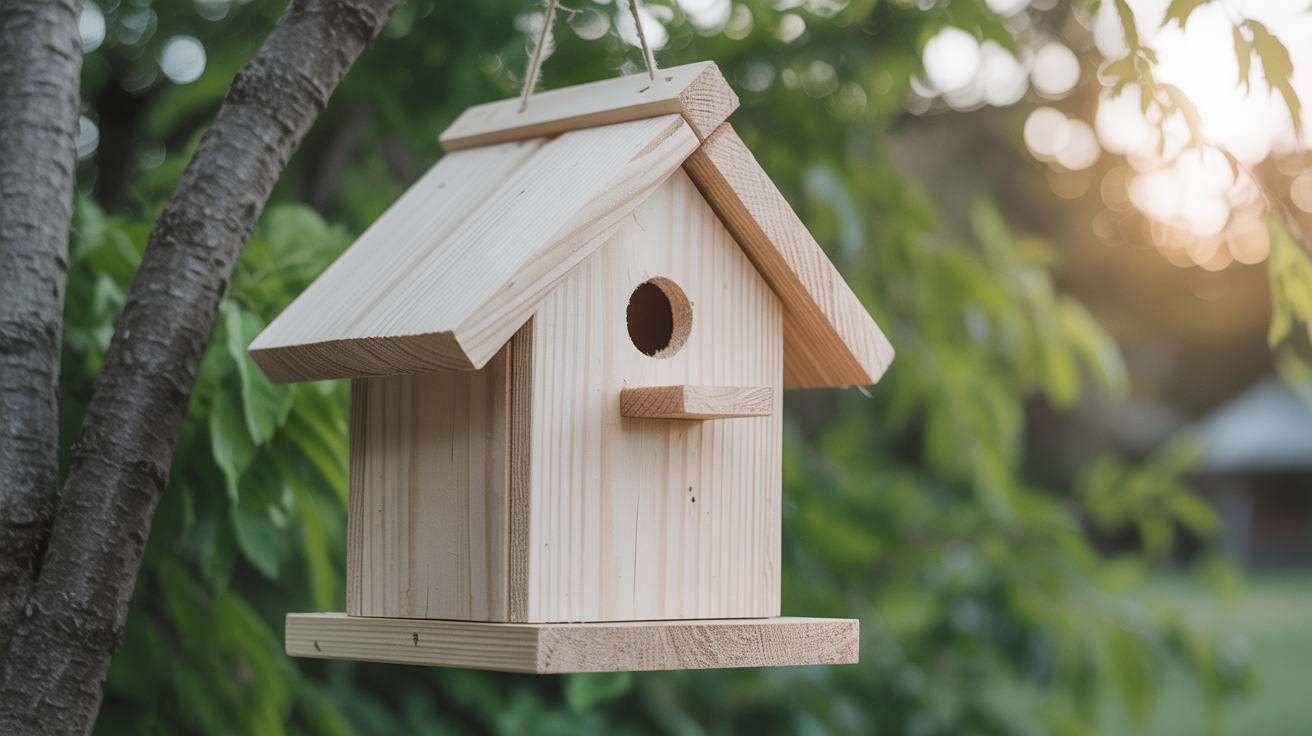
Building a birdhouse is one of the most direct things you can do to support cavity-nesting birds, and knowing how to build a birdhouse that actually gets used comes down to a few non-negotiable details: the right entrance hole diameter, the right interior floor size, and wood that won't turn the box into an oven. Get those right and you stand a good chance of attracting eastern bluebirds, black-capped chickadees, Carolina wrens, tree swallows, or house wrens, depending on where you live.
Wood, Hardware, and Basic Materials
Untreated cedar and pine are the standard choices. Cedar naturally resists rot and handles seasonal moisture swings without warping much, which matters because a warped box can gap at the seams or trap standing water. Pine is cheaper and works fine if you use at least 3/4-inch stock and keep the exterior painted or sealed. Do not use pressure-treated lumber; the preservatives used in modern ACQ-treated wood are not proven safe for nesting birds in an enclosed space.
Avoid these materials entirely:
- Plywood (interior-grade glues off-gas and delaminate in rain)
- Metal (heats to lethal temperatures on sunny days; interior can reach 105°F or more)
- Plastic containers or PVC pipe (poor ventilation, no insulation)
For fasteners, use exterior-grade screws rather than nails. Screws let you open the box for annual cleaning without splitting the wood. A 1-5/8-inch #8 coarse-thread screw works for most joints. Galvanized or stainless finishes hold up better than standard zinc.
You'll need a drill, a hole saw or spade bit sized to your target species, a saw, sandpaper, and about 90 minutes of bench time for a basic box. Total material cost for a single bluebird box runs $8 to $15 in cedar; pine comes in cheaper at $5 to $10.
Dimensions by Species
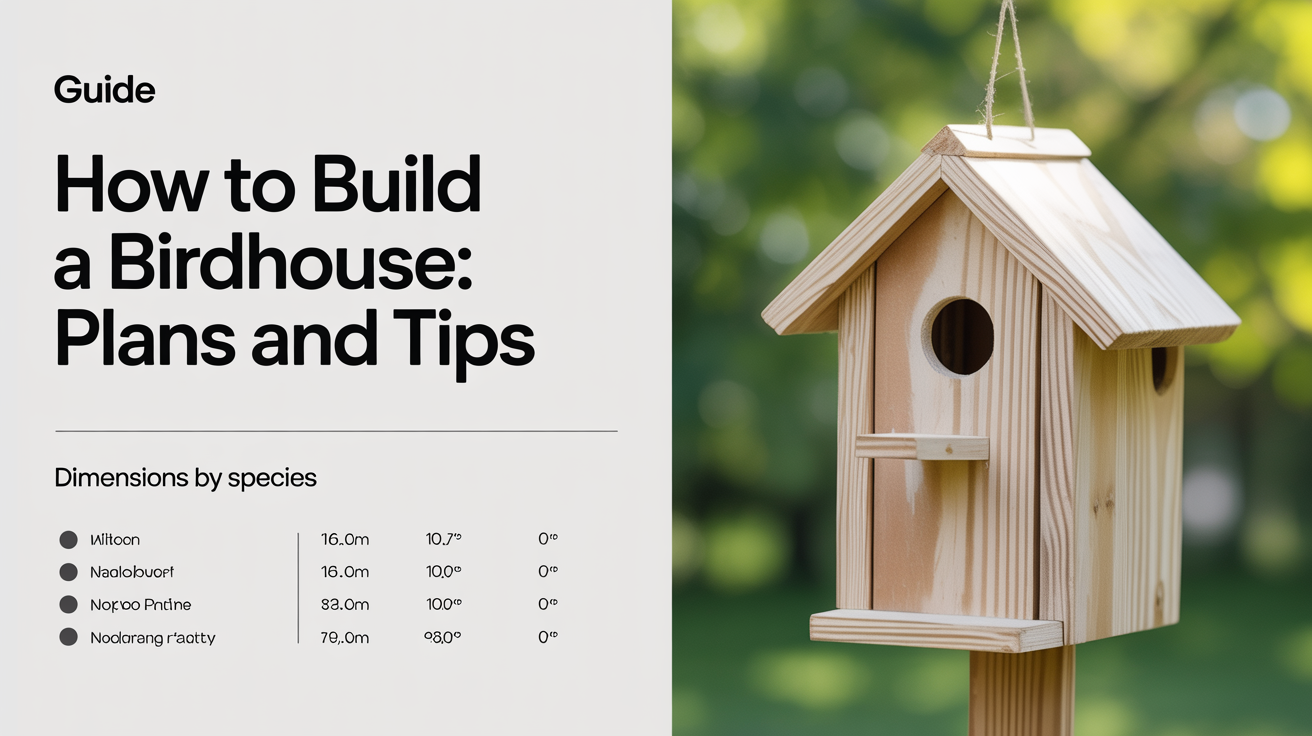
This is where most DIY birdhouses fail. A box built for a bluebird with a 1 1/2-inch hole will be immediately taken over by house sparrows. A wren box with a floor too large will be skipped in favor of a more snug fit. The table below covers the most common North American cavity nesters that will accept nest boxes.
| Species | Floor (in) | Depth (in) | Entrance Hole (in) | Mounting Height (ft) |
|---|---|---|---|---|
| Eastern/Western Bluebird | 5 x 5 | 8–10 | 1 1/2 | 4–6 |
| Tree Swallow | 5 x 5 | 6–8 | 1 1/2 | 5–8 |
| Black-capped / Carolina Chickadee | 4 x 4 | 8–10 | 1 1/8 | 5–10 |
| House Wren | 4 x 4 | 6–8 | 1 1/8 | 5–8 |
| Carolina Wren | 4 x 4 | 6–8 | 1 1/2 | 5–8 |
| White-breasted Nuthatch | 4 x 4 | 8–10 | 1 3/8 | 8–20 |
| Downy Woodpecker | 4 x 4 | 9–12 | 1 1/4 | 8–20 |
| Hairy Woodpecker | 6 x 6 | 12–15 | 1 1/2 | 8–20 |
| American Kestrel | 8 x 8 | 12–16 | 3 | 12–30 |
| Wood Duck | 10 x 18 | 24 | 4 x 3 oval | 4–20 (over water) |
The entrance hole diameter is not approximate — it is the critical number. A 1 1/8-inch hole physically excludes house sparrows and European starlings while admitting chickadees and small wrens. For bluebirds, you need exactly 1 1/2 inches, and a 1 9/16-inch hole (sometimes called a "slot entrance") is even better because it's shaped to exclude house sparrows without affecting bluebird access.
See the companion guide on nest box hole sizes for different birds for a deeper breakdown of how entrance geometry affects which species you get.
Building a Basic Bluebird Box
The bluebird box is the most widely built plan in North America, partly because bluebird populations dropped sharply through the mid-twentieth century as natural cavity trees were removed, and nest boxes have genuinely helped their recovery. Here is a straightforward plan using a single 1 x 6 cedar board, 5 feet long.
Cut list from a 1 x 6 x 60-inch board:
- Front: 10 inches
- Back: 14 inches (extra length for mounting)
- Two sides: 10 inches each, with the front edge cut at a slight angle (about 5°) to match a sloped roof
- Floor: 5 x 5 inches
- Roof: 8 x 8 inches (can use a separate offcut)
Assembly steps:
-
Drill the 1 1/2-inch entrance hole in the front piece, centered 6 to 8 inches from the bottom edge. This positions the hole about 2 to 3 inches below the roofline, which is the right depth for bluebirds.
-
Drill three or four 1/4-inch drainage holes in the corners of the floor piece. Drill two or three small ventilation holes near the top of each side piece, just below the roofline.
-
Sand the interior of the front piece below the hole. Bluebirds need to grip the wood to exit; a rough surface is intentional here, not a flaw.
-
Assemble the floor between the two side pieces. Then attach the front and back to the sides.
-
Attach the roof with a single screw on each side so it can pivot open for monitoring and cleaning, or hinge it with a small brass piano hinge.
-
Do not paint the interior. The exterior can be left natural or painted a light color (light gray, tan, or pale green) to reflect heat. Avoid dark paint on any surface that will be in direct sun.
One important omission: do not add a perch below the entrance hole. Perches are a marketing feature on commercial boxes, not a functional one. Cavity nesters do not need them, and a perch gives house sparrows and starlings a platform to harass the nesting pair.
Ventilation, Drainage, and the Clean-out Door
Three details separate a box that birds use from one they avoid.
Ventilation prevents the interior from overheating. On warm spring days, even a well-shaded box can climb into the upper 90s°F inside without ventilation. Gaps of 1/4 inch between the roof and the side walls, or a few small holes near the top of the side pieces, are enough to circulate air without creating a draft at nest level.
Drainage is straightforward: four 1/4-inch holes at the floor corners. If you cut the floor slightly undersized (4 3/4 x 4 3/4 inches instead of a full 5 x 5), the small gap around the perimeter also drains well. Standing water in a nest kills eggs and nestlings quickly.
The clean-out door is not optional if you want to monitor the box. Either hinge one side panel so it swings open, or design the roof to lift off and be secured with a screw or pivot nail. You need to get inside every fall to remove the old nest. Removing old nesting material eliminates mites, blow fly pupae, and pathogens that accumulate over the season. It also resets the box so it doesn't sit packed with compressed material when the next tenant arrives in spring.
Once you have the box up, think carefully about where to place a nest box for the best results — orientation, sun exposure, and proximity to suitable foraging habitat all affect whether birds will move in.
Mounting and Predator Protection
A birdhouse on a post is exposed to raccoons, snakes, cats, and squirrels unless you take specific steps. A metal pole is harder for a raccoon to climb than a wood post, but the real protection comes from a baffle.
A stovepipe baffle (a section of 8-inch diameter metal duct, about 24 inches long, centered on the pole below the box) is the most effective predator deterrent for ground-level approaches. A smooth metal cone baffle works nearly as well. Without one, a raccoon can reach over most box designs from below and extract eggs or nestlings. Bluebird trail operators lose a meaningful percentage of clutches every year to raccoon predation on unprotected poles.
Do not mount a nest box on a tree if you can avoid it. Trees give squirrels, raccoons, and snakes direct access without touching the post, and there is no effective baffle for a tree-mounted box. A 1-inch EMT electrical conduit makes an inexpensive metal mounting pole; a 3/4-inch pipe flange screwed to the back of the box slides over the conduit.
For more detail on keeping nest boxes safe after they are occupied, the guide on how to keep predators off a nest box covers baffles, spacing, and what to do if you have a persistent predator problem.
Frequently Asked Questions
What is the best wood for a DIY birdhouse?
Untreated cedar is the most practical choice: it is rot-resistant, stable across seasons, and widely available. Pine works if you use 3/4-inch stock and seal the exterior. Neither needs to be premium lumber; construction-grade boards are fine. The only wood to avoid is pressure-treated, because the copper-based preservatives in modern treated wood are a concern in an enclosed nesting space.
Do birdhouses need ventilation holes?
Yes. Without ventilation, interior temperatures in a closed box can climb well above 100°F on a warm day, which can kill eggs and nestlings. Small gaps near the roofline or 1/4-inch holes near the top of the side pieces are enough. You do not need large openings; you just need some airflow above nest level.
Should I paint or stain a birdhouse?
Leaving it natural cedar is fine. If you paint, use light exterior latex on the outside only (pale gray, tan, or sage green are all reasonable colors in direct sun). Never paint or stain the interior, and avoid dark colors on exterior faces that get direct afternoon sun, since dark surfaces absorb significantly more heat.
Can I build a birdhouse for multiple species at once?
Sort of. You can put up several boxes with different entrance hole diameters in different habitat zones, which will attract different species. But a single box can only serve one nesting pair at a time, and most cavity nesters are territorial enough that they will not nest within 100 feet of a same-species box. The practical approach is to build one box for your target species, mount it correctly, and add more once you see what shows up.
Why won't birds use my new birdhouse?
Timing and location are usually the issue. A box installed in March may sit empty the first season because local birds already scoped out nesting sites in February. Entrance hole size matters enormously — a 1 1/2-inch hole on a box hung in dense shrubs may be claimed by house sparrows before bluebirds find it. Make sure the box faces away from prevailing wind and rain (southeast or east is common advice), is mounted at the right height for your target species, and has a clear flight path to the entrance. Some boxes take a full season before birds discover them.