Nest Boxes & Nesting
How to Keep Predators Off a Nest Box
Learn how to protect nest box from predators using baffles, hardware cloth, extended roofs, and smart placement. Practical tips for bluebirds, wrens, and
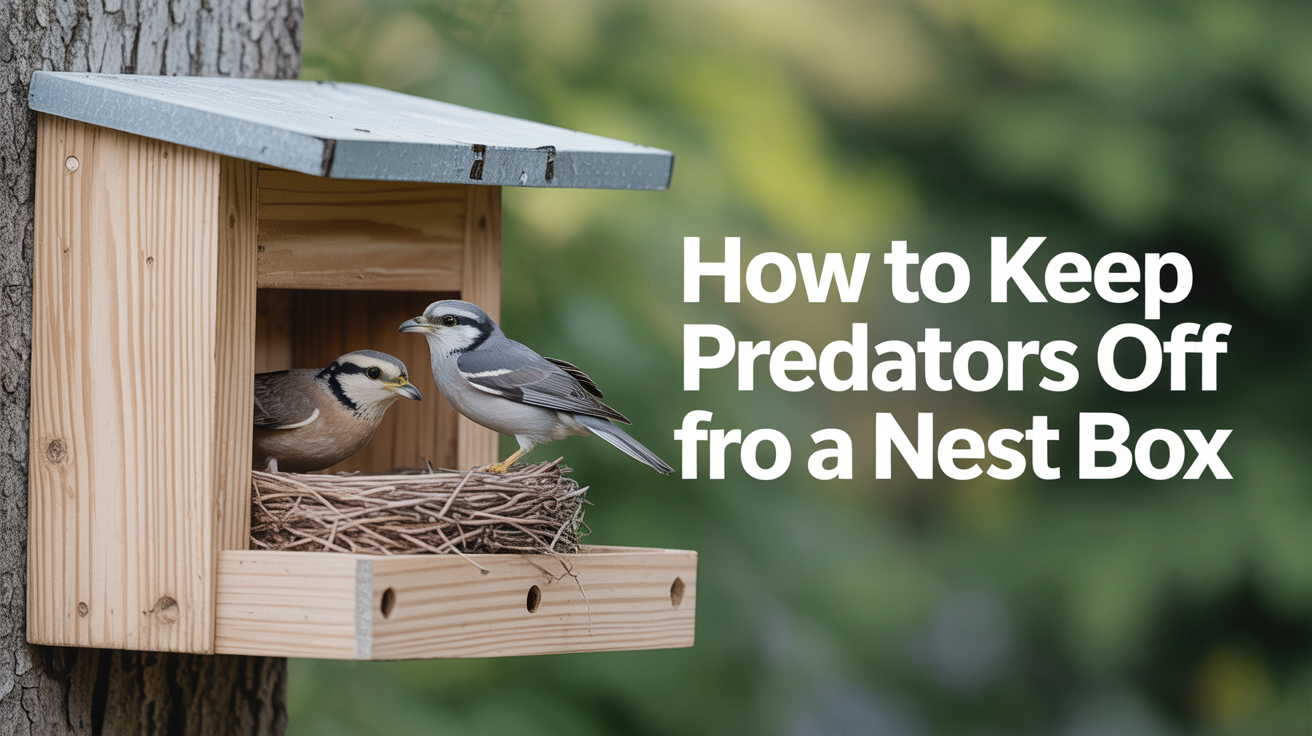
A nest box can be a death trap without predator protection. Raccoons, house cats, rat snakes, European starlings, and house sparrows are responsible for most nest failures in backyard boxes, and a few targeted hardware upgrades cut that risk dramatically. This guide covers the specific threats, the proven defenses, and how to protect nest box from predators for the most common cavity-nesting species you're likely to host.
Understanding Which Predators Cause the Most Damage
Before buying hardware, it helps to know what you're actually dealing with. Predation looks different depending on the culprit.
Raccoons are the most destructive mammalian nest predators in suburban yards. They can reach 6-7 inches into a standard 1.5-inch entrance hole with one paw, pull out eggs or nestlings, and will return night after night once they find a productive box. Damage is usually messy: nesting material pulled out, the floor wet or cleared.
Rat snakes (and to a lesser extent corn snakes and black racers) are excellent climbers that can scale smooth wood poles and metal conduit. A snake that finds eggs once will return to the same box repeatedly. You rarely see evidence of a snake visit; eggs or nestlings vanish cleanly, with the nest cup left undisturbed.
House cats (domestic, stray, and feral alike) are ambush predators. They rarely get into a box directly, but they will wait at the entrance and grab fledglings the moment they appear. Cats are most dangerous in the 1-2 days around fledging.
House sparrows and European starlings are non-native species that will evict native cavity nesters, destroy eggs, and kill nestlings or incubating adults. Their impact on bluebirds and tree swallows is severe enough that they deserve a place in this discussion, even though they're not predators in the traditional sense. The fix for them is hole size control, not baffles — covered in Nest Box Hole Sizes for Different Birds.
Squirrels chew entrance holes wider. A hole intended for a chickadee (1.125 inches) can become a starling-sized opening (1.5-1.75 inches) in a single afternoon if a squirrel decides to investigate.
The Right Baffle for Each Threat
A baffle is the single most effective predator defense for a mounted nest box. The type you need depends on how the box is mounted.
Stovepipe Baffles (Pole-Mounted Boxes)
If the box is on a freestanding metal or wooden pole, a stovepipe baffle is the gold standard. It consists of a cylinder of smooth sheet metal, typically 6 inches in diameter and 18-24 inches long, centered on the pole below the box. A raccoon or snake climbing the pole hits the bottom edge of the cylinder, which rotates or tilts under their weight and dumps them off.
Commercial versions (Wildlife Supply Company and Erva Tool & Mfg both make widely used models, in the $25-$45 range) clamp onto a half-inch conduit pole. You can also fabricate one from 6-inch HVAC stovepipe and a pipe clamp for around $10. The critical measurements: the bottom of the baffle should sit at least 4 feet above the ground, and the baffle itself should be no less than 18 inches long. Shorter baffles give a large raccoon enough grip to muscle past.
Cone Baffles (Tree-Mounted or Fence-Mounted Boxes)
If the box is attached to a fence post, a wooden stake, or a tree trunk, a stovepipe baffle won't work because the mounting surface is too wide. Use a cone baffle instead: a sheet-metal cone about 18-24 inches in diameter that angles outward and downward. Mount it on the pole or post below the box, sloping side facing down. A raccoon trying to climb around it will find nothing to grab.
Cone baffles are less effective on large-diameter tree trunks. A raccoon can get above the cone by going around it, which is one reason mounting boxes directly to tree trunks is generally a poor idea if predation pressure is high. Moving the box to a freestanding pole solves the baffle problem and gives you much better placement control. See Where to Place a Nest Box for the Best Results for pole-mounting specifics.
Below-Box Baffles for Fence Posts
For a box on a short wooden fence post, another option is a wide board baffle mounted horizontally below the box like a collar. It's less elegant than a cone and needs to extend at least 12 inches on each side. It works against cats better than raccoons, which can often pull themselves up and over.
Entrance Hole Guards and Extenders
Baffles address climbing predators, but they do nothing about a raccoon standing on the ground and reaching up into a box that's mounted too low, or one that has gotten on top of the box and is trying to reach down through the hole.
Metal Hole Guards
A metal hole guard is a flat plate of sheet aluminum or steel with a drilled hole that matches the entrance diameter. It screws over the existing wooden entrance and prevents squirrels from chewing the hole wider. Most come pre-drilled in common sizes (1.125, 1.25, 1.375, 1.5 inches). They cost $3-$8 each and are worth using on almost every box as a baseline.
Extended Entrance Tubes (Porter-Style)
A deeper entrance is one of the most underused predator defenses. A standard nest box has a front panel about three-quarters to one inch thick. Extending that with a short tube of PVC or hardwood, 1 to 2 inches deep, makes it physically harder for a raccoon paw to sweep the interior. The entrance tube concept was popularized by nest box researchers working with Eastern Bluebirds; it measurably reduces predation in areas with high raccoon density.
A simple version: drill the correct entrance hole through a 1.5-inch-thick block of cedar and glue or screw it over the original entrance hole. Cost is near zero if you have scrap lumber.
Wobble-Plate Roof
Some commercially available bluebird boxes use a loosely attached roof that rocks when an animal climbs on top of it. This disrupts a raccoon trying to lower a paw through the entrance hole from above. It's a minor add-on, but in areas where overhead predation is common, it helps. You can retrofit it by mounting the roof with a single centered screw and a washer rather than two screws at the sides.
Placement as a Predator Defense
Hardware helps, but placement decisions made at install time determine how much work your baffle has to do.
| Threat | Placement Countermeasure |
|---|---|
| Cats stalking the entrance | Mount box at least 5 feet high; keep no branches or fences within 10 feet of the entrance |
| Raccoons reaching the box | Freestanding pole, 4+ feet from any climbable structure; add stovepipe baffle |
| Snakes climbing the pole | Stovepipe baffle (smooth-bore metal); grease the pole as a secondary measure |
| Squirrels chewing the hole | Metal hole guard; site away from dense tree canopy |
| House sparrows and starlings | Correct hole size for target species; monitor weekly and remove sparrow nests promptly |
One practical note on distance from trees: 10 feet sounds like a lot, but cats can jump roughly 5-6 feet horizontally from a crouch, and they use fence rails, tree branches, and raised garden beds as launch pads. If a cat can get within 6 feet of the entrance while elevated, it can reach fledglings.
Monitoring and In-Season Management
A predator guard that isn't monitored can give false confidence. Weekly nest checks from egg-laying through fledging take about 30 seconds per box: open the side panel, count eggs or nestlings, note anything unusual, and close it. Disturbing the nest briefly does not cause parents to abandon it; that's a persistent myth.
What to look for on checks:
- Egg or nestling count drops unexpectedly: possible snake or raccoon visit; check if the baffle is still properly installed and the pole isn't touching any structure.
- Entrance hole larger than it was: squirrel chewing; install a metal guard immediately.
- Adult found dead inside the box: often a house sparrow attack; if you're not monitoring for house sparrows, start now.
- Nest cup disturbed or pushed aside: can be house sparrows building on top of the existing nest, or a raccoon paw disturbance.
If you find a bird that appears injured, has fallen from the box, or is clearly sick, contact a licensed wildlife rehabilitator rather than attempting to care for it yourself. The National Wildlife Rehabilitators Association maintains a locator at wildliferehab.org.
Putting It Together: A Recommended Setup for Bluebirds
Eastern Bluebirds are the species most commonly monitored and most thoroughly studied in terms of predation pressure, so their setup makes a good reference point. The same principles transfer to Carolina Wrens, Tree Swallows, Chickadees, and most other small cavity nesters.
- Box: Cedar or pine, 1.5-inch entrance, ventilation slots under the roof, side-panel opening for monitoring. If you're building from scratch, see How to Build a Birdhouse: Plans and Tips for dimensions.
- Pole: Half-inch galvanized conduit, 6-7 feet above ground, with all-thread rod inside for a 2-piece setup you can take down in winter.
- Baffle: 6-inch stovepipe baffle, 18-24 inches long, positioned so the bottom edge is at least 4 feet above the ground and at least 1 foot below the box.
- Hole guard: Metal plate over the entrance, drilled to 1.5 inches for bluebirds.
- Spacing: At least 100 yards from the next bluebird box (they're territorial). Freestanding, 50+ feet from dense shrubs, and not in a raccoon travel corridor like a fence line.
- Monitoring: Weekly checks in the morning, from first nest construction through fledging.
This combination stops the vast majority of predation events. No setup is perfect — an experienced raccoon sometimes figures out a new-style baffle, and a determined house cat will wait for hours — but a properly baffled, well-placed box dramatically improves the odds that the eggs you see on week two become fledglings by week six.
Frequently Asked Questions
What's the best predator guard for a nest box on a wooden post?
A cone-style sheet metal baffle is the most effective option for a fixed wooden post. It should be at least 18 inches in diameter and mounted below the box with the cone angling outward and downward. If the post is one of several in a fence line, raccoons may be able to approach from above. In that case, adding a wobble-plate roof or moving the box to a freestanding pole gives better protection.
Do predator guards actually work, or are they just extra spending?
They genuinely work. Cornell Lab of Ornithology nest box monitoring data show that baffled boxes have significantly higher nest success rates than unbaffled boxes in the same area. The stovepipe baffle has been field-tested across decades of bluebird trail monitoring. The $25-$45 investment in a commercial stovepipe baffle is the single highest-return upgrade you can make to an existing nest box program.
Will checking on the nest scare off the parent birds?
No. Adult cavity nesters don't abandon nests because of brief human disturbance. They may fly off the nest and sit nearby calling for a few minutes, then return. The key is to keep checks brief (under a minute) and not to handle eggs or very young nestlings with bare hands unnecessarily. Nest monitoring is encouraged by most conservation organizations because it lets you catch problems early.
How do I stop squirrels from chewing the entrance hole?
Install a metal hole guard over the entrance. Pre-made guards are available from bird supply retailers, and most hardware stores carry sheet aluminum you can cut to size. Make sure the hole in the guard matches the correct entrance diameter for your target species. Squirrels will sometimes chew the edges of the guard itself, but they can't enlarge a metal-rimmed hole the way they can wood.
Can I put a nest box directly on a tree trunk?
You can, but it's harder to baffle effectively and often harder to monitor. Trunks are wide enough that cone baffles can be bypassed, and predators can approach from almost any angle. A freestanding pole with a stovepipe baffle gives you much better predator control and lets you position the box at the ideal height and orientation. If a tree mount is your only option, at minimum install a metal cone below the box and keep the area under the box clear of brush.