Seasonal Birding
Summer Bird Feeding: What Changes
Summer bird feeding works differently than winter. Learn what foods to offer, what to skip, and how to keep feeders safe when temperatures climb.
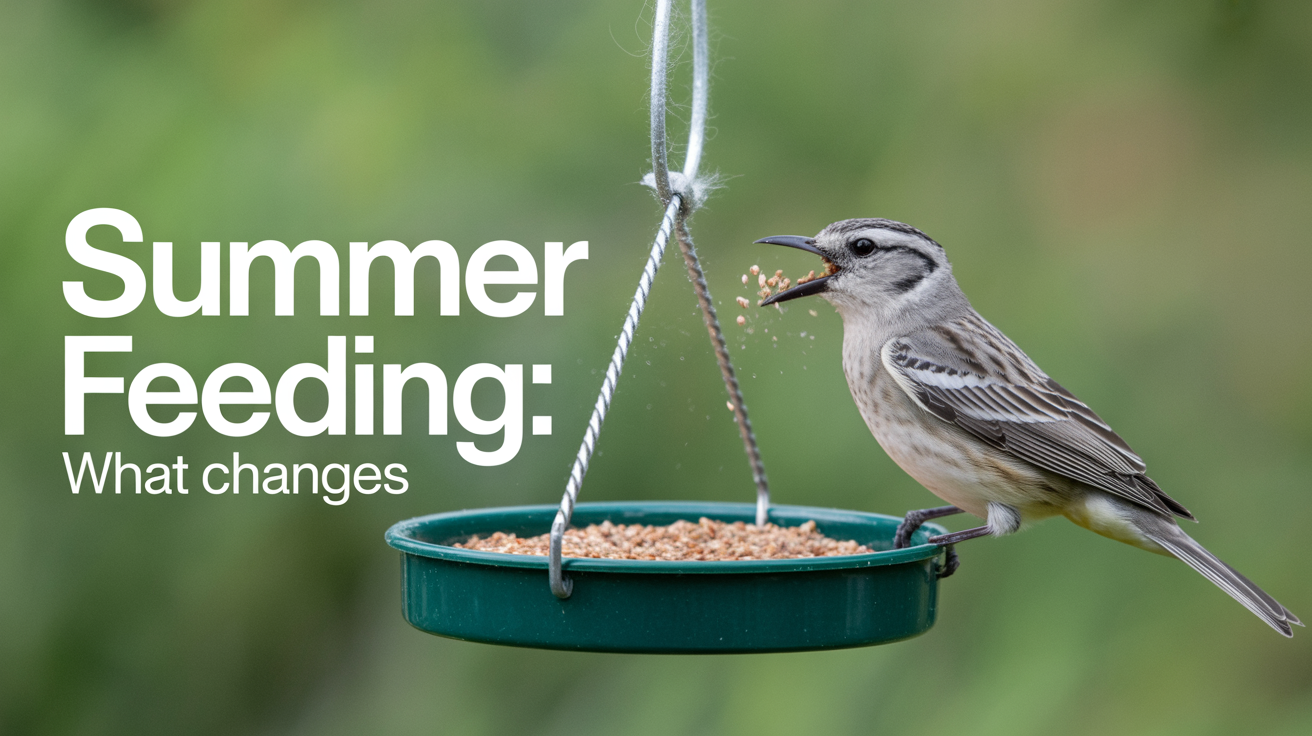
Summer bird feeding is worth doing, but it calls for different food, different maintenance habits, and a realistic sense of what your feeders are actually accomplishing when natural food is everywhere. The short answer: keep feeders up, cut back on fat-heavy foods, clean more often, and lean into what birds genuinely want in warm weather: insects, fruit, and reliable water.
Should You Keep Feeding in Summer?
The debate pops up every June. Some sources suggest pulling feeders down once breeding season starts, arguing birds don't need the help when insects and berries are abundant. That's partially true. A healthy yard in summer supplies far more natural food than your feeder does, and most songbirds feed nestlings almost entirely on insects regardless of what's available at your station. Cardinals, chickadees, and bluebirds all carry caterpillars and beetles back to the nest, not sunflower seeds.
That said, feeders in summer still serve a real purpose. They concentrate activity where you can watch it, they support birds during the post-fledgling period (late June through August) when young birds are learning to feed themselves, and they provide a supplement during drought years when insect and berry crops fall short. The main thing to adjust is what's in the feeder and how often you clean it.
One genuine reason to pull a feeder: if you have outdoor cats in the neighborhood, summer's dense nesting activity makes a feeder near shrubs and low vegetation genuinely dangerous. Young fledglings hop on the ground and can't fly well. If cat predation is a real problem at your property, relocating feeders to an open spot 10 feet or more from cover matters more in summer than any other season.
What Foods to Offer (and What to Skip)
The bigger shift in summer feeding is food selection. A few things that work well in winter become problems when temperatures regularly hit the 80s and 90s.
Suet is the main thing to reconsider. Rendered suet cakes melt in heat above about 90°F, turning rancid and potentially smearing onto feathers. This is bad for insulation, and birds that try to preen it off make things worse. If you want to keep suet feeders running through summer, switch to a "no-melt" or "summer blend" suet that uses additional binders to hold its shape. Expect to pay $1-$3 more per cake. Even summer suet can soften on very hot days, so check it regularly and pull it on extreme heat days rather than leaving melted fat dripping out of the cage.
Nyjer (thistle) stays fine year-round. American Goldfinches breed later than most songbirds, often not until July or August, so late summer is actually prime goldfinch time at tube feeders. Nyjer doesn't spoil quickly in heat as long as the feeder stays dry, though you should still empty and clean it every 2-3 weeks to prevent clumping.
Black-oil sunflower seed is still your best general offering, but in summer you want to prevent it from sitting long enough to go moldy. Buy smaller quantities and turn the supply over completely every week or two rather than topping off an old base.
Fresh fruit becomes a real draw in summer in a way it isn't in cold months. Sliced oranges on a platform feeder attract Baltimore Orioles through their breeding season (roughly May through July across much of the East). Halved grapes work for American Robins, Gray Catbirds, and Cedar Waxwings. Remove fruit daily, because it ferments fast and can attract yellowjackets.
Grape jelly for orioles has become standard advice, but it's worth noting the tradeoff: it's high-sugar and nutritionally poor, and some birders have observed orioles switching to jelly at the expense of foraging for insects their nestlings need. A small amount (a tablespoon or two per day) seems fine; a full jam jar isn't. Skip it entirely once oriole breeding is well underway (late June onward) and save it for the spring migration window when they're refueling.
| Food | Summer verdict | Notes |
|---|---|---|
| Black-oil sunflower | Keep it | Refresh weekly; avoid moldy seed |
| Nyjer/thistle | Keep it | Goldfinches breed late; prime summer |
| Suet cake (standard) | Swap or remove | Melts above ~90°F; goes rancid |
| No-melt suet | Fine in most heat | Still check on very hot days |
| Fresh oranges | Excellent | Replace daily; attracts orioles |
| Grape jelly | Use sparingly | Small amounts only; remove by late June |
| Millet (white) | Okay | Ground-feeding sparrows, doves |
| Mixed seed with milo | Mostly filler | Most birds ignore milo; it rots fast |
| Corn (cracked) | Skip in humidity | Molds quickly; attracts starlings |
| Hummingbird nectar | Essential | 4:1 water:sugar; change every 2-3 days in heat |
Cleaning Schedules in Summer Heat
This is where summer feeding goes wrong for a lot of people. Seed molds, nectar ferments, and wet hulls pile up faster in warm, humid conditions than in winter.
Hummingbird feeders need the most attention. Nectar made from 4 parts water to 1 part white sugar (no red dye, no honey, no artificial sweeteners) ferments within 2-3 days when temperatures are above 80°F. Cloudy nectar or black mold inside the ports means you've waited too long. Disassemble the feeder completely, scrub with a bottle brush and hot water, and refill. If you see a feeder go through nectar quickly, that's ideal — you're being forced to keep it fresh. If it's sitting full for four days in July heat, cut the batch size to match actual consumption.
Seed feeders should be wiped down and checked weekly. Look for wet clumped seed at the bottom of tube feeders; that's where mold starts. A tablespoon of wet seed can contaminate the whole load. Toss anything that smells sour or feels damp. Platform feeders are worst for this because seed and hulls sit in rain. A mesh-bottom platform drains better than a solid one and is worth the upgrade ($15-$30 more) if you're dealing with summer humidity.
A full scrub with a 9:1 water-to-bleach solution every 2-4 weeks is good practice year-round, but in summer it's not optional. Salmonella outbreaks in feeder bird populations (House Sparrows and Pine Siskins are particularly susceptible) trace directly back to dirty feeders. Rinse thoroughly and let everything air-dry completely before refilling.
What Birds Are Actually Doing in Summer
Understanding what's happening in the yard helps calibrate what feeders can and can't do.
Most songbirds wrap up their first nesting attempt in May or June and then attempt a second or even third brood, depending on species and location. During active nesting, adult birds visit feeders less. You may notice a quiet period in June when feeder activity drops noticeably. This isn't a sign something's wrong; it's a sign birds are busy. Activity picks back up in July and August when fledglings start showing up, often looking scraggly and vaguely confused, following parents around begging for food.
Late summer also brings the beginning of fall migration for some species. Shorebirds start moving south as early as late July. Warblers begin staging in August in northern states. This timing matters for feeder setup: if you want to attract migrating species passing through, having active, clean feeders in late August can pull in birds that wouldn't otherwise stop.
Hummingbirds deserve a particular mention. Ruby-throated Hummingbirds in the East and Rufous Hummingbirds in the West can both show up at nectar feeders through August and September. Keeping nectar feeders clean and full through Labor Day is worth doing — migration pushes numbers up, not down, in late summer.
For a seasonal contrast, see our guide on how to feed birds in winter, where the logic runs in the opposite direction: high-fat foods like suet become essential, and the birds visiting are mostly resident species supplementing scarce natural food rather than abundant-food breeding birds.
Managing Heat, Pests, and Competition
Ants and wasps are the main feeder pests in summer. For nectar feeders, an ant moat (a small water-filled cup that hangs above the feeder and blocks ants from crossing) is the most reliable solution; a well-made one costs $5-$10 and works far better than petroleum-based ant guards, which can drip onto feeding surfaces. Yellowjackets are trickier. They're attracted to fruit and to nectar. Saucer-style hummingbird feeders, where the nectar sits below the ports rather than in an inverted bottle, are harder for wasps to access than bottle-style feeders.
Squirrels become more aggressive in summer when natural food quality is lower. A pole-mounted feeder with a properly fitted baffle (12-14 inches in diameter, mounted 4-5 feet above ground and at least 10 feet from any jumping point) is still the most effective solution. Cayenne in seed doesn't bother birds but is inconsistent against squirrels and wears off after rain.
Bear country warrants a real conversation about summer feeders. Black bears actively roam during summer and learn feeder locations quickly. In areas with bear activity, bringing feeders in at night or suspending feeding entirely from May through November is the practical choice. A bear that gets rewarded at a feeder will keep returning and may eventually need to be relocated or euthanized by wildlife authorities. For spring migration coverage and what birds to expect passing through, take a look at spring migration: what to watch for.
Frequently Asked Questions
Do birds need feeders in summer when food is naturally available?
Not in the same way they do in winter. Natural food, including insects, berries, and seeds from native plants, is genuinely plentiful in summer, and most birds will meet their nutritional needs without your help. Feeders in summer are more about observation and supplemental support than about survival. The birds that benefit most are young fledglings learning to forage and hummingbirds, which have very high metabolisms and use nectar feeders as a reliable energy stop.
Is it okay to leave feeders up all summer even if they're not being used much?
Yes, with one condition: a feeder that sits full and unused will have old, moldy seed in it. If activity is genuinely low at a particular feeder, scale back the amount you're putting out rather than filling it on the same schedule as winter. Empty feeders are fine; feeders with month-old seed aren't.
How often should I change hummingbird nectar in summer?
Every 2-3 days when temperatures are above 80°F. Every 4-5 days is the absolute outer limit even in mild summer weather. If nectar looks cloudy or the feeder has visible mold, it needed changing sooner. Making smaller batches, just enough to fill the feeder halfway, helps if you're not seeing heavy traffic.
Why did birds stop coming to my feeder in June?
This is normal and happens every year. It coincides with active nesting: adults are feeding nestlings primarily on insects and are less interested in seeds. You may also notice fewer species overall as migrants have passed through and winter visitors have moved north. Activity will return in July and August as fledglings start appearing. The pause isn't a sign your feeder is wrong; it's a sign of a healthy breeding season.
Should I offer mealworms in summer?
Live or dried mealworms are one of the more genuinely useful things you can put out in summer, precisely because birds are seeking protein for their nestlings. Bluebirds, robins, Carolina Wrens, and catbirds will all take them. Live mealworms cost more ($10-$20 for a cup of 500-1,000) but are more readily accepted than dried. A shallow dish feeder placed consistently in the same spot for a week or two teaches birds it's there. The main tradeoff: live mealworms require a bit of care (refrigerate them, bring them to room temperature before offering) and die quickly in full sun. Dried mealworms avoid that but can be ignored by birds that have learned to expect live ones.
Summer feeding doesn't require a complete overhaul. Mostly it means cleaning more frequently, swapping out suet for summer-appropriate foods, and keeping nectar fresh. If you've been feeding through cold snaps and winter when birds genuinely depend on supplemental food, summer is the easier, lower-stakes season: a chance to enjoy the fledglings and the fruit-eaters and the hummingbirds without worrying that the feeder is a lifeline.