Seasonal Birding
Spring Migration: What to Watch For
A practical guide to spring bird migration — when waves arrive, which species to expect, and how to get the most out of migration birdwatching at home.
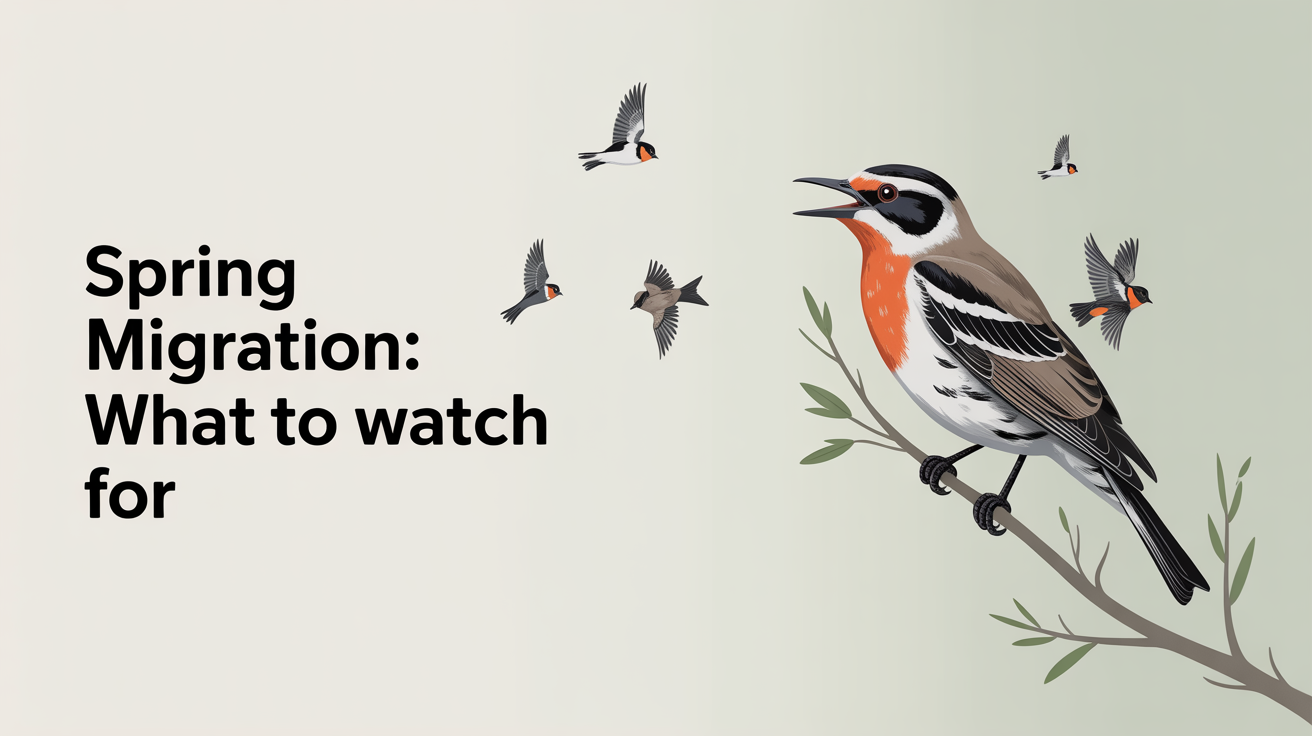
Spring bird migration is one of the most concentrated wildlife events in North America, and you don't need to drive anywhere to enjoy it. From late March through late May, billions of birds funnel northward along established flyways, and many pass directly over or through ordinary backyards. Knowing the timing and the species makes the difference between glancing out a window and having a genuinely memorable morning.
When Migration Happens: The Three Main Waves
Spring migration isn't a single event. It unfolds in overlapping pulses, each with a different cast of birds.
Early wave (mid-March to early April). The first arrivals are hardy species that winter in the southern U.S. rather than the tropics. Eastern Phoebes appear along driveways and fence lines when nighttime temps still dip below freezing. Tree Swallows show up over ponds as soon as insects are flying. American Robins, often already present year-round in warmer regions, suddenly triple in numbers as northern-bound birds pass through. In the Midwest and East, Killdeer return to gravel lots and plowed fields almost predictably around St. Patrick's Day.
Mid wave (late April to early May). This is the period most birders wait for. Neo-tropical migrants (birds that winter in Central America, the Caribbean, or South America) begin arriving in force. Yellow-rumped Warblers, the most cold-tolerant warbler, peak first. Then come Palm Warblers, Yellow Warblers, and the first Ruby-throated Hummingbirds. Orioles (Baltimore and Orchard in the East; Bullock's and Hooded in the West) hit fruit trees and nectar feeders. Chipping Sparrows replace the Dark-eyed Juncos that spent the winter at your feeders and are now heading to boreal forests.
Late wave (mid to late May). The final push brings the biggest warbler diversity: Blackpoll, Bay-breasted, Magnolia, Blackburnian, and others. Shorebirds like Semipalmated and Least Sandpipers pass through on their way to arctic breeding grounds. By Memorial Day, migration is largely over, and the birds that remain are your summer residents.
Weather plays an enormous role in day-to-day activity. A south wind at night moves birds; a cold front with north winds grounds them. The day after a northerly front passes is often the most productive, as birds that were forced down concentrate in any available patch of trees.
What to Actually Look For in Your Yard
Migration birdwatching at home rewards a shift in attention. Instead of scanning only your feeders, spend time watching the treetops, shrub edges, and the sky itself.
Warblers in the canopy. Most warblers don't visit feeders, but they do work through budding trees hunting insects. They're small and fast, so binoculars pointed into the upper branches pay off. A useful trick: listen for thin, high-pitched chips and then freeze. Warblers often pause long enough for a good look. Yellow-rumped Warblers are the easiest starting point; they're relatively tame and show a conspicuous yellow rump patch when they fly.
Orioles and tanagers. If you have large deciduous trees, Baltimore Orioles (East) and Bullock's Orioles (West) may spend time foraging in the canopy before moving on. Put out a halved orange or a small dish of grape jelly in late April and you'll often get one to stop. Scarlet Tanagers in the East favor oaks; the males are hard to miss once you see one.
Sparrows in the brush. A shuffling sound in a hedgerow during late April could be White-throated Sparrows, Fox Sparrows, or Lincoln's Sparrows passing through. They respond to pishing (a soft "pshhhh" sound) by popping up briefly to investigate.
Hummingbirds. In most of the East, Ruby-throated Hummingbirds arrive between late April and mid-May. In the West, the calendar depends heavily on latitude and elevation, but Rufous Hummingbirds move through earlier than most people expect, sometimes as early as February in California. Putting feeders out a week before expected arrival and leaving them up through early June covers the main window.
Nighttime movements. Many migrants fly after dark, navigating by stars and magnetic cues. On calm nights with south winds in late April, step outside around 9–11 p.m. and listen: you'll often hear thin "seep" calls from thrushes, warblers, and sparrows passing overhead. Birders call these nocturnal flight calls (NFCs). BirdCast.info publishes migration forecasts by region that predict the intensity of these nightly movements based on weather data.
Which Migrants Are Most Likely to Stop in Your Yard
A backyard on migration functions as a fueling station. Birds stop where they find food, cover, and water. The species list depends partly on your region, but these are among the most yard-friendly migrants across North America:
| Species | Arrival Window (Northeast/Midwest) | What Attracts Them |
|---|---|---|
| Yellow-rumped Warbler | Late March–early May | Insects, bayberries, suet |
| Ruby-throated Hummingbird | Late April–May | Nectar feeder, red tubular flowers |
| Baltimore Oriole | Late April–May | Orange halves, grape jelly |
| Chipping Sparrow | April–May | Millet on ground or platform feeder |
| Rose-breasted Grosbeak | Late April–May | Sunflower seeds at hopper feeder |
| Gray Catbird | May | Berries, fruit, dense shrubs for cover |
| Swainson's Thrush | May | Low shrubs, water feature |
| Blackpoll Warbler | Mid to late May | Insects in canopy |
In the West, swap Baltimore for Bullock's Oriole, and add Western Tanager (late April in California, later at elevation) and Cassin's Vireo to the mix.
How to Prepare Your Yard for Migrant Stopovers
Most migrants need to refuel fast and move on. A few targeted changes to your yard setup can make it a reliable waypoint.
Add a water source with movement. Migrants are drawn to the sound of dripping or splashing water more reliably than to any food source. A simple dripper attachment on an existing birdbath costs under $20 and works far better than a static bath. Place it near shrub cover so birds have somewhere to retreat.
Skip the lawn chemicals in April and May. Many migrants are insectivores that ignore seed entirely. A yard with some leaf litter and unmowed edges holds more insects than a chemically treated lawn. Leaving a small brush pile near a hedgerow gives thrushes and sparrows a place to forage and hide simultaneously.
Plant native shrubs and berry producers. Serviceberry (Amelanchier spp.) fruits in May, right when migrants are moving through. Dogwoods and viburnums hold fruit into late winter and attract early arrivals. These pay dividends year after year and require minimal maintenance compared to feeders. For more ideas, the article on native plants that attract birds covers this in detail by region.
Keep your feeders stocked through late May. It's tempting to cut back on seed once your winter birds leave, but mid-May can bring grosbeaks, orioles, and sparrows that otherwise would have no reason to stop. If you wind down for the summer, see summer bird feeding: what changes for guidance on which feeders and foods are still worth maintaining.
Tools That Make Migration Birdwatching More Useful
You don't need to know every species from memory. A few free resources make the learning curve much shorter.
Merlin Bird ID (Cornell Lab of Ornithology). The Sound ID feature listens through your phone's microphone and identifies birds calling overhead in real time. It's especially useful for warblers and for nocturnal calls. Free on iOS and Android.
eBird. The same Cornell project runs eBird, which shows what other birders are finding near you on any given day. The "Explore" tab's "Species Maps" and "Bar Charts" show exactly when each species is expected in your county, which is far more precise than any general guide.
BirdCast. This radar-based migration forecasting tool shows predicted migration intensity by night, along with live radar of birds in flight. A "high migration" night followed by a still, clear morning is when you want to be in your yard early.
A regional field guide. Digital tools are convenient, but a physical guide to your region helps you build search images — the mental template you use to spot an unfamiliar bird before you can look it up. The Sibley Guide to Birds or a region-specific Peterson guide are both solid choices.
Frequently Asked Questions
When exactly should I put out my hummingbird feeder?
In the continental U.S., the timing varies widely by region. A practical rule: put the feeder out one to two weeks before you expect the first hummingbird. For the Southeast, that's late March to mid-April. For the mid-Atlantic and Midwest, mid to late April. For New England and the upper Midwest, early to mid-May. You don't harm anything by putting it out early; just change the nectar every 3–4 days even if no birds have visited, since the sugar solution ferments in warm weather.
Do the same birds come back to the same yards each year?
Many species show strong site fidelity on migration, meaning individual birds return to the same stopover locations in consecutive years. Baltimore Orioles are particularly well-documented in this respect: a bird that found your jelly in May 2024 is genuinely likely to return in May 2025. This is one reason it's worth keeping feeders and water sources consistent from year to year rather than setting them up on a whim.
Why do I see so many more birds some mornings than others?
Overnight weather is the main driver. When a cold front moves through and north or northwest winds follow, birds that were airborne get pushed down and concentrate in the nearest patch of trees or shrubs. These "fallout" mornings can produce astonishing numbers, sometimes dozens of warbler species in a single tree. On warm, south-wind nights, millions of birds may pass through your area without landing because conditions favor continuous flight.
Should I stop feeding birds during migration so they don't become dependent?
No. Concern about birds becoming "dependent" on feeders is largely unfounded — birds are opportunistic and will always seek natural food sources. Migration is a period of extremely high energy demand, and supplemental food at your feeders doesn't interfere with migration timing or instinct. If you're managing feeders through winter, keeping them stocked through late spring is the natural extension. This is covered in more depth in the article on how to feed birds in winter, which addresses the dependency question directly.
Is it normal to see large flocks of robins, grackles, or blackbirds in March?
Yes, and this is one of the clearest signs that early spring migration is underway. Common Grackles, Red-winged Blackbirds, and Brown-headed Cowbirds often move in mixed flocks hundreds or thousands strong in late February and March, particularly in the Midwest. American Robins do the same: what looks like your familiar backyard pair is often part of a much larger northbound flock that's pausing briefly. These flocks are following the 37°F isotherm, which marks the point at which earthworms become accessible near the surface.