Attracting Birds
Native Plants That Attract Birds
Discover which native plants bring the most birds to your yard, from seed-producing grasses to berry shrubs and insect-rich oaks.
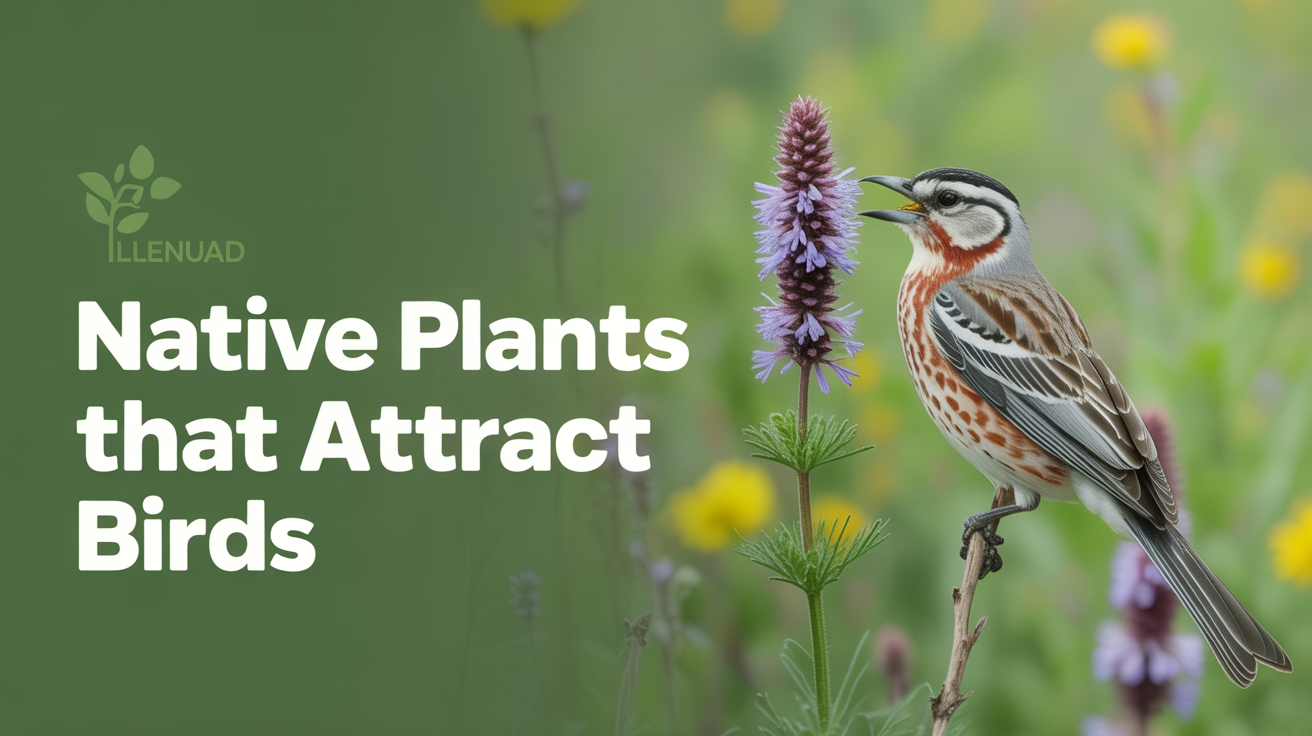
The single most effective thing you can do to bring more birds to your yard is plant native species. Native plants that attract birds do so because they co-evolved with local wildlife over thousands of years: their berries ripen at migration time, their caterpillars feed nestlings, and their seed heads persist through winter exactly when birds need calories most. A yard full of feeders but no native plants is passable, but it's nowhere near as useful as one with real habitat.
Why Native Plants Outperform Exotics for Birds
Non-native ornamentals are often bred for showiness at the cost of ecological usefulness. A Bradford pear blooms beautifully but produces tannin-heavy fruits few birds touch. A native serviceberry (Amelanchier spp.) blooms nearly as early, then drops sweet berries in June just as warblers and tanagers are moving through.
The key mechanism is insects. A native white oak (Quercus alba) can support more than 500 species of caterpillars and moth larvae. A similarly sized ornamental ginkgo supports fewer than 5. Carolina chickadees, one of the most studied species, require roughly 6,000 to 9,000 caterpillars to raise a single clutch to fledging. Without native insect host plants, there simply aren't enough bugs to do that job.
Berries and seeds matter too, but the insect load a plant carries is what really determines its bird value. This is why ecologist Doug Tallamy's research has shifted many gardeners toward what he calls a "homegrown national park" approach: prioritize high-caterpillar-biomass natives first, then add fruit-producers for fall and winter.
Top Native Plants by Category
Trees and Large Shrubs
Oaks (Quercus spp.) are the single highest-value plant genus in North America for birds. Even a young oak in a modest suburban yard begins hosting insects within a few years. White oak, bur oak, and water oak all work well depending on your region. They're not fast growers, but a 10-year-old oak already matters.
Native cherries (Prunus serotina, Prunus virginiana) produce small dark fruits that migrating thrushes, waxwings, and catbirds strip clean each August. Black cherry also hosts several hundred caterpillar species, making it a close second to oak in ecological value. It's a medium-size tree, topping out around 60–80 feet, with modest fall color.
Serviceberry (Amelanchier spp.) stays under 20 feet in most forms, fits smaller lots, and produces blueberry-sized fruits in late May through June. Robins, bluebirds, cedar waxwings, and orioles all take them. Serviceberry also tolerates partial shade and wet spots where many trees struggle.
Mid-size Shrubs
Elderberry (Sambucus canadensis) grows fast (10–15 feet in 3–4 years), tolerates poor soil, and produces heavy clusters of small purple-black berries in late summer. It's one of the few native shrubs that actually spreads on its own through root suckers, so give it room. Wood thrushes, veeries, and great crested flycatchers are reliable visitors during migration.
Winterberry holly (Ilex verticillata) holds its bright red berries from October well into February or March, depending on local bird pressure. This is a critical species for overwintering bluebirds, hermit thrushes, and American robins that stay south rather than migrating. One caveat: winterberry is dioecious, meaning you need at least one male plant near your females or you won't get berries. A single male can pollinate up to five or six females if it blooms at the same time.
Viburnum (Viburnum dentatum, V. lentago, V. prunifolium) offers late-fall berries in dark blue-black clusters. Arrowwood viburnum (V. dentatum) is one of the most widely adapted native shrubs, growing from zone 3 to 8, and its berries attract more than 35 bird species. It also layers naturally, so a planting fills in over time without much effort.
Perennials, Grasses, and Vines
Purple coneflower (Echinacea purpurea) is one of the more familiar native perennials, but its real value for birds comes when you leave the seed heads standing through winter. American goldfinches cling to spent coneflower heads from September through January, working out seeds one by one. Black-eyed Susan (Rudbeckia hirta) behaves similarly and is slightly more aggressive about self-seeding into bare spots.
Little bluestem (Schizachyrium scoparium) and switchgrass (Panicum virgatum) are warm-season grasses that hold their seed heads all winter. Juncos, sparrows, and towhees scratch through the fallen seeds beneath them. They also provide winter structure and nesting material. Both are drought-tolerant once established.
Virginia creeper (Parthenocissus quinquefolia) is a vigorous native vine that covers fences, walls, or dead trees and produces small blue-black berries in fall. It's a top food source for yellow-rumped warblers during southbound migration in October. The foliage turns a reliable red in autumn. It does spread aggressively, so keep it away from trees with loose bark.
A Quick-Reference Table
| Plant | Height | Berry/Seed Season | Notable Birds Attracted |
|---|---|---|---|
| White oak | 60–80 ft | Acorns: Oct–Nov | Blue jays, wood ducks, red-bellied woodpeckers |
| Black cherry | 60–80 ft | Berries: Aug | Thrushes, waxwings, catbirds |
| Serviceberry | 10–20 ft | Berries: May–Jun | Bluebirds, orioles, robins |
| Elderberry | 10–15 ft | Berries: Aug–Sep | Thrushes, flycatchers, tanagers |
| Winterberry holly | 6–10 ft | Berries: Oct–Mar | Bluebirds, robins, hermit thrush |
| Arrowwood viburnum | 6–10 ft | Berries: Sep–Oct | Waxwings, vireos, flickers |
| Purple coneflower | 2–4 ft | Seeds: Sep–Feb | Goldfinches, chickadees, nuthatches |
| Little bluestem | 2–3 ft | Seeds: Oct–Mar | Juncos, sparrows, towhees |
| Virginia creeper | Vine | Berries: Sep–Oct | Yellow-rumped warblers, woodpeckers |
How to Choose Plants for Your Region
Native plant communities vary significantly across North America, so a species that's native in Georgia may be invasive in Oregon. The safest starting point is your state's native plant society or a local nursery that specializes in regionally appropriate stock. The National Wildlife Federation's Native Plant Finder (nwf.org/NativePlantFinder) lets you enter your ZIP code and returns a ranked list of native trees, shrubs, and perennials by the number of butterfly and moth species they support, a figure that correlates closely with bird value.
A few practical notes on sourcing:
- Buy regionally sourced seed stock when possible. A serviceberry grown from Mid-Atlantic seed is better adapted to Mid-Atlantic conditions than one from a nursery in the Pacific Northwest, even if they're technically the same species.
- Avoid "nativar" cultivars for insect value. Purple-leaf cultivars of native species, or double-flowered forms, often support fewer insects than straight species. 'Pow Wow Wild Berry' coneflower is prettier but less useful than plain Echinacea purpurea.
- Container plants are fine for shrubs and perennials. For trees, bare-root stock planted in late fall or early spring often establishes faster than a containerized tree planted in June.
For a broader look at designing with birds in mind, see our guide to how to attract more birds to your yard, which covers food, water, and structure together.
Planting for Year-Round Usefulness
The goal is staggered fruit and seed availability across all four seasons. A yard that's rich in September berries but bare in January doesn't serve overwintering birds. A rough framework:
- Spring (March–May): Serviceberry and native cherries. These also provide early nectar for insects that early migrant warblers hunt.
- Summer (June–August): Elderberry, early viburnums. Breeding birds rely heavily on the insect biomass from oaks and native shrubs during this period.
- Fall (September–November): Virginia creeper, late viburnums, coneflower seed heads. Migration months when berry availability matters most for refueling birds.
- Winter (December–February): Winterberry holly, little bluestem, switchgrass. These serve the birds that stay through the cold: juncos, sparrows, goldfinches, and lingering robins.
Pairing native plants with a reliable water source dramatically increases their draw. Moving water is especially effective during fall migration, when birds locating resources from overhead can hear a dripper from quite a distance. You can read more about that in bird baths: how to attract birds with water.
A good companion step is considering how plants fit together in layers: canopy trees, understory shrubs, perennials, and groundcovers. More depth on that approach is in our guide to how to make a bird-friendly garden.
Frequently Asked Questions
How long does it take for native plants to start attracting birds?
It depends on the plant. Elderberry and serviceberry can produce their first meaningful berry crop in two to three years. Perennials like coneflower and black-eyed Susan attract goldfinches to their seed heads in the very first fall after planting. Oaks take longer to produce acorns — typically 20 years or more for a significant crop — but they begin hosting caterpillars within a few years of planting, which benefits birds sooner than most people expect.
Do I need a large yard to plant natives for birds?
No. Even a 10-foot border along a fence line can hold two or three shrubs and several perennials, and a container serviceberry on a patio produces real berries. If space is very limited, prioritize plants with the best insect-to-space ratio: a single arrowwood viburnum in a corner hedge does more work than a much larger bed of non-native ornamentals.
Will native plants spread and become hard to manage?
Some will. Virginia creeper and elderberry both spread by suckers and can get out of hand if not trimmed back yearly. Others, like serviceberry and winterberry holly, stay fairly well-behaved. Check mature size and spreading habit before you plant, and if in doubt, choose clump-forming species over suckering ones in tight spaces.
Are cultivated "improved" varieties of native plants still good for birds?
For berry and seed production, cultivated varieties are usually fine. For supporting caterpillars and other insects, straight species tend to outperform horticultural selections, particularly double-flowered forms (which can be physically inaccessible to pollinators) and cultivars with dramatically altered leaf color. When the primary goal is bird food production rather than caterpillar biomass, a named cultivar is generally acceptable.
Should I still use feeders if I'm planting natives?
Yes. Feeders and native plants serve different purposes and complement each other well. Feeders are reliable, visible to birds quickly, and useful for species that don't readily visit native plants (house finches and mourning doves, for example, are seed specialists that benefit from feeders). Native plants provide the insect protein breeding birds need, the natural berries that migratory birds seek, and the structural cover that lets birds feel safe enough to actually use your yard. The combination draws more species than either approach alone.