Attracting Birds
Bird Baths: How to Attract Birds With Water
Practical bird bath tips for placement, depth, movement, and cleaning to bring more birds to your yard year-round.
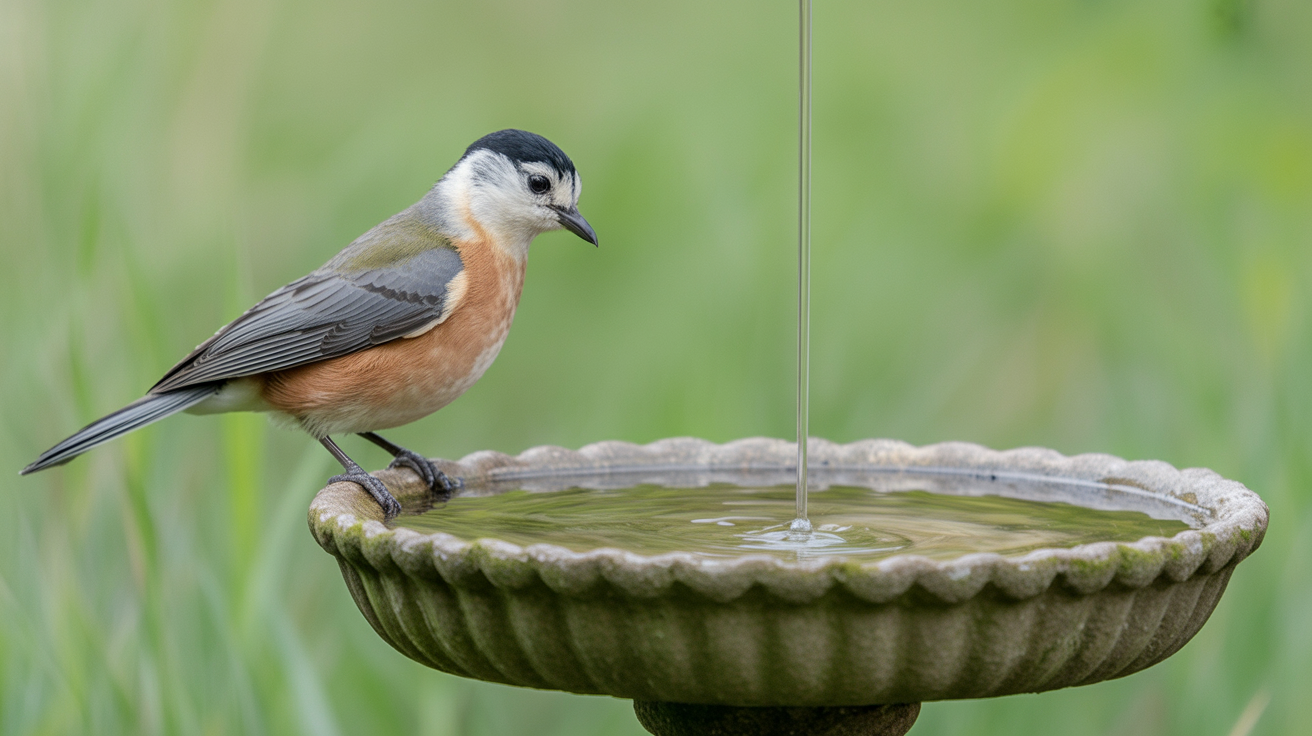
A well-placed bird bath can pull in more species than an additional feeder ever will. Water is the one thing birds need every single day, and once you learn a few straightforward bird bath tips, species that ignore your seed setup entirely will start showing up regularly.
Why Water Works Better Than You Might Expect
Seed feeders attract seed-eaters: finches, sparrows, chickadees, doves. That's a solid list, but it leaves out a huge portion of your yard's bird life. Warblers, thrushes, orioles, catbirds, and most native flycatchers rarely touch seed at all. Every one of them needs fresh water, though, and many are bolder at a bath than at a crowded feeder.
The physics of bird drinking matters too. Most passerines can't absorb water through their skin; they must tip their head back after each sip to let it run down. They drink frequently throughout the day, especially during hot weather and dry spells. A reliable water source becomes a genuine hub of yard activity from early March through November across most of North America, and continues year-round in mild climates.
Adding water is also the most cost-effective upgrade for a yard that already has feeders. A basic concrete pedestal bath runs $25 to $60 and lasts decades. A high-quality glazed ceramic model costs $40 to $100. Even an upturned garbage-can lid on two stacked bricks works. The water matters far more than the container.
Choosing the Right Bird Bath
The market offers five main styles, each with genuine trade-offs.
| Type | Best for | Typical cost | Drawback |
|---|---|---|---|
| Pedestal (concrete) | General use, durability | $25–$60 | Heavy; hard to move or dump |
| Hanging bath | Small yards, decks | $15–$40 | Sways in wind; shallower capacity |
| Ground-level basin | Ground-foraging species (robins, thrushes) | $10–$35 | More exposure to cats |
| Heated bath (electric) | Winter use in freezing climates | $40–$90 | Ongoing electricity cost (~$5–$10/month) |
| Solar fountain bath | Moving water without wiring | $30–$80 | Fountain only runs in direct sun |
The single most important specification is depth. Birds want water they can stand in. The sweet spot is 1 to 2 inches at the center. Many decorative baths are deeper, sometimes 3 to 4 inches, which makes smaller birds nervous and reduces use considerably. If your bath is too deep, add a flat stone or a few large pebbles to create a shallower landing area.
Textured bottoms grip better than smooth glazed surfaces, which can send a wet bird skidding. Concrete and rough stone are naturally grippy. Glazed ceramic and plastic get slippery when wet; a layer of fine gravel or a rubber bath mat cut to fit solves the problem.
Bird Bath Placement: Where to Set It Up
Placement determines whether birds find the bath safe enough to use, and it's where most people get it wrong the first time. A few principles:
Distance from cover. Position the bath 6 to 10 feet from shrubs or low-growing plants. This lets birds scan for danger from the bath rim, then reach cover quickly if a hawk appears. Placing the bath directly under a dense shrub saves wet birds the flight time, but it also gives cats a hiding spot right underneath. The 6-to-10-foot gap is a reasonable compromise.
Shade and sun. Partial shade extends how long water stays cool in summer and reduces how quickly algae grows. Full sun heats the water fast and speeds evaporation, so you're filling and scrubbing more often. Full shade stays cleaner longer but some birds seem to prefer visually open spots where they can watch for predators. Morning sun with afternoon shade is the practical ideal.
Visibility from the house. This sounds self-serving, but baths near a window you look out of regularly are baths you'll maintain. A bath you forget about for a week turns into a mosquito nursery and a disease risk for birds.
Height. Robins, towhees, and other ground-foraging species often prefer a bath set near ground level or on a low platform 6 to 12 inches up. Warblers and vireos tend to prefer slightly elevated baths, 18 to 30 inches high. If you're choosing one height, 18 to 24 inches (a standard pedestal height) is the broadest compromise.
If you're also working on your yard's overall bird appeal, the thinking in How to Attract More Birds to Your Yard covers how water fits into a broader habitat strategy alongside food and shelter.
Moving Water: Why It Matters and How to Add It
Still water works. Moving water works dramatically better. Birds detect the sound and sparkle of dripping or flowing water from considerable distances, and the motion attracts species that might walk past a silent bath entirely.
There are three practical ways to add movement:
Drippers. A simple garden-hose dripper or a gravity-fed reservoir ($8 to $25) creates a steady drip into the basin. The sound carries 15 to 20 feet on a still morning. Easy to set up, no electricity needed for gravity models.
Misters. A fine mist attachment fastened to a branch or feeder pole creates a misting zone. Hummingbirds, warblers, and finches fly through mist to cool down and wet their feathers in summer. Misters use more water than drippers and work best connected to a hose-timer.
Recirculating fountains. A small submersible pump ($15 to $35) cycles water through a fountain head or spitter. These run on standard current or solar power. The solar versions are convenient near garden beds but only flow when the sun hits the panel directly. Keep a spare pump impeller on hand; they tend to clog with debris and algae.
No matter which approach you choose, the movement prevents standing water from becoming stagnant as quickly, which is also why moving-water setups require slightly less frequent cleaning than static basins.
Keeping the Bath Clean and Safe
A dirty bath is worse than no bath — it can spread avian conjunctivitis (House Finch eye disease), salmonellosis, and trichomoniasis between birds. The cleaning cadence matters.
Every 2 to 3 days in summer: Dump, scrub with a stiff brush, and refill. You don't need soap for routine cleaning; plain water and a brush remove most biofilm. In hot weather, biofilm and algae establish within 48 hours.
Weekly: Mix a solution of 1 part bleach to 9 parts water, scrub the basin, let it sit for a minute, rinse very thoroughly, and let it air-dry before refilling. This kills bacterial films that plain scrubbing doesn't reach. The "rinse very thoroughly" part is non-negotiable; even dilute bleach residue harms birds.
Ongoing: Skim out leaves, feathers, and drowned insects before they decompose. A leaf skimmer or even an old slotted spoon left beside the bath makes this a 10-second task.
Mosquitoes lay eggs in standing water and larvae mature in about a week. If you're maintaining the bath on a 2-to-3-day cycle, you break the cycle before larvae can develop. A recirculating pump with movement also makes the water unsuitable for egg-laying.
One product many birders reach for is copper mesh or a few copper pennies dropped in the basin. There's anecdotal support for copper slowing algae, but the evidence is inconsistent. If you want chemical assistance, Wildlife Research Center's Kooler Bird Bath Protector and a few other enzyme-based additives are considered safe at label rates, though plain frequent scrubbing is more reliable than any additive.
Winter Bath Tips for Cold Climates
A heated bird bath is genuinely useful, not just a luxury, during hard winters. When natural water sources freeze, maintaining liquid water in your yard can make a real difference to resident species like Black-capped Chickadees, White-breasted Nuthatches, and Dark-eyed Juncos. These birds must find open water somewhere daily even in sub-zero temperatures.
There are two approaches:
Purpose-built heated baths. These have a built-in thermostat that activates only when the water temperature drops near freezing, typically consuming 50 to 150 watts. The API brand sells a reliable 150-watt model for around $40 to $55. Place it on a GFCI-protected outdoor outlet.
Add-on deicers. If you already have a concrete or resin bath you like, a submersible deicer ($20 to $35) drops into the existing basin. Check that the basin is rated for winter use; cheap resin cracks badly in repeated freeze-thaw cycles and concrete can spall if it's porous and holds water when it freezes.
Either way, keep the water at a normal bath depth (1 to 2 inches) rather than filling the bath to the brim. A large volume takes more energy to keep unfrozen.
For the broader picture on keeping birds healthy when temperatures drop, see Helping Birds Survive Cold Snaps and Snow.
Common Problems and How to Fix Them
Birds aren't using the new bath. Give it a few days; birds are creatures of habit and need time to notice a new feature. Add movement with a dripper. Make sure the bath is visible from a perch birds already use. If it's in full sun, try moving it.
The water turns green fast. Algae grows fastest in warm, sunlit, still water. Move the bath to partial shade, add a fountain pump, and scrub on a tighter schedule. A piece of barley straw in the basin (sold for pond use) slows algae growth through the growing season.
Cats are a problem. A smooth metal pole with a conical baffle below the basin makes it very difficult for a cat to climb. Alternatively, place the bath where cats can't hide within 6 feet: open lawn with no shrubs immediately adjacent. Ground-level baths in a yard with outdoor cats are high-risk for birds.
Sparrows are monopolizing the bath and driving off other species. House Sparrows are aggressive and can stake out a bath, particularly in urban settings. Two baths placed 15 to 20 feet apart often distributes traffic better than one. A second, slightly more secluded bath near plantings sometimes draws shyer species.
Pairing a water source with the right plant structure compounds the effect considerably. The article on native plants that attract birds covers which shrubs and perennials pair well with a bath to give birds the cover they want nearby.
Frequently Asked Questions
How often should I change the water in a bird bath?
In warm weather, every 2 to 3 days is the practical minimum. In cool spring or fall weather, every 3 to 4 days is usually fine as long as you can see the water is still clear. In direct summer sun, daily topping-off with fresh water (and a scrub every other day) keeps biofilm from establishing.
What depth of water do birds prefer?
One to two inches at the deepest point works for the widest range of species. Smaller birds, including warblers and chickadees, often won't wade into anything deeper than an inch. Adding a flat stone or a layer of pea gravel in a deep bath brings the effective depth into the right range.
Do I need running water, or does a still bath work?
A still bath works and will attract birds. Moving water works noticeably better, especially for non-seed-eating species. If you have to choose one upgrade, whether adding a feeder or adding a dripper to your existing bath, the dripper often brings in more new species.
Is it safe to use bleach to clean a bird bath?
Yes, at 1 part bleach to 9 parts water (roughly 1.5 tablespoons per gallon), followed by very thorough rinsing and air-drying. The key is the rinse: run clean water over every surface until you can't smell bleach. Don't let birds use the bath until it's completely dry.
Can I put a bird bath in full shade?
You can, and it stays cleaner longer. The trade-off is that shaded baths see less bird activity in some yards; birds seem to prefer baths where they have a clear sightline to spot approaching danger. Dappled shade is better than deep shade; morning sun with afternoon shade is the most practical middle ground.