Seasonal Birding
Should You Take Feeders Down in Bear Season?
Bird feeders and bears are a real conflict in many regions. Here's when to pull your feeders, what makes them attractive to bears, and how to keep feeding go...
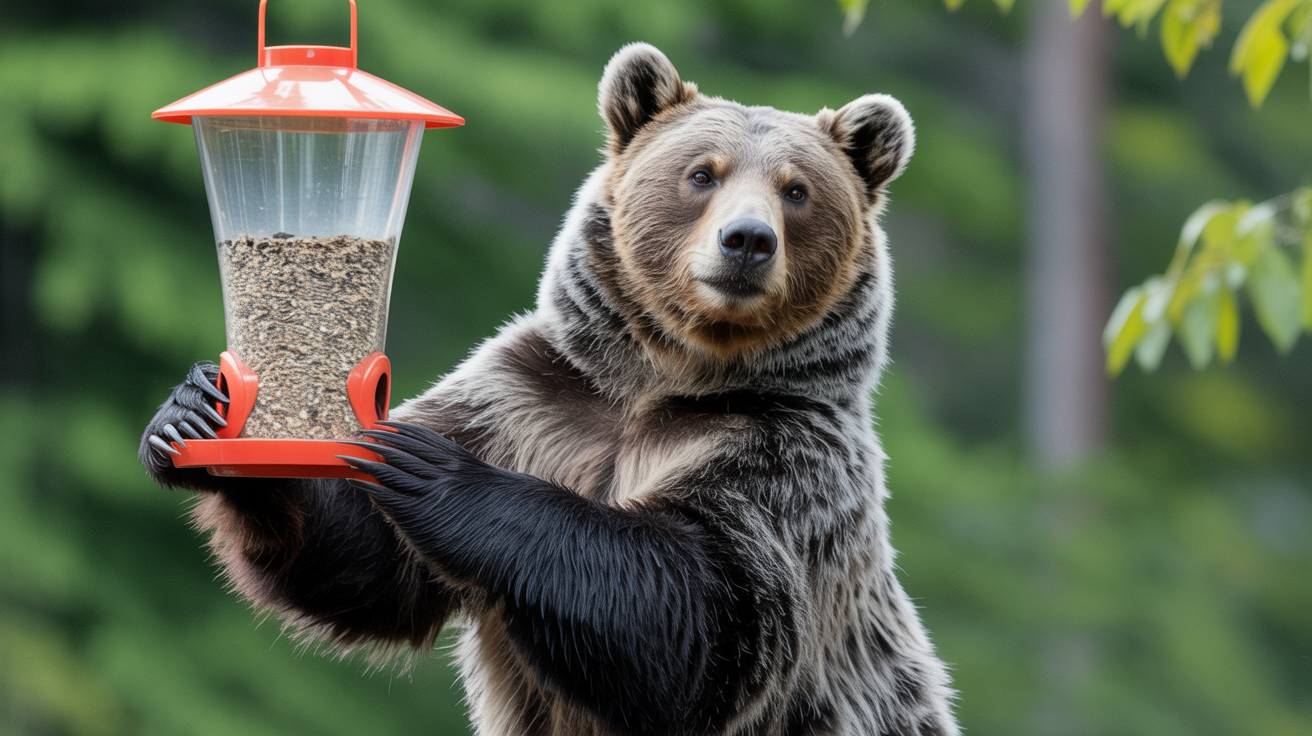
If you live in bear country, yes -- you should take your feeders down for part of the year. Bird seed is high in fat and calories, and black bears learn fast that feeders are an easy meal.
The good news is that with a bit of planning you can protect both your yard setup and the bears, and still keep feeding birds through the seasons that matter most.
Why Bears Target Bird Feeders
Black bears are opportunistic eaters. They spend most of their active months building up fat reserves before winter, and a tube feeder packed with black oil sunflower seed or a suet cage is the caloric equivalent of finding a free buffet. Bears can detect food from over a mile away, and once one discovers your feeder, it will return -- often nightly -- until the food source disappears.
The problem goes beyond a knocked-over feeder. A bear that finds food in a yard quickly loses its wariness around people and structures. Wildlife managers call this "food conditioning," and it almost always ends badly for the bear. Relocating a food-conditioned bear rarely solves the problem; they tend to return or find new food sources in the new area. In many cases, a bear that repeatedly raids properties is eventually euthanized. Removing the food source -- your feeder -- is genuinely the most effective way to protect the bear.
Spilled seed on the ground compounds the problem. A bear that cleans up under your feeder can get a substantial meal without even reaching the hanging hardware. If you do keep feeders up during low-risk periods, regular ground cleanup matters.
When to Remove Feeders: Regional Timing
There is no single national calendar for bear activity because it varies by climate and latitude. The general rule is that bears are most active from the time they emerge from their dens in spring through the time they re-enter in late fall. In most of the lower 48, that window runs roughly April through November or December.
Here is a simple regional breakdown:
| Region | Typical Active Season | Feeder Risk Period |
|---|---|---|
| Northeast (MA, CT, NJ, NY, VT, NH, ME) | April -- November | April through Thanksgiving |
| Mid-Atlantic (PA, MD, WV, VA) | March -- December | April through November |
| Southeast (NC, TN, GA, SC) | March -- December | March through December |
| Upper Midwest (MN, WI, MI) | April -- November | April through November |
| Rocky Mountains / West | March -- November | April through October |
| Pacific Northwest | March -- November | April through October |
Some states have made the guidance official. Massachusetts, New Jersey, New York, and Connecticut have all issued seasonal advisories asking residents in bear-inhabited areas to take feeders down during the active season. A few states or municipalities go further and issue temporary feeding bans when bear activity spikes.
Check with your state wildlife agency for the specific dates and any local regulations. The agency sites for most northeastern and mid-Atlantic states publish annual reminders, and many allow you to sign up for bear activity alerts by county.
The Simplest Approach: Bring Feeders In for the Season
For most backyard birders in bear country, the cleanest solution is to take feeders down entirely from roughly April through late November. This period covers peak bird feeding season less than you might think. Spring and summer are actually the months when most wild birds rely least on supplemental feeders -- natural food is abundant, insects are everywhere, and most species are raising young on a diet that is heavy in protein rather than seed.
The months when feeders genuinely matter most for birds are late fall and winter, which is exactly the time bears are denning. You can read more about that in our guide to how to feed birds in winter and what to set out during cold stretches in helping birds survive cold snaps and snow.
Taking feeders in for spring and summer also removes the maintenance burden of keeping seed dry and fresh through humid months. Seed that sits in a feeder through July and August often molds or ferments, which can make birds sick. So the hiatus is good for birds as well as bears.
Bear Proof Bird Feeding: Options If You Want to Keep Feeding
Some birders in bear country have successfully kept feeders up year-round by using a combination of placement, hardware, and timing adjustments. This approach takes more effort and is not foolproof, but it is possible in areas with lower bear pressure.
Height and clearance
A feeder needs to hang at least 10 feet off the ground AND at least 4 feet away from any trunk, branch, or structure a bear could climb. Bears are strong enough to pull down branches, so a feeder hanging 10 feet up but close to a limb is not secure. Very few yard setups can meet both requirements without installing a dedicated post or pulley system.
Baffles
A metal baffle mounted below the feeder on a smooth pole can prevent bears from climbing to it, but only if the pole is placed well away from trees and fences. The same baffles used for squirrels do not provide enough deterrence for a bear. Look for wide, dome-style metal baffles rated for larger animals.
Bring feeders in at night
Bears are most active at dawn, dusk, and overnight. If you take feeders inside each evening before dark and put them back out after sunrise, you remove the majority of the risk without giving up daytime bird activity entirely. This is labor-intensive but effective.
Avoid the most attractive foods during active season
Suet, peanut butter, and peanuts are particularly high in fat and have a strong scent. Plain nyjer (thistle) seed is somewhat less attractive to bears than sunflower or mixed seed. Switching to nyjer-only during spring and early fall can reduce risk slightly, though it is not a complete solution.
Switch to habitat instead
Spring and summer are the best time to invest in the yard features that attract birds without a feeder at all. Native berry-producing shrubs, brush piles, a shallow water source, and leaving some leaf litter for ground foragers can all bring birds in through the warm months when bears are active. When birds arrive for spring migration, they are often more responsive to good habitat than to a feeder anyway.
What to Do If a Bear Has Already Found Your Feeder
If a bear has already visited once, take the feeder down immediately -- not tomorrow, that night. A single food reward is enough to establish a habit. Clean up all spilled seed from the ground, which may mean raking or even removing the top layer of soil if seed is scattered widely. Wash the feeder before storing it so the scent does not continue to draw the bear.
Do not put the feeder back up until bears have denned for winter in your area. If you put it back up too soon and the bear returns, it reinforces the habit further.
Report the visit to your state wildlife agency if the bear came close to the house or showed any aggression. Most agencies track bear sightings and can advise on whether the animal is a known problem bear in the area.
Frequently Asked Questions
Does taking down feeders mean birds will go hungry?
During spring and summer, no. Wild birds have access to abundant natural food through the warm months and do not depend on backyard feeders the way they do in winter. You can safely take feeders in from April through November without harming your local bird population. The birds that stick around will find insects, berries, and other natural sources with no trouble.
What if I only see bears occasionally in my neighborhood?
Occasional sightings still mean bears are present and moving through the area. Once a bear finds a food source, occasional presence can become regular visits very quickly. The safest approach is to treat the whole active season as a feeder-free period rather than waiting for a bear to show up at your specific yard.
Can I keep a hummingbird feeder up during bear season?
Hummingbird feeders are a real attractant. The sugar water has a strong scent and bears have been documented raiding them regularly. If you want to keep hummingbirds coming through, the bring-it-in-at-night approach works reasonably well, since hummingbirds stop feeding at dusk anyway. Take the feeder inside each evening and put it back out after sunrise.
Are there feeders that are truly bear-proof?
No commercially available bird feeder is genuinely bear-proof. A determined adult black bear can apply several hundred pounds of force and will eventually get through most hardware. The more accurate term is "bear-resistant." Height and clearance are more reliable than feeder design alone.
When is it safe to put feeders back out in fall?
Most wildlife agencies suggest waiting until bears have denned in your area, typically after the first hard frosts settle in and nighttime temperatures drop consistently below freezing. In the Northeast and upper Midwest, late November to early December is usually safe. In warmer parts of the country, this window is shorter or may not exist at all. When in doubt, check with your state wildlife agency for local guidance.