Identifying Birds
Male vs Female Birds: How Plumage Differs
Learn how to tell male and female birds apart using plumage, color, and pattern clues. A practical backyard birder's guide to bird sexual dimorphism.
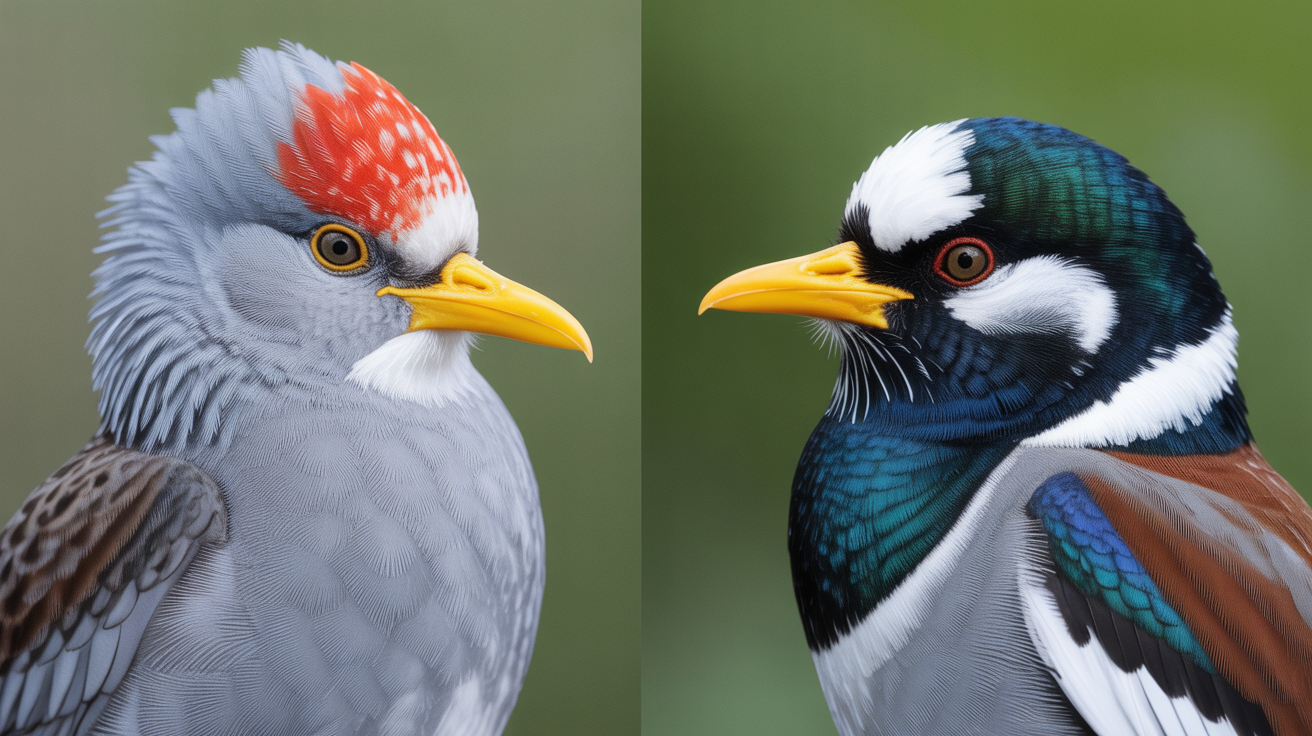
In most backyard species, males and females look noticeably different from each other, and once you start paying attention to those differences, your whole feeder scene becomes easier to read. This guide breaks down how and why plumage varies between the sexes, with practical tips for common yard birds.
At a Glance
- Sexual dimorphism just means the sexes look different. It's strongest in species where males compete visually for mates and females do most of the incubating.
- Easiest IDs: cardinal, goldfinch (breeding season), house finch, downy/hairy woodpecker.
- Hardest IDs: blue jay, black-capped chickadee. These are essentially monomorphic and need behavioral cues, not plumage, to sex reliably.
- Season matters. Many "easy" species get much harder outside breeding plumage, especially the American Goldfinch, which loses its black cap and bright yellow by fall.
- First-year males often resemble females and only reach full adult coloring after a molt or two.
- When plumage fails, check the bill and body shape. These don't change with season or sex the way color does.
What Is Sexual Dimorphism in Birds?
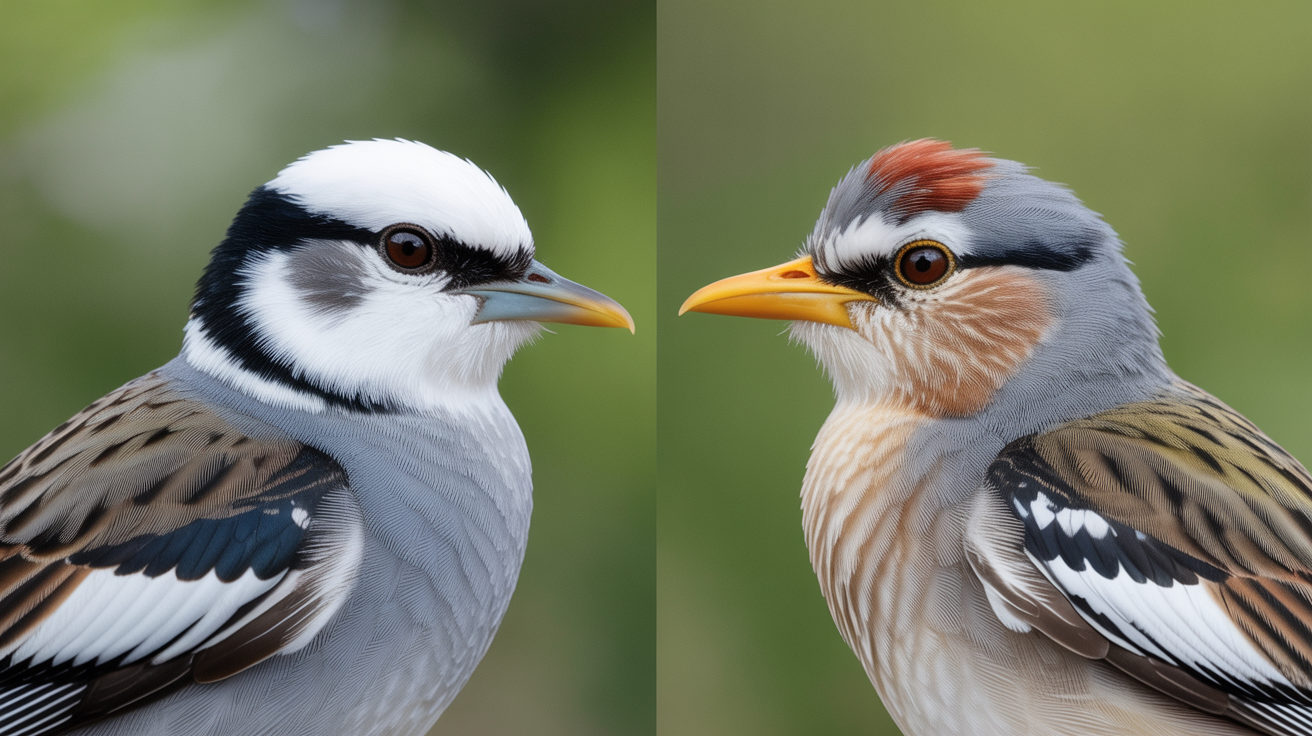
Sexual dimorphism simply means the two sexes of a species look different. In birds, this shows up most often in plumage color and pattern, though size, bill shape, and even posture can also differ.
The degree of dimorphism varies a lot. Some species are strongly dimorphic, where males are boldly colored and females are drab. Others are nearly identical, and you need behavioral cues or careful observation to sort them out.
The main driver is mate selection. Males in many species attract females by displaying bright feathers, so natural selection has pushed males toward vivid colors over generations. Females, who often shoulder the primary incubation duties, benefit from camouflage that makes them harder to spot on a nest.
A few important caveats before you start applying these patterns:
- Not every species follows the "bright male, drab female" rule. In some groups it flips.
- Juvenile birds add a layer of complexity. First-year males often look much more like females and only develop full adult plumage after their first or second molt.
- Molts matter too. Some species have distinct breeding (alternate) and non-breeding (basic) plumages, so the same bird can look quite different in June versus December.
Common Backyard Birds: Males vs Females
The best way to build a mental library is to study specific species side by side. Here are some of the birds most likely to show up at a North American feeder, organized by how obvious the difference is.
Strongly Dimorphic Species
These are the easiest to learn because the contrast is stark.
Northern Cardinal The male is entirely red with a black face mask. The female is buff-brown with reddish tinges on the crest, wings, and tail, and she has the same distinctive crest shape. Many beginners initially mistake female cardinals for a different species entirely.
American Goldfinch In breeding plumage, the male is bright canary yellow with black wings and a black cap. The Audubon Field Guide describes the contrast plainly: the "summer male American Goldfinch is distinctively bright yellow with black wings, tail, and forehead," while the "summer female" is "duller yellow-green" and winter birds of both sexes fade to "yellowish-brown to gray." That seasonal collapse in contrast is exactly why so many people think they've lost their goldfinches every fall.
Ruby-throated Hummingbird Males have the iridescent ruby-red gorget (throat patch) that gives the species its name. Females have a plain white throat. This one is a common source of confusion at nectar feeders in late summer, when juvenile males look similar to females.
Indigo Bunting Males in breeding plumage are a saturated blue that looks almost painted. Females are plain brown with faint streaking. The male's blue is structural color, meaning it appears bright in good light but can look quite dark or dull in shade.
Moderately Dimorphic Species
Downy Woodpecker and Hairy Woodpecker In both species, males have a red patch on the back of the head; females do not. Otherwise they look nearly identical to each other within each species.
House Finch Males have red coloring on the head, breast, and rump, though the intensity varies a lot based on diet, with some males running more orange or yellow instead. The Audubon Field Guide notes males show a "red eyebrow and forehead" with red on the throat and chest, while females have "rather plain brown faces" and blurry streaking on pale underparts, a contrast sharp enough to sex most birds at a glance even when the male's red is on the pale side. For more detail on separating finch species at your feeder, see Identifying Backyard Finches: Goldfinch, House, and Purple.
Red-winged Blackbird Males are jet black with red-and-yellow shoulder patches that they can puff up or flatten depending on their mood. Females are heavily streaked brown and white, and many beginners confuse them with large sparrows.
Subtly Dimorphic Species
American Robin Males have a darker, richer orange-red breast and a more uniformly dark head. Females are slightly duller overall. The difference is real but subtle, and the two often look similar at a glance.
Blue Jay Males and females are essentially identical in plumage. Size can differ slightly, but you won't sort them reliably in the field by looks alone.
Dark-eyed Junco Most subspecies show only minor differences. In the common "slate-colored" form, males are sharply slate-gray and white while females are brownish-gray, but the variation within the species is wide enough that it takes practice.
Quick Reference Table
| Species | Male | Female | Difficulty |
|---|---|---|---|
| Northern Cardinal | All red, black mask | Brown with red tinge | Easy |
| American Goldfinch (breeding) | Bright yellow, black cap | Olive-yellow, no cap | Easy |
| House Finch | Red-orange head and breast | Streaked brown, no red | Easy |
| Downy Woodpecker | Red patch on nape | No red patch | Easy |
| Red-winged Blackbird | Black with red shoulder | Streaked brown | Moderate |
| American Robin | Rich orange breast, dark head | Duller, brownish head | Moderate |
| Blue Jay | Same as female | Same as male | Hard |
| Dark-eyed Junco | Slate-gray and white | Brownish-gray and white | Moderate |
When Plumage Changes: Molt Timing
Knowing when a species molts explains a lot of the "why did this bird suddenly look different" confusion.
| Species | Bright/breeding plumage window | Dull/basic plumage window |
|---|---|---|
| American Goldfinch (male) | Roughly March to August | September to February |
| Indigo Bunting (male) | April to August | Fall and winter; looks patchy brown mid-molt |
| Ruby-throated Hummingbird (juvenile male) | Gorget feathers grow in gradually through late summer | Looks female-like until the first full molt |
| House Sparrow (male) | Spring and summer; bold black bib | Fall and winter; fresh feather tips mute the bib |
| Northern Cardinal | Year-round, minimal seasonal change | Same, no dull phase |
Why Females Are Often Brown and Streaked
It's worth pausing on this because the pattern shows up so consistently. Streaked brown plumage is not boring; it's functional. A female cardinal sitting on a nest in a shrub is genuinely hard to pick out, while a bright red bird in the same spot would draw attention from every passing hawk.
This trade-off is part of why bird plumage differences between sexes tend to be more pronounced in species where females do most of the incubating. In species where males share incubation equally, the two sexes tend to look more similar, since males also benefit from being cryptic on the nest.
There are exceptions. Phalaropes are the classic case: females are more colorful and males do the incubating. The same logic applies, just reversed.
Seasonal Plumage Changes Complicate the Picture
If you watch your feeders year-round, you will run into the same bird looking quite different in different seasons. This is normal and expected.
The American Goldfinch is the classic example for backyard watchers. In late summer and fall, males molt out of their bright breeding plumage into a dull olive coat that closely resembles the female. By late winter and into spring, they molt back into bright yellow. The transition is gradual, and you will sometimes see patchy-looking birds that are mid-molt.
House Sparrows show a similar but subtler shift. Males have a bold black bib in breeding season; in fall and winter, fresh feather tips obscure the black, making the bib look smaller until those tips wear off.
If you want to get solid on the birds most likely to visit before digging into plumage details, how to identify common backyard birds is a good starting point.
Tips for Telling Male and Female Birds Apart at the Feeder
A few practical habits that help:
Watch pairs together. When a male and female of the same species are at the feeder at the same time, the comparison is immediate. Chickadees often travel in loose flocks, but cardinals and goldfinches frequently visit as mated pairs in spring.
Check the head first. Head color and pattern are often where the clearest differences show. Look for patches, caps, masks, or streaking before moving to the body.
Note the throat. Many songbirds show their most distinctive markings on the throat and breast. The ruby-throated hummingbird gorget is one example, but male warblers often have bold throat colors that females lack.
Don't assume "brown and streaked" means sparrow. Several species with brown females get misidentified as sparrows. Female house finches, female purple finches, and female red-winged blackbirds all get lumped into "random brown bird" by newer birders. If you find yourself with a brown streaky bird you can't place, check the bill shape and habitat alongside the plumage. Speaking of sparrows, how to tell common sparrows apart covers the genuine sparrows in detail.
Use the bill and size as anchors. When plumage alone doesn't resolve it, the bill shape rarely lies. A conical seed-cracking bill points to finches, sparrows, and buntings. A thin, pointed bill suggests a warbler or vireo. Confirming the family first narrows the field.
Log what you see, even the uncertain ones. Keeping a running note of which sex you saw, when, and at which feeder builds a pattern over a season that a single sighting never will. A pair that visits together in March and April is almost always male and female of the same species, which is a faster confirmation than plumage alone in tricky cases.
Frequently Asked Questions
Why do males sing more than females in most species? In most North American songbirds, males do the bulk of territorial and mate-attraction singing, which tracks with their brighter plumage. Both are outward signals aimed at other birds. That said, females of many species do sing. Female Northern Cardinals sing regularly, and female robins produce quieter versions of the male song. Plumage dimorphism and singing are correlated but not a strict pair.
Do juvenile males look like females? Often, yes. Many species have a first-year plumage where young males resemble adult females. First-year male grosbeaks, for instance, have faint rosy patches but lack the crisp black and white of adult males. Most birds acquire full adult plumage by their second year.
If both birds look the same, how can I tell them apart? For monomorphic species like Blue Jays or Black-capped Chickadees, behavioral cues help. During breeding season, the bird on the nest is typically female. One bird crouching and fluttering to solicit food from a partner is usually female as well. Outside of breeding season, reliably separating the sexes in these species is not possible in the field without banding data.
Does brighter mean healthier? Often, yes, in males of dimorphic species. Brighter coloring in house finches tracks with diet, since the pigments that produce red and orange feathers come from food rather than being made by the bird itself, so a more intensely red male has generally found better food during his molt. Females tend to prefer brighter males, which is part of why the pressure for vivid male plumage persists.
Can lighting affect how bright a bird looks? Yes. Structural colors like the blue of an Indigo Bunting or a hummingbird gorget depend on light angle, so the same bird can look nearly black in shade and electric blue in direct sun. Getting the bird in good light is often the difference between a puzzling brown blob and a clear ID.
Why does my male goldfinch look almost green in October? That's the fall molt, not a different bird or a sign of illness. Male American Goldfinches drop their bright yellow breeding feathers in late summer and grow in a duller olive coat for fall and winter, closely resembling the female until the black cap and bright yellow return the following spring. If you're only feeding nyjer in October and the flock looks uniformly drab, that's expected, not a red flag.
Is it worth learning to sex birds if I'm just a casual backyard watcher? It changes what you notice at the feeder more than most beginners expect. Once you can reliably tell a male cardinal from a female, you start picking up on pair behavior: who's guarding the feeder, who's dropping to the ground for spillage, which bird disappears toward a nest site after feeding. None of that requires more equipment or study time than learning the color patterns already covered here. It's the same skill applied a little further, and it tends to be the point where casual feeder watching turns into genuine birding.