Getting Started
How to Start Watching Birds From a Small Yard or Balcony
No yard, no problem. Learn which feeders work on a railing or window, what to ask your landlord first, and which birds actually show up.
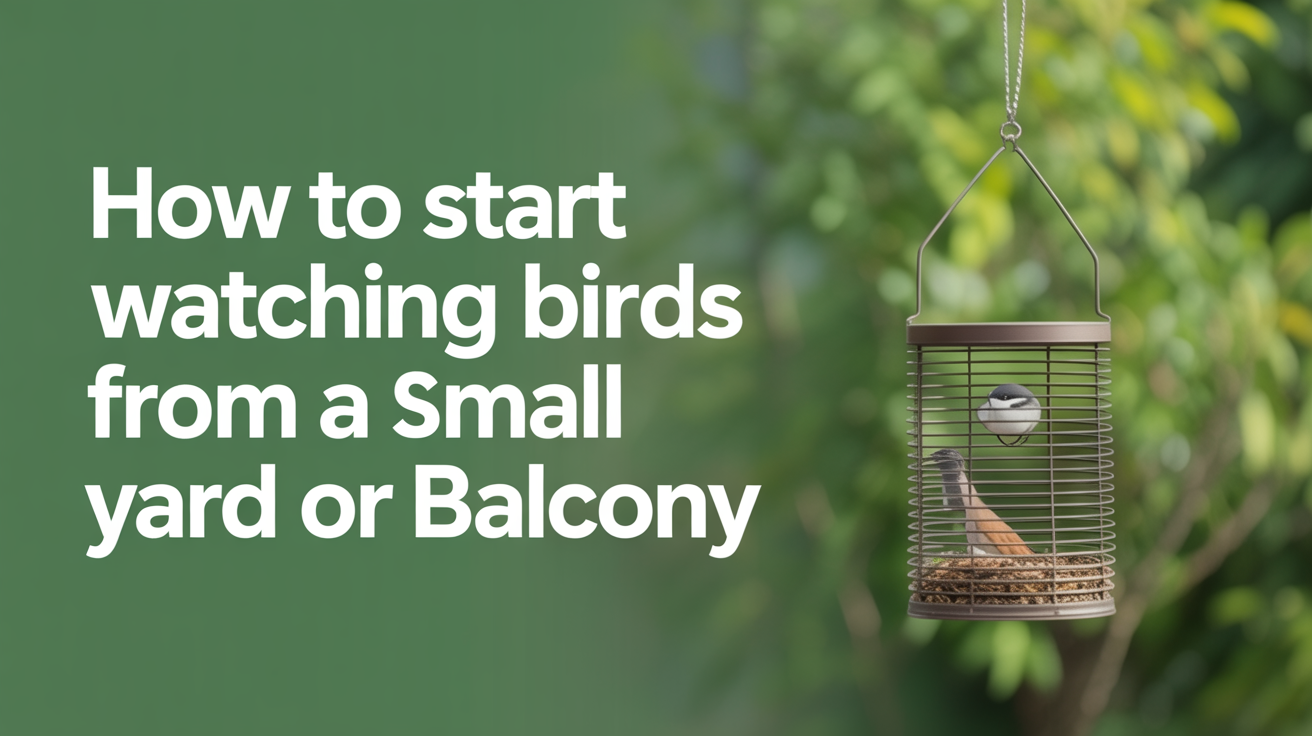
You don't need a quarter acre and a row of oak trees to get good at balcony birdwatching. A third floor railing, a window ledge, or even a small patio table can pull in a steady rotation of visitors once you set things up with care. Birds in cities and suburbs are used to working small spaces for food, and a balcony with the right feeder in the right spot reads to them the same way a backyard does: a reliable place to eat.
This guide is for renters and apartment dwellers starting birdwatching with no yard to speak of. It covers feeder styles that hold up outside a window, what to square away with a landlord or HOA first, how to manage wind and mess, and which species to expect at height versus on the ground.
Feeder styles that actually work on a balcony
Not every feeder sold at the garden center is built for a railing or a pane of glass. You want something that mounts securely without damaging the building, holds up in wind, and doesn't require a shepherd's hook stuck into a lawn you don't have. Four styles cover almost every balcony situation.
Window feeders attach with strong suction cups directly to the glass. They put birds inches from your face, which is part of the appeal, but they need a clean, flat pane and a spot out of direct blasting wind or the cups can fail over time. Check and reseat the cups every few weeks.
Clamp-on tray feeders grip the top rail of a balcony like a c-clamp and don't touch the glass or siding at all, which makes them a safe bet if your lease says no drilling or adhesives. They tend to hold more seed than a window feeder and are easy to take down for cleaning.
Suction-cup platform feeders are a hybrid: a small tray or dish that sticks to a railing or window using the same cup mechanism as a window feeder, but sized more like a tray. Good for mixed seed and for birds that prefer to perch and look around rather than cling.
Hanging feeders on a bracket work if your balcony has any kind of overhang, pergola, or ceiling you can screw a small hook into. This is the closest thing to a traditional backyard setup and gives you the most feeder options, from tube feeders to suet cages, but it depends on having something overhead to hang from.
| Feeder type | Mounts to | Capacity | Pros | Cons |
|---|---|---|---|---|
| Window feeder (suction cup) | Glass | Small | Close-up views, easy to see from inside | Suction can fail in wind, needs a clean flat pane |
| Clamp-on tray | Railing | Small to medium | No drilling, HOA-friendly, easy to remove | Exposed to wind and rain from more angles |
| Suction-cup platform | Glass or railing | Small | Good for ground-feeding species, easy cleanup | Limited seed capacity, frequent refills |
| Hanging bracket feeder | Overhead structure | Medium to large | Most feeder variety, includes suet and tube styles | Needs an overhang or ceiling hook point |
If you're not sure which one fits your specific setup, the broader rundown in how to choose the right bird feeder walks through seed types and feeder mechanics in more depth than this list can.
What to check with your landlord or HOA first
This is the step people skip and then regret. Before you attach anything to a railing, window frame, or exterior wall, find out what your lease or HOA bylaws actually say. A few things worth confirming ahead of time:
- Whether anything can be affixed to the exterior of the building, including suction cups (some management companies genuinely object to these, usually over concerns about marks on glass or liability if something falls).
- Whether bird feeding is restricted at all. Some buildings have blanket no-feeding rules aimed at pigeons and rodents, and those rules don't usually distinguish between a rat and a chickadee.
- Whether there's a lower-floor neighbor who might get seed hulls or droppings on their patio. This is more of a courtesy check than a legal one, but it avoids a conversation you don't want to have later.
- Local ordinances in some cities also touch on wildlife feeding, so a quick look at your city's municipal code is worth the ten minutes if you want to be thorough.
None of this is meant to talk you out of it. Most buildings have no issue with a small feeder that isn't drilled into anything, and a clamp-on or suction style sidesteps most of the objections above. It's just worth asking rather than assuming.
Wind, weather, and the mess factor
Height changes the physics of bird feeding. A feeder that sits calmly in a backyard at ground level can swing and rattle several stories up, and that matters for both the birds and the seed.
Wind is the biggest practical problem. A poorly secured feeder can spill seed, swing hard enough to spook visitors, or detach entirely. Favor feeders with a low center of gravity, mount them on the side that gets less direct wind if you have a choice, and check hardware regularly rather than assuming a clamp or suction cup holds forever.
Mess is the concern most likely to affect your relationship with neighbors or a landlord. Seed hulls, especially from sunflower seed in the shell, pile up under a feeder. A shelled or no-mess blend cuts this down substantially since there's no hull left behind, and a small catch tray under the feeder plus a quick sweep every few days keeps things from building into a pile that draws complaints, or worse, rodents. Droppings are a smaller issue than people expect if the feeder isn't directly over a shared walkway, but it's still worth aiming runoff away from anywhere it'll bother someone else.
Realistic species: what shows up at height versus at ground level
Setting expectations early saves some disappointment. Birds that spend most of their time foraging on the ground, like juncos, towhees, and most sparrows, are simply less likely to visit a feeder three or ten stories up. They can find it, but it's not their preferred zone, and in a dense urban area many of them won't be present at all.
What does show up reliably at height tends to be the same cast of adaptable, feeder-savvy species that dominate backyard feeders everywhere: house finches, chickadees, and house sparrows are quick to find a new food source regardless of floor. Depending on your area and season, you may also pull in goldfinches, downy woodpeckers if there's suet on offer, and the occasional migrating warbler that stops to investigate.
If your balcony overlooks a courtyard with mature trees, or sits on a lower floor, you'll likely see a wider mix than someone facing pavement and rooftops. Proximity to any greenery, even a few street trees, makes a real difference.
For a broader sense of who's likely to visit and how to tell them apart once they arrive, the general approach in how to start backyard birding: a beginner's guide applies just as well to a balcony as it does to a yard, since most of it comes down to patience and paying attention rather than square footage.
Making the most of limited planting space
You don't need a garden to add habitat value to a balcony setup. A single planter with a native flowering species can pull in something a feeder never will, and a shallow dish of fresh water changed every day or two often draws more visitors than seed alone, especially in hot weather when standing water is scarce nearby. Even one or two pots near the feeder give birds somewhere to perch and look around before landing, which many species prefer over dropping straight onto an exposed feeder. Keep pots out of the direct feeder line if you're using a hanging or clamp style, since dropped seed in soil tends to sprout.
Getting the basics beyond the feeder itself
A pair of binoculars changes this hobby more than almost anything else you can buy, and at close balcony range you don't need anything expensive. If you haven't picked a pair yet, how to choose binoculars for birdwatching covers what actually matters at this range versus what's marketing. Beyond that, a notebook or a simple ID app and a bag of good seed cover most of what you need. For the small list of gear actually worth owning, the beginner birder's starter kit: what you actually need is a useful companion to this guide.
Frequently Asked Questions
Can I feed birds on an apartment balcony without a yard at all?
Yes. An apartment bird feeder mounted on a railing or window works the same way a backyard feeder does, just at a smaller scale and usually with less seed capacity, meaning more frequent refills.
Will a balcony feeder attract pigeons or pests instead of songbirds?
It can, especially if seed is left scattered on the ground below rather than contained in a tray. Using a no-mess or shelled seed blend, cleaning up spilled seed regularly, and choosing a feeder style with a catch tray reduces this risk considerably.
How high up is too high for birds to find a feeder?
There's no hard cutoff, but the higher you are, the more you'll skew toward flying, feeder-adapted species and away from ground foragers. Even very high floors can attract chickadees, finches, and sparrows within a season or two once the feeder becomes part of the local birds' routine.
Do I need to worry about noise complaints from bird feeding?
Feeders themselves are silent. Any noise comes from the birds, which is rarely loud enough to bother anyone, though a very active feeder near a shared wall might draw occasional chatter. This is a minor consideration compared to mess and building rules.
What's the single best small-space feeder for a first-time balcony birder?
A clamp-on tray feeder is the easiest starting point for most people. It doesn't require drilling or strong suction cups, holds a reasonable amount of seed, and is simple to remove for cleaning, which makes it a forgiving first purchase while you figure out what your particular balcony and local birds respond to.