Getting Started
How to Start Backyard Birding: A Beginner's Guide
Learn how to start backyard birding with simple steps: what gear you need, how to set up feeders, and which birds to expect first.
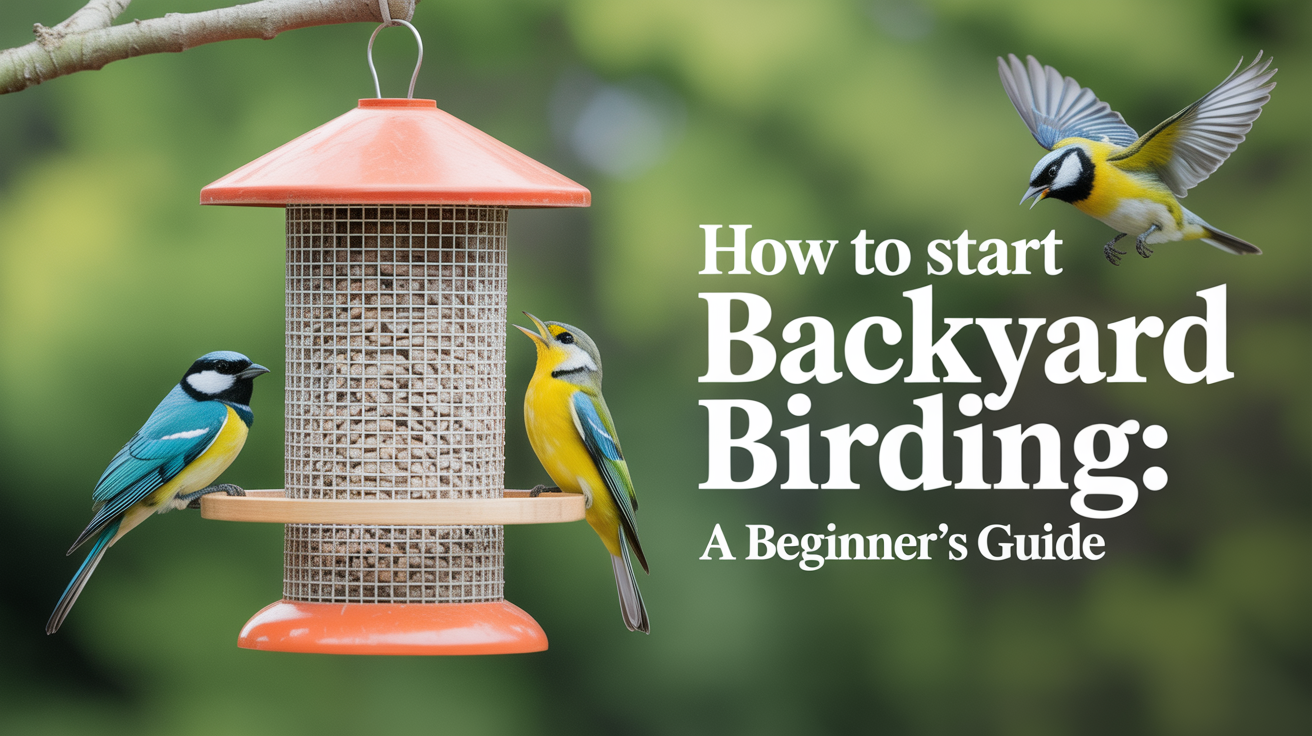
If you want to know how to start backyard birding, the honest answer is: you already have. The moment you noticed a flash of red at your window and wondered what it was, you were birding. The rest is just paying closer attention, and giving birds a reason to stick around.
This guide walks through everything a beginner needs to get going, from the first feeder to keeping a proper list. You don't need expensive equipment or a rural property. A suburban yard, a balcony, or even a window overlooking a tree can get you started.
Set Up a Feeder First
The fastest way to bring birds close enough to watch is food. A single feeder filled with the right seed will have visitors within a day or two in most neighborhoods.
Black-oil sunflower seed is the best all-purpose choice. It has a thin shell that small birds can crack, and high fat content that appeals to a wide range of species: chickadees, nuthatches, house finches, cardinals, juncos. A 10-pound bag runs about $8–$12 at hardware stores or garden centers.
Start with one feeder rather than four. A basic tube or hopper feeder mounted on a pole, or hung from a branch 5–6 feet off the ground, is enough. Once you know which birds are coming, you can add a suet cage for woodpeckers or a thistle sock for goldfinches.
A few placement notes:
- Keep feeders at least 3 feet from windows (so birds can't build speed before impact) or more than 30 feet away (so they have room to see the glass coming). The worst spot is 10–20 feet away.
- Put the feeder near shrubs or a tree. Birds need a staging area where they can wait and watch before flying in to eat.
- Keep cats indoors, or mount the feeder high enough that a cat can't ambush birds on the ground below.
Get a Basic Pair of Binoculars
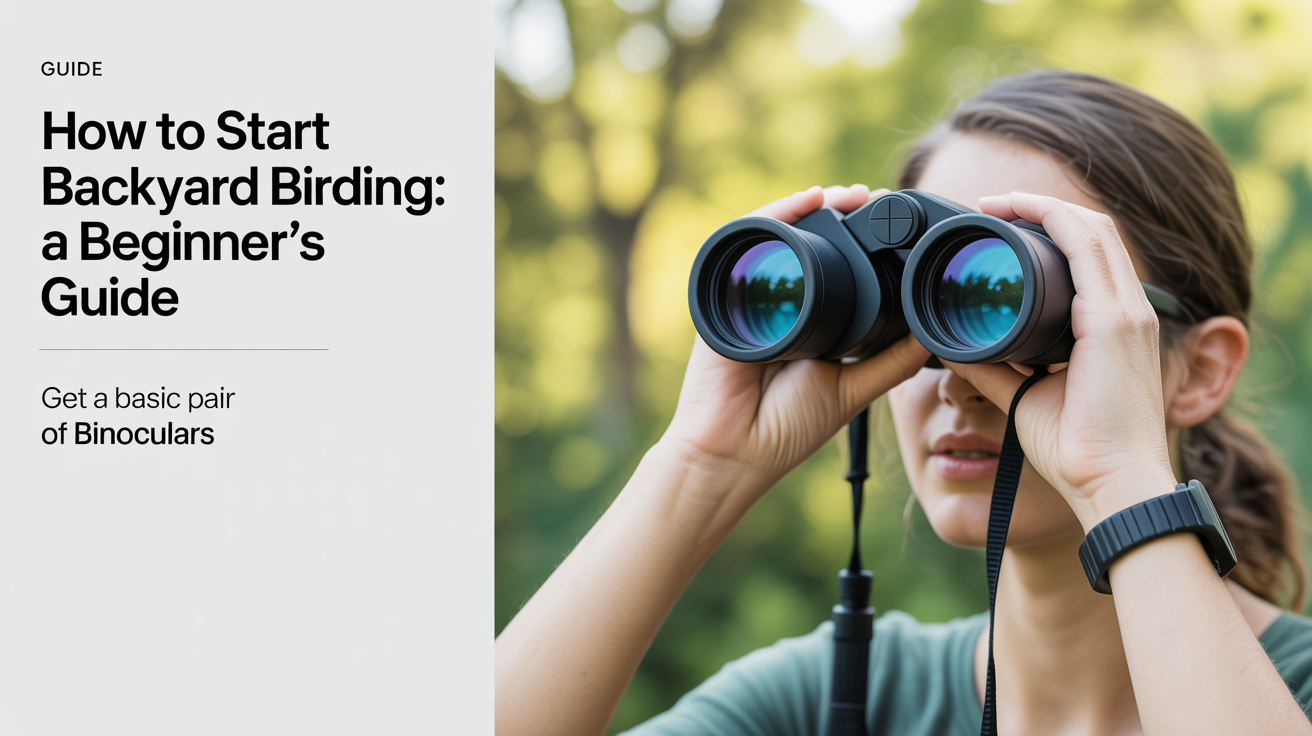
You can bird without binoculars, but you'll miss a lot of detail that makes identification satisfying. A cardinal is obvious at the feeder. The difference between a house finch and a purple finch is not — without glass, you'll never be sure.
For backyard birding, you don't need to spend much. A decent 8x42 pair in the $100–$180 range (Celestron Nature DX, Vortex Diamondback HD, or similar) gives you enough brightness and field of view for close-range yard work. The "8x" is magnification; "42" is the diameter of the objective lens in millimeters. That combination handles most lighting conditions without being too heavy to hold steady.
The key spec beginners ignore is close focus distance. Many cheap binoculars can't focus on anything closer than 20 feet. In a small yard, you want a pair that focuses at 8–10 feet. Check this before buying.
For a full breakdown of what to look for, see how to choose binoculars for birdwatching.
Learn Your Regulars First
Trying to identify every bird at once is discouraging. A better approach: focus on the 8–10 species most likely to visit your yard and get to know them cold.
Depending on your region and season, your starter list will probably include:
| Species | What to look for | Likely at feeder? |
|---|---|---|
| Black-capped Chickadee | Black cap, white cheeks, "chick-a-dee" call | Yes, sunflower |
| House Finch | Rosy red head/breast (male), streaky brown (female) | Yes, sunflower |
| American Goldfinch | Bright yellow in summer, olive-yellow in winter | Yes, nyjer/thistle |
| Dark-eyed Junco | Gray body, white belly, white outer tail feathers | Ground, millet |
| Downy Woodpecker | Small, black-and-white, tiny bill vs. Hairy's large bill | Yes, suet |
| Northern Cardinal | All-red male, crested brown female | Yes, sunflower |
| White-breasted Nuthatch | Blue-gray back, white face, climbs headfirst down trees | Yes, sunflower |
| American Robin | Orange breast, forages on lawn for earthworms | No, fruit/worms |
| Song Sparrow | Streaked breast with central spot, pumps tail in flight | Ground, millet |
| Mourning Dove | Buff-tan, long pointed tail, walks on ground | Ground, mixed seed |
Once you can name these ten confidently, every new bird becomes a reference point. "Smaller than a robin, bigger than a chickadee" is useful once you know what a robin and chickadee look like in the field.
A regional field guide helps more than a national one. Peterson's regional series and the Sibley guides are both good. The free Merlin Bird ID app from the Cornell Lab of Ornithology is genuinely excellent for beginners: you can enter what you saw (size, colors, behavior) and get a ranked list of candidates, or use the Sound ID feature to identify birds calling outside your window.
Add Water to Attract More Species
A birdbath pulls in birds that never touch seed feeders. Warblers, thrushes, and catbirds often show up at water but not at feeders, especially during spring migration. Even a shallow dish set on the ground works.
The one feature that matters most: moving water. A small dripper or solar-powered fountain that ripples the surface can triple the number of species using your bath. Birds locate water by sound as much as sight.
Keep it clean. A birdbath that sits for a week develops algae and bacteria and can spread disease among birds. Scrub it with a stiff brush every few days and refill with fresh water. In winter, a birdbath heater (about $20–$35) keeps water liquid down to -20°F and becomes one of the most visited spots in a frozen yard.
Depth matters more than people think. Most backyard birds want water no deeper than 1.5 to 2 inches at the deepest point. Large concrete basins that are 4 inches deep go mostly unused. If you have a deep bath, add flat stones so birds can stand without fully submerging.
Keep a Simple List
Writing down what you see, and when you first saw it, adds a lot to the experience. You don't need a formal system to start. A small notebook or the free eBird app on your phone works well.
Record the date, species, and a note about behavior or plumage if something seems unusual. Over months, you'll notice patterns: goldfinches arrive in October when the coneflowers go to seed, juncos appear the first week of November and leave in April, the first ruby-throated hummingbird of the year usually shows up around the same date each spring.
eBird, run by the Cornell Lab, also contributes your sightings to a global database used by researchers. It's a nice way to make casual backyard observations count for something larger.
For more on what gear makes birdwatching more manageable from day one, the beginner birder's starter kit covers the essentials without over-complicating things.
A Few Things Worth Knowing Early
Not every bird you see is findable in a guide. House sparrows, European starlings, and rock pigeons are introduced species that are everywhere but often left out of beginner guides focused on native birds. If you see a chunky brown bird with a streaked back crowding your feeder, it's almost certainly a house sparrow. If you see an iridescent black bird that seems too clever by half, it's a starling.
Window strikes are common and usually survivable. If you find a stunned bird under a window, place it upright in a shoebox with air holes and leave it somewhere quiet for 20–30 minutes. Most recover and fly off. If a bird is bleeding, has a broken wing, or doesn't recover after an hour, contact a licensed wildlife rehabilitator. Keep native wild birds is illegal under the Migratory Bird Treaty Act — the goal is always release, not keeping.
Cats are the largest human-related cause of bird death in North America, accounting for an estimated 1.3–4 billion birds per year in the U.S. (American Bird Conservancy, based on loss modeling studies). Keeping pet cats indoors is the single biggest thing a backyard birder can do for bird welfare beyond putting up a feeder.
As you get more comfortable with identification and behavior, it's worth reading up on birdwatching etiquette and ethics. There are a handful of norms around playback, nest disturbance, and reporting that most birders follow.
Frequently Asked Questions
How long does it take for birds to find a new feeder?
Usually two to four days in a suburban or residential area. Birds are constantly scanning for food sources, and word spreads quickly once one species finds a feeder. You can speed things up by placing the feeder near existing cover (trees, shrubs) and using fresh black-oil sunflower seed.
Do I need to feed birds year-round?
No. Supplemental feeding is most valuable in winter and during spring and fall migration, when natural food is scarce. In summer, most birds have abundant insects and berries and don't need your help. That said, feeding year-round isn't harmful to birds — the concern that birds will "become dependent" and stop finding their own food isn't supported by research.
What's the cheapest way to start backyard birding?
A basic tube feeder costs $10–$20. A 10-pound bag of black-oil sunflower seed runs $8–$12. The Merlin app is free. That's a workable setup. You can add binoculars and a field guide later once you know whether birding is something you want to invest more in.
Which birds come to feeders in winter?
In most of North America, winter feeder regulars include dark-eyed juncos, black-capped or Carolina chickadees, white-breasted and red-breasted nuthatches, downy and hairy woodpeckers, American goldfinches (in their drab winter plumage), and northern cardinals. In cold snaps, you may also get white-throated sparrows, American tree sparrows, and pine siskins.
Do I need a yard to watch birds at home?
No. A window feeder mounted on glass with suction cups works in apartments. Even a second-floor window overlooking a tree or park can produce good sightings, particularly during migration. Some of the most interesting urban birdwatching happens during May migration, when warblers moving through at night land anywhere green they can find.