Seasonal Birding
Fall Migration and Preparing Your Yard
Learn how fall bird migration works, which species pass through backyards in autumn, and practical steps to prepare your yard for fall migrants.
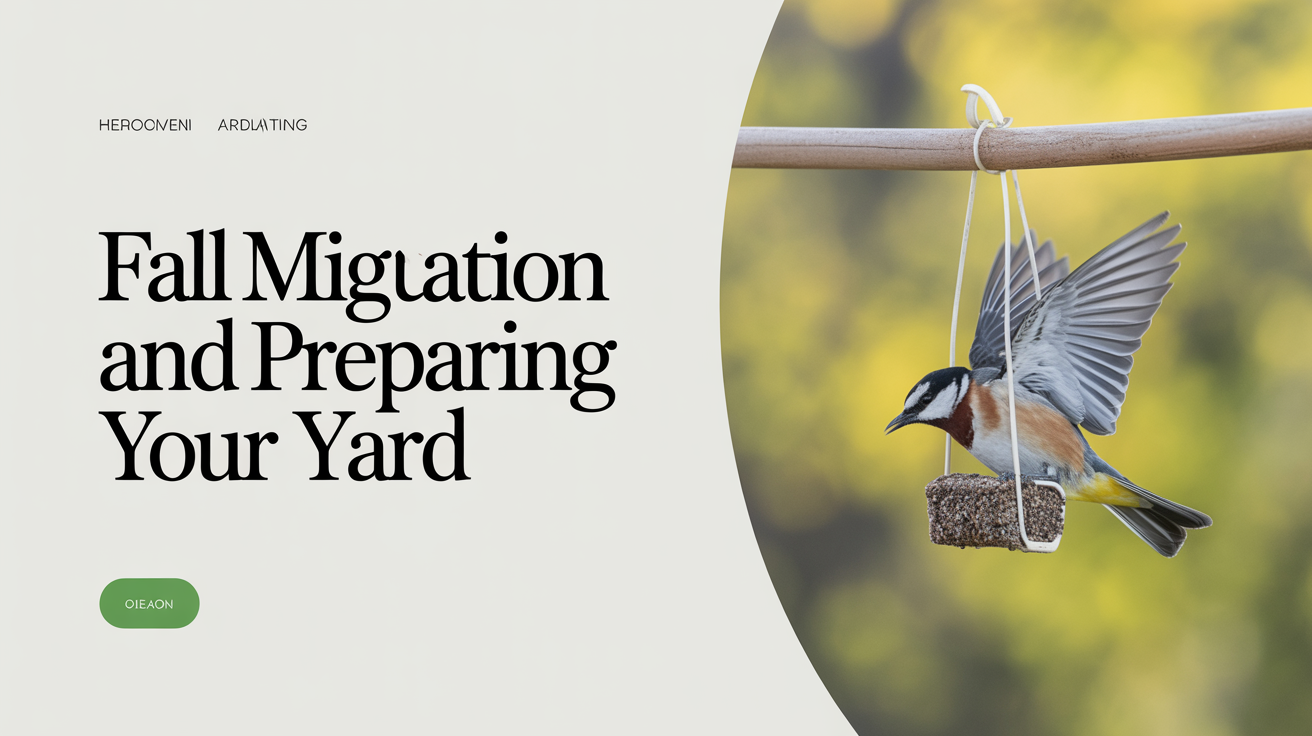
Fall bird migration turns an ordinary backyard into a stopover for dozens of species that may never visit any other time of year. A few simple changes to your setup can mean the difference between a one-day pit stop and a week-long stay.
How Fall Migration Differs from Spring
Most people picture migration as a spring event, and for good reason: northbound birds in breeding plumage are conspicuous and noisy. Fall migration is larger in raw numbers but far quieter. Juveniles make up a big share of the southbound traffic, and adults have molted out of their bright breeding colors. A lot of birders dismiss the fall as "just sparrows and warblers," but that undersells it considerably.
A few key differences worth knowing:
- Timing is stretched out. Spring migration in most of North America happens in a compressed window, roughly late March through May. Fall migration starts as early as July (shorebirds and some flycatchers) and runs through November for sparrows, hawks, and late-departing waterfowl. You have much more time to catch birds than you do in spring.
- Routes spread wider. Northbound birds funnel through specific corridors in spring. Going south, they scatter more broadly. Your yard may see migrants that never pass through on the return trip.
- Identification is harder. Juvenile plumages, worn adult feathers, and the absence of breeding song all make fall birds trickier to pin down. This is part of what makes autumn birding genuinely interesting for people who have learned spring identification.
- Refueling is the priority. Migrants are putting on fat, not finding mates. They want food and cover, not song perches.
Which Birds Pass Through in Fall
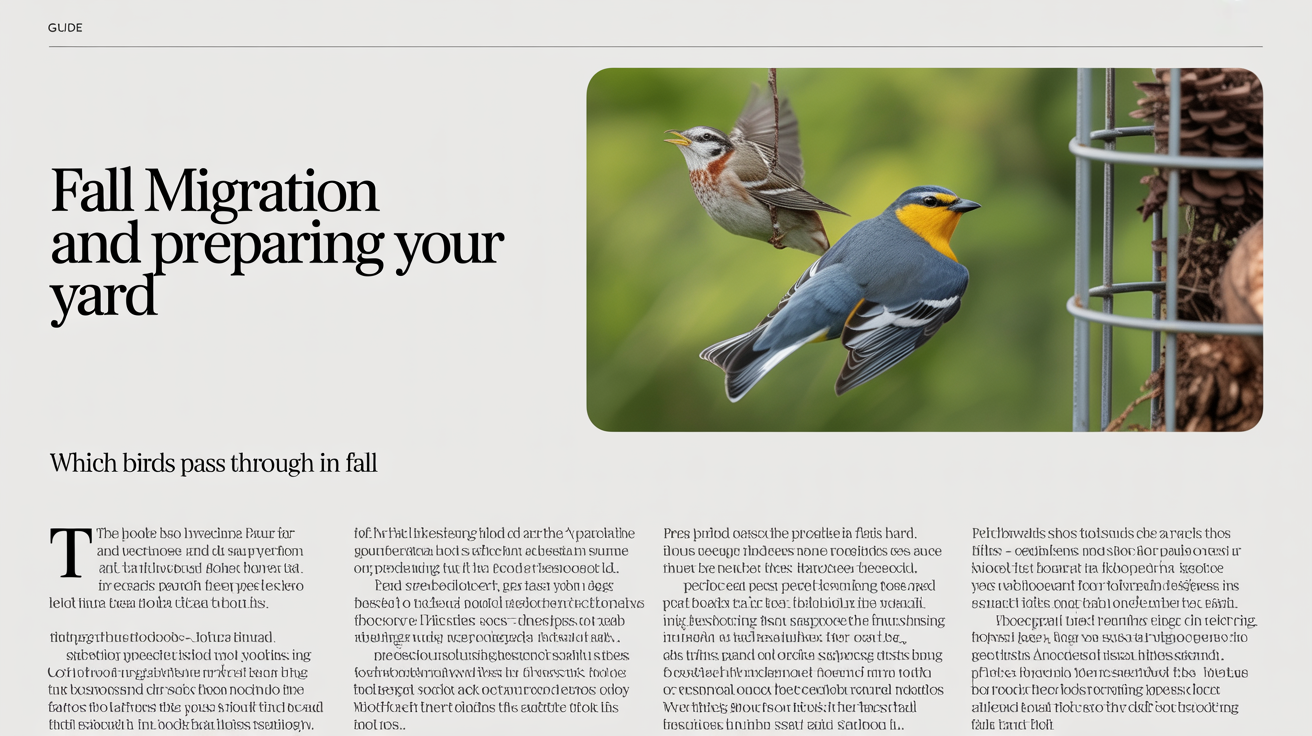
The exact species depends on where you live, but a few categories show up reliably in backyard settings across the continent.
Warblers move through in mixed flocks, often joining chickadee-led foraging groups. In fall they work through shrubs and low branches hunting insects, so a yard with native plantings gets far more action than a lawn with a feeder. Look for Yellow-rumped Warblers, which stay later than most, well into October in many regions.
Sparrows are the classic fall migrants at feeders. White-throated Sparrows, White-crowned Sparrows, Fox Sparrows, and Swamp Sparrows all move through and often linger for days or weeks. They scratch in leaf litter and low brush, so a brush pile or unmowed corner does more for them than a tube feeder.
Thrushes pass through largely at night and rest during the day in dense cover. Hermit Thrushes, Swainson's Thrushes, and Veeries are not feeder birds, but they will stop in yards with native fruiting shrubs like dogwood, viburnums, or serviceberry.
Hummingbirds in eastern North America are generally done by mid-September, but in the West and along the Gulf Coast, multiple species move through well into October. Keeping nectar feeders out a few weeks past your last sighting is good practice, especially if you want to catch vagrant western species that occasionally wander east.
Hawks and raptors do not visit feeders, but watching your sky from late September through October can turn up kettles of Broad-winged Hawks, Sharp-shinned Hawks, and Cooper's Hawks riding thermals south. If you notice all the yard birds go suddenly silent and scatter into cover, scan overhead.
Kinglets are tiny, energetic, and almost comically fearless. Ruby-crowned and Golden-crowned Kinglets show up in October and often move through conifer and shrub edges. They ignore feeders but are easy to attract with moving water.
Preparing Your Yard for Fall Migrants
The single most effective thing you can do for fall migration is leave things alone. This sounds counterintuitive, but:
Skip the fall cleanup. Seed heads on native grasses, coneflowers, black-eyed Susans, and sunflowers are direct food sources for finches and sparrows. The dried stalks also harbor insect eggs and larvae that fuel migrating warblers. Wait until late winter or early spring to cut back perennials.
Build or keep a brush pile. A loose pile of branches and woody stems in a corner of the yard gives ground-feeding sparrows, thrushes, and towhees a place to feed safely. It does not need to be tidy. A few layers of branches stacked over leaves is enough.
Add native fruiting shrubs if you have the space. Dogwood (Cornus spp.), native viburnums, winterberry holly, and serviceberry (Amelanchier) produce fruit that migrating thrushes and waxwings depend on. The payoff comes year after year.
Get your water feature running. A birdbath with a dripper or a small recirculating pump is probably the most reliable way to attract migrants that never visit feeders. Moving water produces sound, and migratory birds locked on to water sounds from a surprising distance. Clean the bath every two or three days to keep it fresh.
Check your windows. Fall migration is the season with the highest window strike rates, because many birds are unfamiliar with your yard's layout. If you have had strikes in previous years, put up external window tape or decals before migration peaks. Vertical stripes spaced about four inches apart break up the reflection effectively.
Feeder Strategy for Fall
Feeders matter less in fall than people expect, because so many migrants are insectivores that will not use them. Still, the right setup captures a different set of species and holds the birds that do arrive.
Sunflower seed in a tube or hopper feeder is the backbone. Black-oil sunflower draws chickadees, nuthatches, titmice, finches, and the occasional passing warbler that has learned to take seeds.
White millet scattered on the ground or on a low platform is the move for sparrows. White-throated Sparrows and juncos are almost exclusively ground feeders in the wild, and they spend most of their time scratching under feeders, not clinging to them.
Nyjer (thistle) in a sock or fine-mesh feeder keeps American Goldfinches on the property as they molt into their drab winter plumage. Pine Siskins, which are irruptive and unpredictable, also key in on nyjer.
Suet becomes more useful once temperatures drop. Early fall is still warm enough that suet can go rancid quickly; wait until overnight lows are consistently below 50 degrees Fahrenheit before putting out standard cakes. Then suet becomes a great resource for woodpeckers, nuthatches, and Brown Creepers.
Once the migrants have moved through, you will transition into feeding primarily your year-round residents and arriving winter visitors. The same setup that holds fall sparrows is a good foundation for feeding birds through winter.
Autumn Birding: Getting the Most from Migration Season
You do not need to travel to a famous hawk watch or coastal hotspot to have a real fall migration experience. Backyards see genuine volume if you know when and how to look.
Watch at first light. Birds that traveled overnight drop into cover at dawn. The hour after sunrise is typically the most active period, before the day warms and insects get moving enough to pull birds deeper into vegetation.
Listen before you look. Many fall migrants give thin, high-pitched call notes as they move through. Learning the flight calls of common species, particularly warblers and sparrows, unlocks a layer of observation that visual identification alone cannot provide.
Keep a simple yard list. Writing down species and dates over several seasons reveals patterns: which week the White-crowned Sparrows arrive, when the last hummingbird left, which year a late warbler lingered until October. This record becomes more useful the longer you keep it.
Connect the seasons. Fall's migrants are the same individuals you might see again at the feeders all winter if they decide to stay, or the same birds that will come back north in April. For more on what to expect as the calendar turns, spring migration brings a different set of visitors and behaviors.
During hard weather in fall, especially early cold snaps that catch migrants mid-journey, birds can be stressed and concentrated. A well-stocked yard becomes genuinely important for them. See how to help birds through cold snaps and snow for specifics on what to do when temperatures crash unexpectedly.
Frequently Asked Questions
When does fall bird migration start and end? The window is longer than most people realize. Shorebirds and some flycatchers begin moving south in late July. Warblers and vireos peak in August and September. Sparrows and finches move through October and into November. Raptors follow thermals south through October. In mild years, stragglers of several species push well past typical cutoffs.
Will leaving my feeders out extend my hummingbirds' stay too long? No. Hummingbirds migrate in response to day length, not food availability. Leaving feeders up will not delay their departure. It will, however, catch late migrants, including western species that occasionally turn up in the East. A good rule is to take feeders down two weeks after your last sighting of the season.
What is the best plant for attracting fall migrants? Native fruiting shrubs do more for fall migrants than any feeder. Among the most broadly useful are native dogwoods, viburnums, serviceberry, and winterberry holly. They produce fruit timed to migration and attract species that never visit seed feeders.
Why do I see more sparrows in fall than any other season? Sparrows breed across northern latitudes and boreal forests, habitats that produce enormous numbers of young each summer. Fall migration moves a large wave of first-year birds south. Many of them have never encountered a yard before, so they are less shy than the same species might be in winter after they have had time to learn the landscape.
How do I keep window strikes down during migration? External deterrents work; internal ones do not. Window films, tape patterns, or screens applied to the outside surface break up the reflection that birds see when they fly toward what looks like open sky. CollidEscape, Feather Friendly tape, and homemade patterns of vertical painter's tape all work, provided they are on the exterior glass and spaced closely enough, roughly four inches or less between vertical marks.