Nest Boxes & Nesting
Birdhouse Mistakes That Keep Birds Away
Find out the most common birdhouse mistakes that stop birds from nesting, and learn simple fixes to make your nest box irresistible.
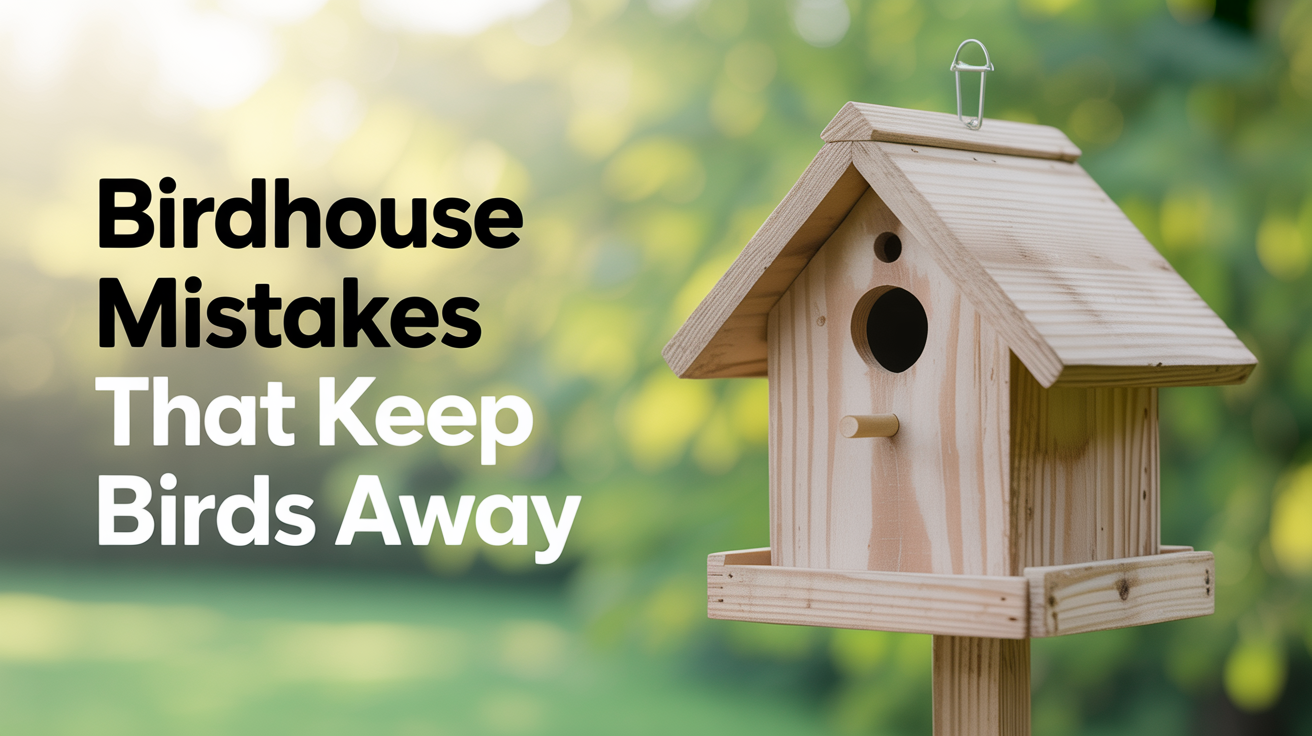
Put up a birdhouse last spring and watched it sit empty all season? You're not alone. Most birdhouse problems come down to a handful of fixable details that are easy to overlook.
The Wrong Hole Size for the Birds You're Trying to Attract
This is the single most common reason a birdhouse goes unused. Every cavity-nesting species has a preferred entrance hole diameter, and they pay close attention to it. A hole that's too large lets predators in and exposes the nest to weather. A hole that's too small simply won't be entered at all.
Bluebirds prefer a 1.5-inch opening. Chickadees and titmice want something closer to 1 1/8 inches. House wrens can squeeze through a 1-inch hole. Tree swallows are happy with 1.5 inches as well. Larger birds like wood ducks and common mergansers need a 4-by-3-inch oval.
Before hanging any box, figure out which species live in your area and size the hole to match. A box with a hole that's half an inch off from the target species' preference will be ignored in favor of a natural cavity or a neighbor's correctly sized box. See the full breakdown of entry diameters in our guide to nest box hole sizes for different birds.
Poor Placement
Location matters at least as much as the box itself. A birdhouse nailed to a fence post at the edge of a busy patio, facing the wrong direction, at the wrong height, or surrounded by dense brush is not going to get tenants.
Height: Most songbird boxes should hang between 4 and 8 feet off the ground. Bluebirds prefer 4 to 6 feet; tree swallows do well at 5 to 8 feet. Screech owls and wood ducks need boxes mounted 10 to 20 feet up. Getting height wrong by even a few feet can mean the difference between a nest and an empty box.
Facing direction: The entrance hole should generally face east or slightly southeast in North America. This shields the inside from prevailing afternoon heat in summer and keeps rain from driving in during storms. A box that faces west can overheat, killing eggs and nestlings.
Distance from feeders and people: Most cavity nesters want privacy. Mounting a box within 10 to 15 feet of a busy bird feeder or directly in a high-traffic part of the yard puts birds off. They want to feel safe approaching and leaving the entrance without running a gauntlet of commotion.
Open perch areas: Bluebirds and tree swallows hunt from perches near open grass. A box hemmed in on all sides by shrubs or hanging under a tree canopy is not what they're looking for, even if everything else about the box is right.
For a detailed walkthrough of siting decisions, read our guide on where to place a nest box for the best results.
Perches and Decorations That Invite Predators
Many commercially made birdhouses come with a decorative perch below the entrance hole. Birds that nest in cavities don't need them, and those little wooden dowels actively work against you. Starlings and house sparrows, both aggressive non-native species that will claim nest boxes and harass or kill native cavity nesters, are expert at using perches to grip the entrance while peering in.
Strip off any exterior perch before hanging the box. The same goes for ornate decorations, paint designs, and other exterior features that create rough edges or footholds. A plain, smooth exterior with no protrusions is the safest design.
While you're at it, check whether the box has adequate ventilation holes near the roof and drainage holes at the floor. Boxes that get waterlogged or trap heat are avoided by birds even if everything else is correct.
A Box That Can't Be Monitored or Cleaned
Birdhouses not used in a second season are often boxes that weren't maintained after the first. Old nest material harbors mites, blowfly larvae, and bacteria. A new pair of birds investigating a box stuffed with last year's straw or moss will almost always move on.
A quality nest box has a hinged or removable side or front panel that lets you open it up for inspection and cleaning. If your current box is fully sealed with no access point, that's a design flaw worth addressing before next season.
After nesting season ends, remove all old nesting material. Scrub the inside with a stiff brush and let it dry completely before closing it back up. Some birders use a very dilute bleach solution (roughly one part bleach to nine parts water) followed by thorough rinsing and drying. This is optional but helps if you've had a heavy mite load.
Monitoring during the season also tells you whether house sparrows are taking over. Sparrows build distinctive messy nests with grass, trash, and feathers that fill the entire box. When you find one, remove it promptly (house sparrows are not protected under the Migratory Bird Treaty Act). Consistent monitoring is what separates a successful nest box program from one that props up invasive species.
Materials and Construction That Work Against the Birds
Not all birdhouses are built with the birds in mind. Here's what to look for, and what to avoid:
| Feature | What works | What doesn't |
|---|---|---|
| Wood thickness | At least 3/4 inch (insulates and resists warping) | Thin plywood under 1/2 inch |
| Exterior finish | Unfinished, or light-colored exterior paint only | Dark paint or stain on the entire box |
| Roof overhang | At least 2 inches past the entrance | Flat or minimal overhang |
| Interior texture | Rough-cut wood or scored surface below hole | Smooth polished interior (chicks can't climb out) |
| Entry hole | Drilled clean circle, no splinters | Rough or jagged edges |
| Ventilation | Small gaps at roof corners or near the top | Fully sealed box |
| Drainage | Two or more small holes in the floor | No drainage at all |
Decorative ceramic, gourd, and woven birdhouses sold as garden ornaments often fail on several of these points at once. They can look good on a fence post but function poorly. If you want to build a box that actually works, our guide on how to build a birdhouse: plans and tips walks through the specs step by step.
Timing and Patience
A birdhouse hung in late summer may sit empty until the following spring, and that's completely normal. Most songbirds scout nest sites weeks or even months before they begin building. Bluebirds in particular will investigate boxes as early as January or February in the South and March in colder regions.
If you put your box up in July and expect action by August, you will probably be disappointed. The better approach is to clean and re-hang boxes by late winter, well before the breeding season begins in your area.
Also keep in mind that a birdhouse in a yard that's new to birds will often take a full season to be discovered. Birds learn their territories gradually. The first spring may bring a few investigations but no nesting. By the second or third year, with the right habitat and a well-maintained box, you're much more likely to see regular tenants.
Frequently Asked Questions
Why won't birds use my birdhouse even though I followed the directions?
"Following the directions" often means assembling the box correctly, not necessarily placing it correctly or sizing it for a specific species. Check hole size against a species list for your region, evaluate the mounting height and direction, and make sure the box isn't too close to feeders or foot traffic. Also confirm the box is free of old nesting material if it's been up before.
Is it true that birds won't use a birdhouse that smells like humans?
Mostly a myth. Birds have a limited sense of smell and won't reject a box just because you handled it. What they will avoid is a box with strong chemical odors from fresh paint, stain, or wood preservatives. Let any painted or stained box air out for several weeks before hanging it.
Should I put nesting material inside the box to attract birds?
For most cavity nesters, no. They prefer to build their own nests from scratch. The exception is wood ducks, which benefit from a few inches of wood shavings in the bottom of the box since they don't bring in their own nesting material. For other species, leave the box empty and clean.
How do I keep house sparrows out of my bluebird box?
There's no foolproof method, but a few things help. Avoid placing boxes near buildings, barns, or dense shrubbery where sparrows congregate. Use a Noel guard (a wire cage around the entrance) or a Van Ert trap if sparrows repeatedly take over. Monitor the box at least twice a week during nesting season and remove any sparrow nest starts promptly.
Can I hang multiple birdhouses close together?
Depends on the species. Tree swallows are unusual among cavity nesters in that they will tolerate paired boxes placed 15 to 20 feet apart. Most other species, including bluebirds and chickadees, are territorial and will compete with or chase away competitors using nearby boxes. For bluebirds, space boxes at least 100 yards apart, or pair a bluebird box with a tree swallow box 15 to 20 feet away so each species has its own territory.