Attracting Birds
How to Attract Hummingbirds to Your Yard
Practical tips on how to attract hummingbirds using feeders, nectar, and plants. A beginner-friendly guide to bringing these tiny birds to your backyard.
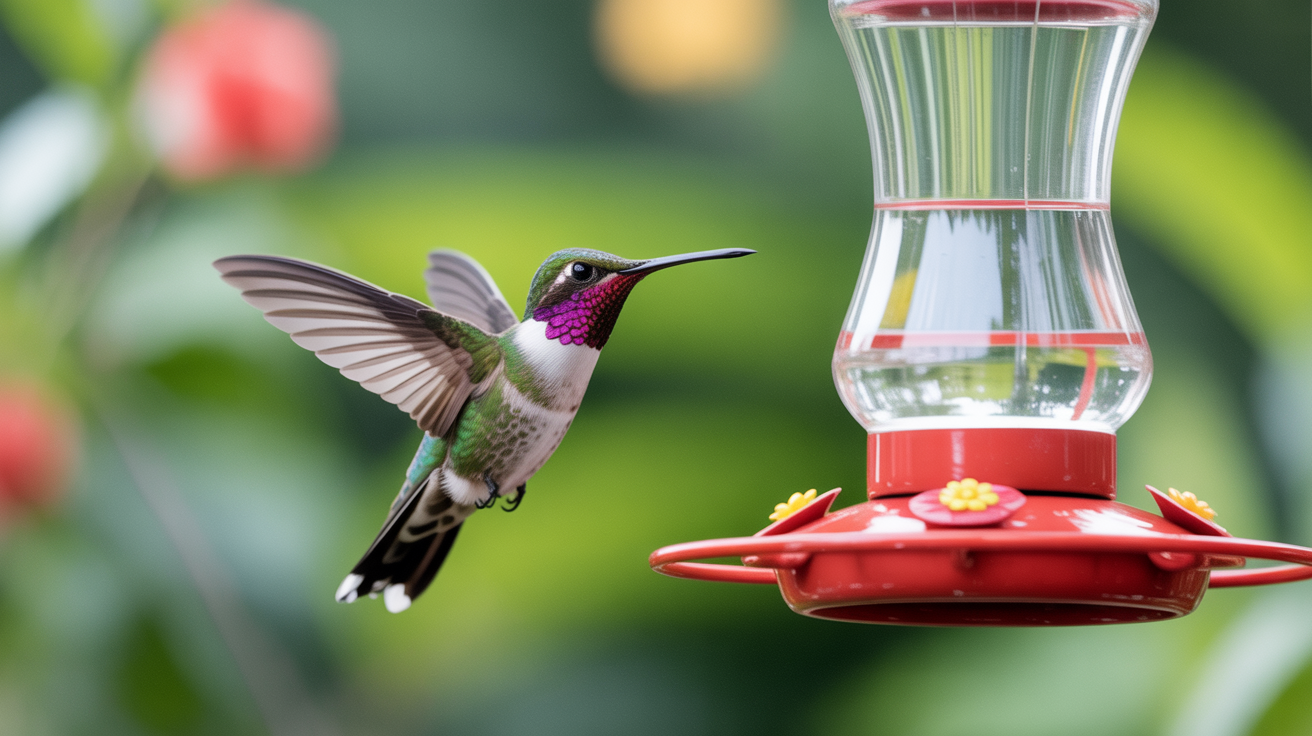
Hummingbirds are drawn to yards that offer two things: a reliable source of nectar and plenty of red tubular flowers. Set those up, and most species will find you within a season.
Put Up a Hummingbird Feeder
A feeder is the fastest way to bring hummingbirds close enough to watch. The birds will visit while they scout your yard, and a good food source keeps them coming back all season.
Choosing the right feeder
Hummingbird feeders come in two basic shapes: saucer-style and bottle-style. Saucer feeders sit with a shallow dish of nectar below the feeding ports. Bottle feeders hang inverted with nectar dripping down into a base. Both work, but saucer feeders are easier to clean thoroughly, which matters more than design.
Look for a feeder with:
- Red parts on the outside (red attracts hummingbirds; you do not need red-dyed nectar)
- Wide ports that are easy to scrub with a bottle brush
- No yellow accents if you can help it; yellow attracts bees and wasps
Avoid feeders with hard-to-reach corners. Nectar ferments quickly in warm weather, and mold builds up in crevices you cannot scrub.
Placement
Hang the feeder in a spot that gets morning sun and afternoon shade. Full sun heats the nectar fast, which speeds fermentation. Shade all day can make the feeder harder for birds to spot from above. Somewhere between four and six feet off the ground is a workable height for most yards.
Hummingbirds are territorial, so space multiple feeders far enough apart that one bird cannot guard all of them at once. Placing feeders around a corner from each other, or on opposite sides of the yard, lets subordinate birds feed without constant chasing.
Make Your Own Hummingbird Nectar
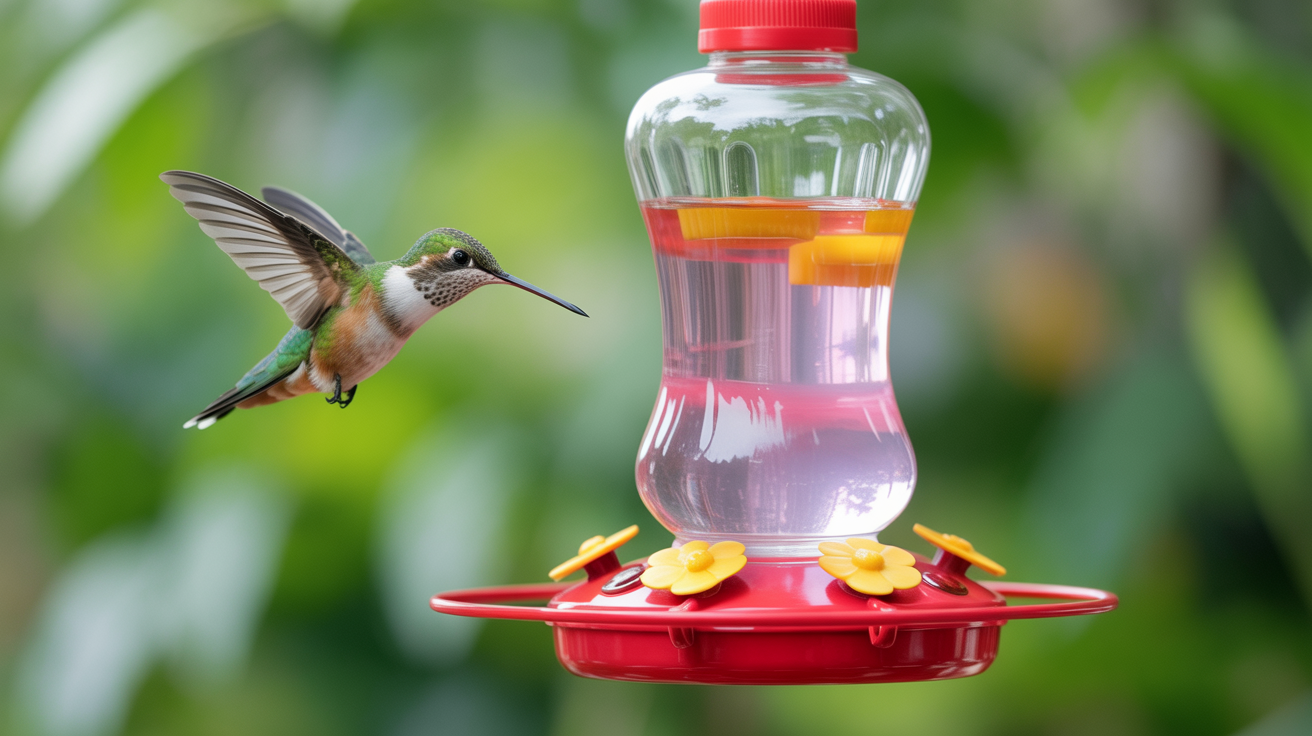
Store-bought nectar packets are convenient, but making nectar at home is cheaper, takes about five minutes, and produces the same result.
The hummingbird nectar recipe
The standard ratio is 1 part white granulated sugar to 4 parts water.
Steps:
- Bring the water to a boil.
- Remove from heat and stir in the sugar until fully dissolved.
- Let the mixture cool completely before filling the feeder.
- Store leftover nectar in the refrigerator for up to two weeks.
That is the whole recipe. The 1:4 ratio closely matches the sugar concentration found in the flowers hummingbirds prefer in the wild.
What not to use
- Red food dye -- the red color on the feeder itself does the work; dye adds nothing and may irritate the birds
- Honey -- it ferments rapidly and can promote a fungal infection that affects a hummingbird's tongue
- Brown sugar, powdered sugar, or sugar substitutes -- these either contain additives or lack the calorie density the birds need
- "Instant nectar" mixes -- most are just sugar with coloring; plain white sugar and water is better
How often to change the nectar
In temperatures below 70 degrees Fahrenheit, change the nectar every five to seven days. Above 80 degrees, change it every two to three days. If the liquid looks cloudy or has any floating particles, change it immediately and rinse the feeder with hot water before refilling.
Plant Flowers That Hummingbirds Love
Feeders get hummingbirds into your yard. Plants keep them there. Hummingbirds spend a large share of their day hunting for natural nectar, and a yard with flowers gives them a reason to patrol your property rather than just make a quick stop at the feeder.
The best hummingbird plants
Hummingbirds strongly prefer tubular flowers in red, orange, and pink. Some of the most reliable options for a backyard planting:
| Plant | Bloom season | Notes |
|---|---|---|
| Trumpet vine | Summer -- fall | Aggressive spreader; plant where it has room |
| Cardinal flower | Summer | Native; thrives in moist soil |
| Salvia (red varieties) | Summer -- fall | Easy to grow, long bloom window |
| Bee balm | Summer | Also called monarda; attracts other pollinators |
| Coral honeysuckle | Spring -- fall | Native vine; gentler than trumpet vine |
| Penstemon | Spring -- summer | Many native species across North America |
| Fuchsia | Spring -- fall | Good for containers and hanging baskets |
| Lantana | Summer -- frost | Excellent in hot climates |
For a deeper look at plants that do double duty for birds and wildlife, see our guide to native plants that attract birds.
Grouping plants for impact
A single plant in a border will get occasional visits. A cluster of the same species, or a mixed bed with overlapping bloom times, keeps hummingbirds returning. Aim for at least three to five plants of a given species together rather than one scattered here and there. Stagger bloom times so something is flowering from late spring through early fall.
Container plantings work well if your yard lacks beds. A large pot of salvia or a hanging basket of fuchsia positioned near a feeder can be enough to hold a bird's attention for a whole afternoon.
Provide Water and Shelter
Nectar covers energy, but hummingbirds also need water for bathing and preening. They do not typically drink from standing water the way other birds do -- they prefer to fly through a fine mist or bathe in moving water that barely covers their feet.
A misting attachment on a garden hose, set to run for a short time each day, will bring hummingbirds in quickly. You can also buy a mister designed to sit above a shallow birdbath, producing a gentle spray a few inches above the water surface.
For shelter, hummingbirds nest in shrubs and trees with dense foliage. They are not cavity nesters and will not use nest boxes. Leaving some branches unpruned and keeping a few shrubby plants near feeding areas gives them a place to perch between visits.
If you want to build a more complete habitat, our guide on how to make a bird-friendly garden covers layering plants and shelter for multiple species at once.
Timing: When to Put Out Your Feeder
Hummingbirds migrate, so the timing of when to put out a feeder depends on where you live.
- Eastern United States: Ruby-throated hummingbirds typically arrive between late April and mid-May. Put feeders out one to two weeks before your expected first sighting date.
- Western United States: Multiple species are present, and some (like Anna's hummingbirds) are year-round residents in mild coastal areas. Rufous hummingbirds arrive early in spring migration.
- Gulf Coast and Southwest: Some hummingbirds are present nearly year-round.
A good rule is to check what other birders in your area are reporting. Apps like eBird show recent hummingbird sightings and can tell you when the first birds of the season are showing up nearby.
Leave feeders up through at least two weeks after your last sighting in fall. Keeping a feeder out does not cause hummingbirds to delay migration -- they leave on an internal schedule tied to day length, not food availability. A late feeder helps migrants passing through that are not local residents.
For more strategies to increase activity across your whole yard, see how to attract more birds to your yard.
Frequently Asked Questions
How long does it take for hummingbirds to find my feeder?
It varies. In an area with an established hummingbird population, a feeder can draw birds within a day or two. In a yard where they have never been fed, it may take several weeks. Red tubular flowers nearby speed up the process considerably, since birds scouting the area for flowers are more likely to notice the feeder.
Do I need to use red-dyed nectar?
No. Plain white sugar and water is all you need. The red color on the feeder itself is enough to attract the birds. There is no confirmed benefit to red dye, and some sources suggest it may cause harm, so there is no good reason to use it.
Why do bees and wasps keep taking over my feeder?
Insects are drawn to nectar too. A few steps help: choose a saucer-style feeder where the nectar sits below the ports (insects have trouble reaching it), avoid feeders with yellow accents, and keep the outside of the feeder clean so drips do not build up. Bee guards -- small plastic mesh covers over the ports -- reduce access without keeping hummingbirds out.
Can I have too many feeders?
More feeders generally means more birds, especially if you space them so a single territorial bird cannot defend all of them at once. There is no practical upper limit, though you will need to keep all of them clean and fresh. If feeders outnumber your ability to maintain them properly, scale back -- a moldy feeder does more harm than no feeder at all.
Should I take the feeder down at night?
Only if bears are a problem in your area. Hummingbirds themselves do not feed at night. If you are in bear country, bringing feeders in after dark (and putting them back out at first light) is a reasonable precaution during the months bears are active.