Attracting Birds
How to Attract Bluebirds
Learn how to attract bluebirds with the right nest box placement, mealworm feeders, and habitat tips that bring these striking birds back season after season.
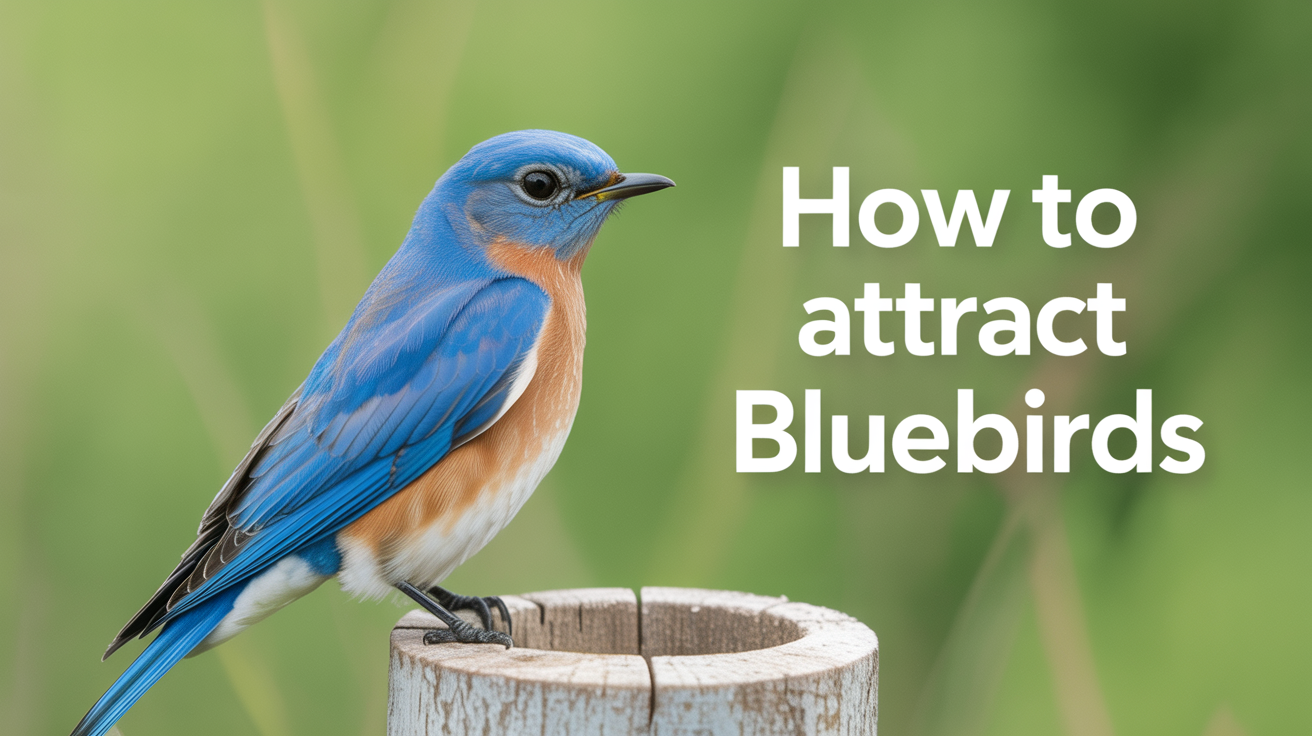
Bluebirds are among the most sought-after backyard visitors, and the right setup can bring them to your yard reliably year after year. The combination of a proper nest box, a steady food source, and open foraging habitat is what makes the difference.
At a Glance
- Nest box: 1.5-inch entrance hole, no perch, mounted 4 to 6 feet up on a smooth metal pole with a baffle.
- Best food: live mealworms to get them started, then a mix of live and dried once they're visiting.
- Placement: open ground away from dense shrubs, entrance facing east or southeast.
- Spacing: at least 100 yards between bluebird boxes; pair with a Tree Swallow box 15 to 20 feet away if you want both species.
- Watch for: House Sparrow nest material (coarse grass, feathers, trash) and remove it immediately.
- Timing: put the box up in late winter, February to early March in most regions, before House Sparrows claim the spot.
Why Bluebirds Disappeared From Many Yards
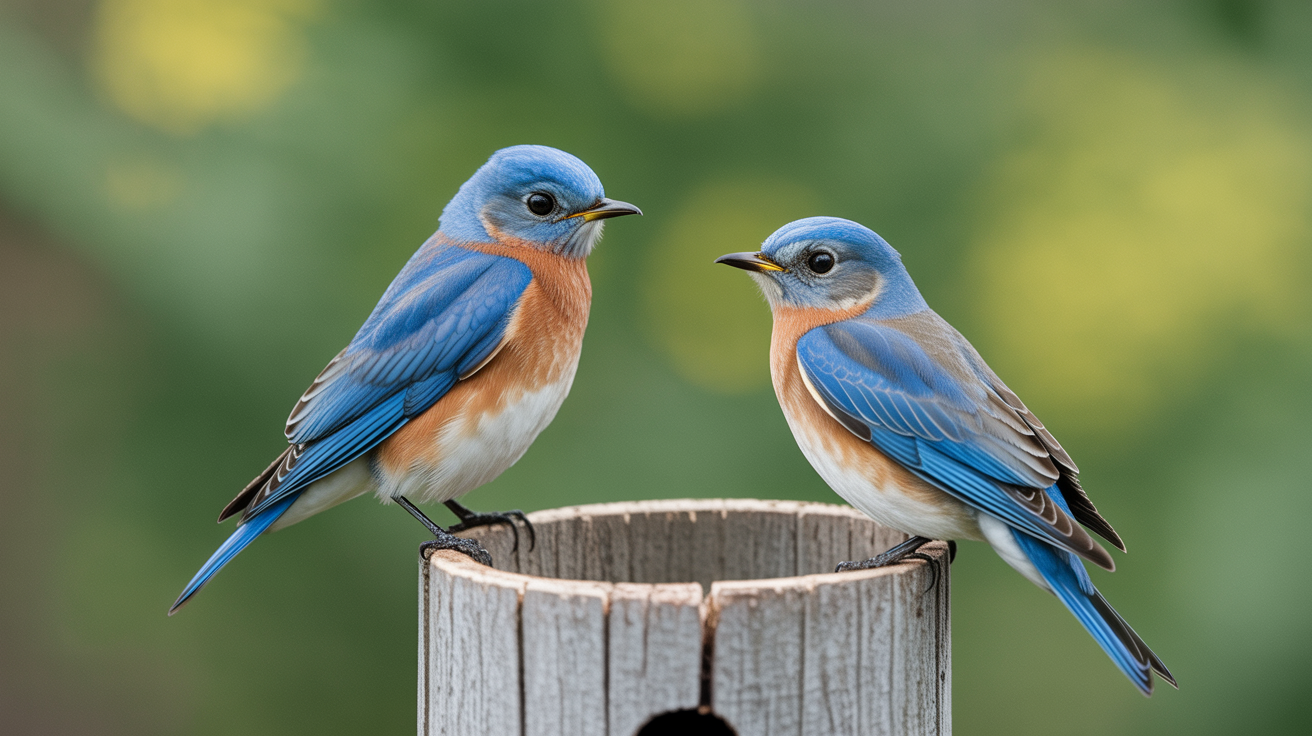
Eastern, Western, and Mountain Bluebirds were in steep decline through most of the twentieth century. Two introduced species, House Sparrows and European Starlings, competed aggressively for every tree cavity bluebirds depended on for nesting. At the same time, the loss of old orchards and open farmland stripped away the short-grass foraging habitat bluebirds need to spot insects on the ground. The Audubon Field Guide describes the Eastern Bluebird's diet as "mostly insects and berries," including crickets, grasshoppers, and beetles picked off open ground, which is exactly the habitat that disappeared as farmland gave way to subdivisions and mowed lawns without any low perches to hunt from.
The recovery since the 1970s is one of conservation's genuine success stories, driven almost entirely by ordinary people mounting nest boxes on fence posts and monitoring them through the breeding season. The North American Bluebird Society traces its own founding to conservationist Dr. Lawrence Zeleny, who spent much of his life setting up and managing bluebird trails, exactly the volunteer model that later spread nationwide. If you have even a small open yard with a clear sightline to grass, you already have more than most bluebirds need to get started.
Setting Up a Bluebird House
A properly sized and placed nest box is the single biggest step you can take. Everything else builds on having the right box in the right spot.
Dimensions that matter
Bluebirds need a 1.5-inch entrance hole, nothing larger. A bigger hole lets starlings move in; a smaller one shuts the bluebirds out. The floor should be roughly 4 by 4 inches, the cavity depth 8 to 10 inches below the entrance. Wood thickness of at least 3/4 inch keeps the box insulated against temperature swings. Skip any box with a perch on the front. Bluebirds do not use them, and House Sparrows do.
Where and how to mount it
- Place the box on a smooth metal pole, 4 to 6 feet off the ground, in open ground away from dense shrubs or brush.
- Face the entrance east or southeast so morning light warms the box and afternoon heat stays off it.
- Keep at least 100 yards between bluebird boxes. If you also want Tree Swallows, pair two boxes 15 to 20 feet apart; swallows and bluebirds tolerate each other and swallows help deter House Sparrows.
- Fit a stovepipe or cone baffle below the box to block raccoons, snakes, and cats.
Check the box every week or so during nesting season (April through July across most of North America). If coarse grass, chicken feathers, or trash appears inside, that is a House Sparrow nest. Remove it immediately and keep removing it. Doing so is legal and is the standard recommendation from bluebird conservation groups, including the practical steps laid out in the North American Bluebird Society's downloadable fact sheets on house sparrow control and predator guards.
Feeding Mealworms to Bluebirds
If you want bluebirds to notice your yard quickly, mealworms are the fastest path. These are the larvae of the darkling beetle and are sold live or dried at most wild bird stores and online.
Live vs. dried mealworms
Live mealworms move, and that movement catches a bluebird's eye the way nothing else does. Many people find that bluebirds will sit near a dish of dried worms for days before touching them, while live worms draw a response within hours. Dried mealworms are easier to store and work well once birds have learned to visit a specific spot.
Start with live mealworms for bluebirds to establish the habit. Once they are visiting reliably, you can shift to a mix of live and dried, or mostly dried if you prefer the convenience.
How to offer them
Put mealworms in a smooth-sided dish with walls at least 3 to 4 inches high so the worms cannot crawl out. A purpose-built mealworm feeder works, but so does a small glass or ceramic bowl. Set it at a consistent spot close to where bluebirds already perch or forage. If they can see the dish from a nearby fence post or low wire, they will find it faster.
Start with a small daily offering, around 15 to 20 worms per bird. Increase the amount as a pair establishes territory and especially when they begin feeding nestlings. During the chick phase, a pair can consume hundreds of mealworms in a day. As a rough budget: a family of two adults feeding three to five nestlings during peak growth can go through 200 to 300 mealworms daily if you are supplying most of their protein, though most pairs also hunt plenty of wild insects on their own even when a feeder is available.
Choosing and Placing a Bluebird Feeder
A dedicated bluebird feeder looks different from a standard seed feeder. Because bluebirds are not seed eaters, the design centers on mealworms, blueberry-flavored pellets, or suet crumbles rather than any grain mix.
| Feature | Why it matters |
|---|---|
| Clear or blue-tinted sides | Bluebirds spot food visually through glass or acrylic |
| 1.5-inch entrance holes | Blocks starlings while allowing bluebirds through |
| Covered roof | Keeps food dry and gives birds a sense of cover |
| Easy-clean tray | Mealworms spoil; a quick rinse every few days matters |
Place the bluebird feeder within 50 to 75 feet of your nest box, close enough that the nesting pair associates both spots, but not so close it creates stress near the box entrance. Bluebirds are territorial during breeding but will share a feeder with their mate and fledglings once the young birds leave the box.
Comparing your feeding options
| Method | Setup effort | Ongoing cost | How fast bluebirds respond |
|---|---|---|---|
| Live mealworms in an open dish | Low | Medium to high | Fast, often within days |
| Dried mealworms in a covered feeder | Low | Low | Slower, works best after live worms establish the habit |
| Mixed live/dried in a starling-resistant feeder | Medium | Medium | Fast once established, and lower waste over time |
| No supplemental feeding, habitat only | None | None | Slowest, but still works if foraging ground is good |
Making Your Yard Bluebird-Friendly
Food and boxes work best when the surrounding yard supports bluebirds through the full season.
Open foraging ground
Bluebirds hunt by perching 4 to 5 feet off the ground, scanning a patch of short grass or bare soil for insects, then dropping straight down to catch them. They need clear sightlines across open ground. A lawn kept at 2 to 3 inches, a garden path, or an open section of meadow all work well. Dense shrubs, tall ornamental grasses, and thick leaf-litter beds limit how much of the yard they can actually use.
Native plantings at the edges
Several native plants produce berries that bluebirds take in fall and winter when insects are scarce. Dogwood, pokeweed, Virginia creeper, sumac, and native hollies are all solid choices. Keep these plantings at the edges of the yard rather than the center so they do not break up the open foraging area bluebirds prefer. Our guide to native plants that attract birds covers species by region in more detail.
Water
A shallow birdbath with moving water draws bluebirds reliably, even when they are not nesting in the immediate area. They bathe often and respond quickly to drippers and small fountains. Keep the water depth under two inches and clean the bath every few days. A solar-powered dripper is a low-maintenance option that keeps water moving without any wiring.
For the broader yard picture, how to attract more birds to your yard covers the full habitat framework, and how to make a bird-friendly garden goes into planting strategies that benefit multiple species at once.
Frequently Asked Questions
What time of year should I put up a bluebird house?
Late winter is best. February or early March in most regions gives bluebirds time to find the box before House Sparrows claim the spot. Bluebirds scout for nest sites early, sometimes before daytime temperatures climb above freezing. That said, boxes put up later in spring still attract birds looking for a second nesting site later in the season.
Why are House Sparrows taking over my bluebird box?
House Sparrows are fast and aggressive about claiming cavities. Remove their nest material as soon as it appears. Additional deterrents include a sparrow spooker (a strip of mylar tape mounted above the entrance that flutters in the breeze) or a box with a slot-style entrance rather than a round hole. Some birders use a sparrow trap set specifically at the box. Check local regulations before trapping any bird.
Will bluebirds use a feeder in winter?
Yes, particularly in the South and along the Pacific Coast where some bluebirds overwinter rather than migrate. In northern states, most Eastern Bluebirds leave by November, though small flocks sometimes linger into January during mild stretches. Adding soft fruits like chopped raisins or dried blueberries alongside mealworms gives wintering birds more to choose from.
How long before bluebirds find my setup?
It varies. Yards in areas with an established local bluebird population may see a pair within days of putting up a box. Yards in areas without nearby bluebird territory may wait a full season. Keeping mealworms fresh, the box clean, and the feeder consistently stocked matters more than any single product. Your local Audubon chapter or a regional bluebird trail group can tell you whether bluebirds are established in your area.
Can I attract bluebirds in a suburban neighborhood?
Yes, if conditions allow. Bluebirds do well in suburbs that have open lawns, ball fields, golf courses, or parks nearby. Dense urban areas with little open ground are harder to work with. Box placement and food offering stay the same regardless of setting; the key variable is whether there is enough open foraging area within a few hundred feet of the box for a pair to hunt successfully.
Do bluebirds reuse the same box year after year?
Often, yes, especially if the first brood succeeded there. Clean out old nest material after each brood fledges and again at the end of the season; bluebirds will not build directly on top of an old nest, and a box packed with old material effectively becomes too shallow to use. A clean, dry box in a proven location is one of the strongest predictors of return visits the following spring.