Identifying Birds
Crows, Jays, and Magpies: Identifying Corvids in Your Backyard
Learn to identify American Crow, Common Raven, Blue Jay, Steller's Jay, and Black-billed Magpie by size, tail, bill, and voice, with range notes for each.
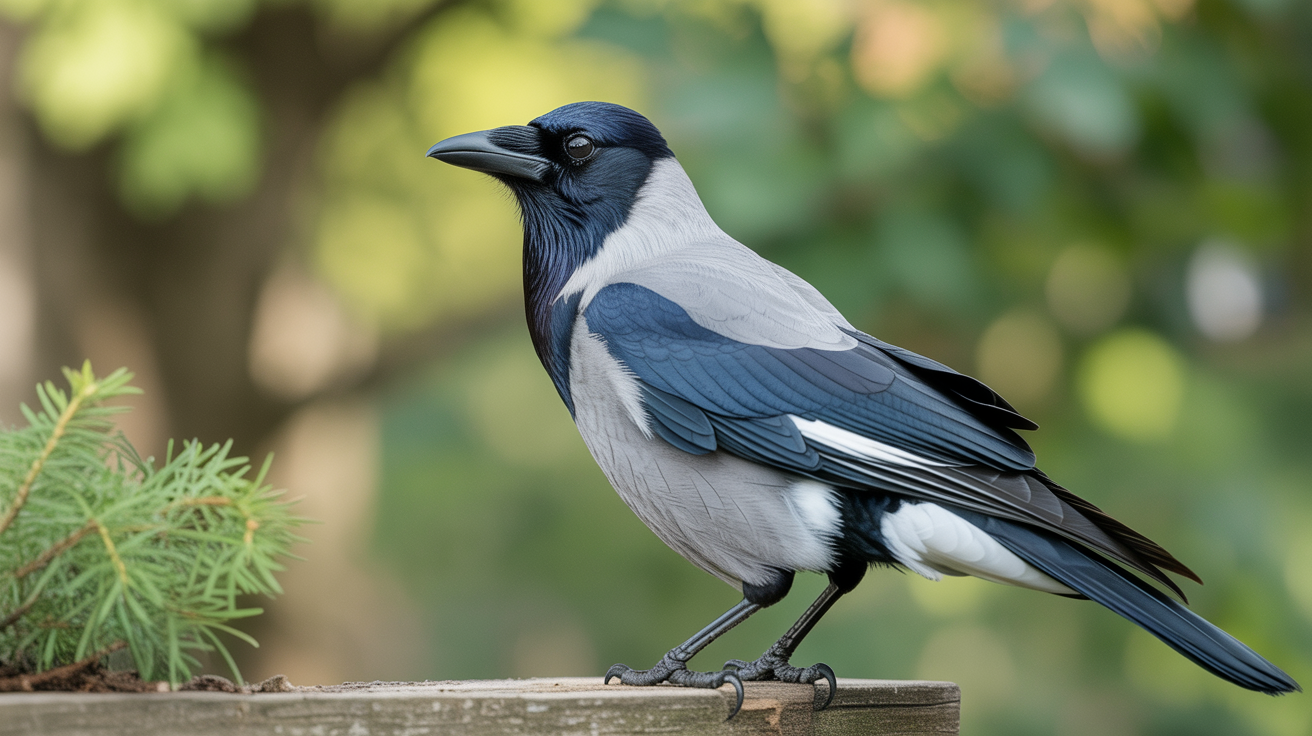
Corvids visit almost every backyard in North America, and once you learn a handful of field marks, you can name the one on your fence post in seconds. This guide covers the five species beginners encounter most often: American Crow, Common Raven, Blue Jay, Steller's Jay, and Black-billed Magpie.
At a Glance
- Tail shape is the fastest way to split crow from raven in flight: a fan-shaped, rounded tail means American Crow, a wedge-shaped, pointed tail means Common Raven.
- Range narrows jay identification instantly. Blue Jay covers the eastern two-thirds of the continent; Steller's Jay takes over west of the Rockies. The two species barely overlap.
- Black-billed Magpie is nearly impossible to mistake for anything else: more than half of its 17 to 24 inch length is a long, iridescent tail.
- Corvids are among the most cognitively advanced birds known, with memory that can last years, not just days.
- A scolding, diving mob of crows almost always means a hawk or owl is hiding nearby.
- Whole peanuts in the shell are the single best food for pulling corvids to a feeder without emptying it in an afternoon.
What Makes a Corvid a Corvid
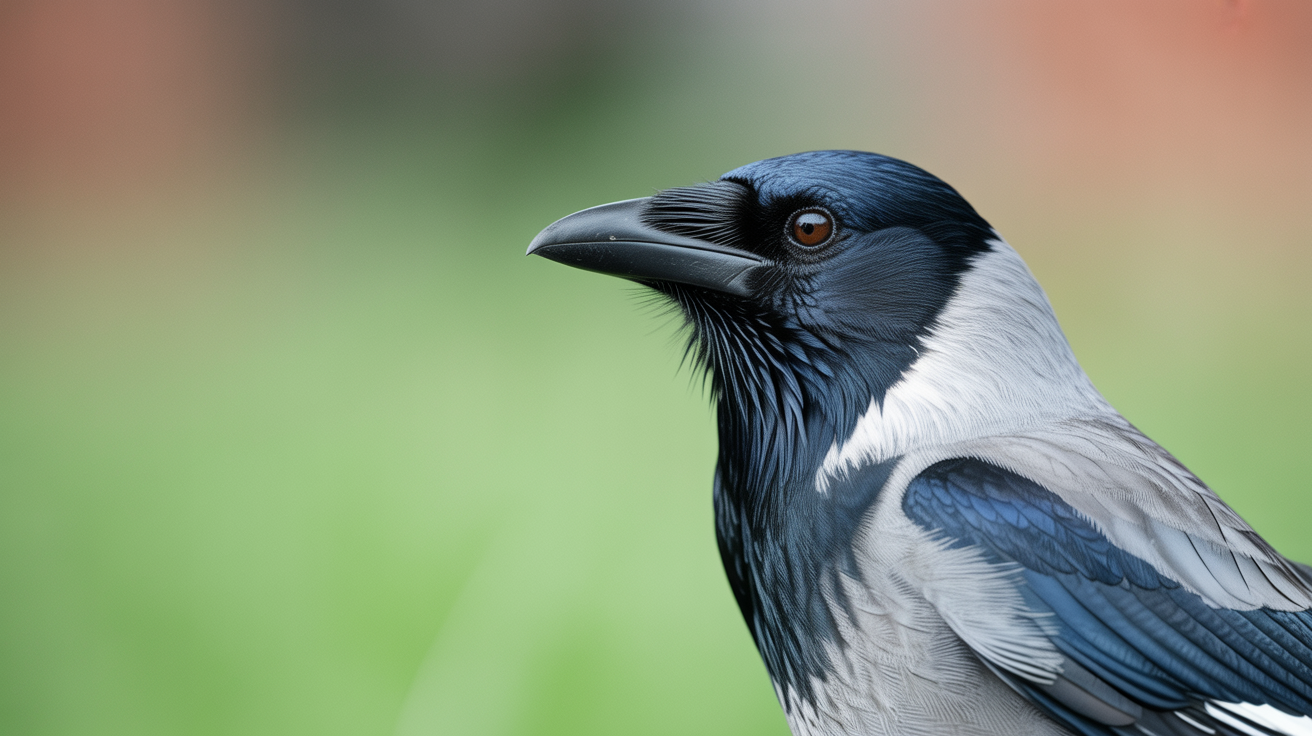
The family Corvidae includes crows, ravens, jays, magpies, and nutcrackers. All North American corvids share a few traits worth knowing before you zoom in on a specific species:
- Large, robust bills. Corvid bills are noticeably thick compared to songbirds of similar body size.
- High intelligence. Corvids cache food, use tools, recognize human faces, and learn quickly from watching other birds. That behavior you think looks deliberate probably is. Researcher John Marzluff's long-running crow study found that birds continued to scold a specific "threatening" mask worn by researchers years after the original encounter, and passed that recognition on to birds that had never even been handled, evidence of both long memory and social learning within a flock, as reported by National Wildlife Federation.
- Loud, varied voices. Crows caw, ravens croak, jays scream and mimic. If a bird is making an unusual sound you haven't heard before, a corvid is a reasonable suspect.
- Omnivorous diets. Seeds, fruit, insects, carrion, eggs, small animals, and whatever you left on the patio table are all on the menu.
For a broader look at how to approach any unfamiliar bird, check out how to identify common backyard birds.
The All-Black Pair: American Crow vs. Common Raven
These two cause more confusion than any other corvid matchup. Both are entirely black, both are smart, and both show up in a wide range of habitats. The differences are real and consistent once you know where to look, and Audubon's own side-by-side breakdown lands on the same core field marks described below.
American Crow
The American Crow is the default "big black bird" for most of the continent. It reaches about 17 to 21 inches from bill to tail, roughly the size of a pigeon but bulkier. A few things to check:
- Tail shape: Fan-shaped and rounded when spread in flight. This is the quickest field mark.
- Bill: Straight and relatively thin for its size.
- Wingbeat: Regular, rowing flaps without much gliding. Crows rarely soar for long.
- Voice: The classic "caw caw," sometimes rapid-fire, sometimes a single sharp note.
- Social pattern: Crows travel and roost in large, noisy family groups, sometimes hundreds strong in winter.
- Range: Year-round across most of the lower 48 states and southern Canada. If you're east of the Rockies and see a big black bird, it's almost certainly a crow.
Crows hold grudges against hawks and owls with real persistence, sometimes escorting a disliked raptor out of the neighborhood every time it reappears for weeks on end.
Common Raven
The Common Raven is a noticeably larger bird: 22 to 27 inches, about the size of a Red-tailed Hawk. It overlaps with crows in some areas but is most reliably seen in the western mountains, the Far North, and parts of New England and the Appalachians. Urban sightings in the interior East are unusual.
Key field marks to separate it from a crow:
- Tail shape: Wedge-shaped or diamond-shaped when spread, distinctly pointed in the center. This is the single most reliable field mark in flight.
- Bill: Much heavier and more curved, giving the head a blocky, almost bulbous look.
- Throat: Shaggy hackle feathers on the throat, visible at close range.
- Wingbeat: Ravens soar and glide far more than crows, using thermals the way hawks do.
- Social pattern: Ravens usually travel in pairs and mated pairs stay together year-round, a contrast with a crow's larger family groups. Watch for a distinctive two-footed hop on the ground, a habit crows rarely show.
- Voice: A deep, hollow "kronk" or "pruk" that sounds nothing like a crow's caw.
If you're uncertain which you're looking at, watch it fly away. A fan tail means crow; a wedge tail means raven.
| Feature | American Crow | Common Raven |
|---|---|---|
| Length | 17-21 in | 22-27 in |
| Tail in flight | Fan/rounded | Wedge/pointed |
| Bill | Straight, moderate | Heavy, curved |
| Common flight style | Steady flapping | Soaring + flapping |
| Social pattern | Large family groups, communal roosts | Pairs, year-round mates |
| Voice | Caw | Deep kronk/croak |
| Range | Widespread, lower 48 | West, Far North, NE |
For more side-by-side comparisons of similar-looking species, see confusing lookalike birds and how to tell them apart.
The Blue Jays: Blue Jay and Steller's Jay
North America has two common large jays with blue plumage, and their ranges barely overlap. Knowing which half of the country you're in solves most of the confusion before you even raise your binoculars.
Blue Jay
The Blue Jay is the corvid of eastern and central North America. It's unmistakable in many ways: vivid blue, white, and black plumage with a prominent crest, a white face, and a black necklace across the throat. At about 9 to 12 inches, it's noticeably smaller than a crow.
Field marks at a glance:
- Crest: Always present, raised when alert and flattened when relaxed.
- White wing bars and white corners on the tail: Visible when the bird fans its tail or spreads its wings in flight.
- Voice: A piercing "jay-jay," plus a surprisingly convincing Red-shouldered Hawk scream that can fool experienced birders.
- Range: Year-round resident from the Great Plains eastward. Rare but not absent in parts of the Mountain West during migration.
Blue Jays are feeder regulars that eat sunflower seeds and peanuts readily, stuffing multiple seeds and even whole peanuts into their expandable throat pouch to cache elsewhere. A single Blue Jay can carry off and bury several acorns in one trip, then return dozens of times over a fall afternoon, which is part of why oak seedlings so often turn up well outside the shade of any parent tree.
Steller's Jay
West of the Rockies, the Steller's Jay takes the Blue Jay's ecological role, occupying a similar niche in mountain and coastal forests the way the Blue Jay does in eastern woodlots and suburbs. The two species look different enough that confusion is rare when you know both exist, and they are roughly the same size class, so range and plumage do the identification work rather than measurements.
- Head and crest: Dark blackish-brown to black, not blue. This dark hood is the defining mark.
- Body: Deep blue from the breast down, darker and more uniform than the Blue Jay's patterned plumage.
- White markings: Minimal. Small white streaks or spots on the forehead in some populations, nothing like the Blue Jay's bold white face.
- Voice: Loud, harsh "shack shack shack" calls, plus excellent mimicry of Red-tailed and Red-shouldered Hawks.
- Range: Mountain forests and Pacific coastal forests from Alaska south through Mexico. Common in campgrounds, mountain towns, and yards with conifers nearby.
Steller's Jays are famously bold around campsites and picnic tables, a trait that gets them fed by hand more often than any other western songbird and, unfortunately, gets them into more trouble with human food than is good for them.
The Black-billed Magpie: Hard to Mistake, Easy to Enjoy
The Black-billed Magpie is one of the most visually striking corvids in North America, and once you've seen one you will never confuse it with anything else. The bird is roughly 17 to 24 inches long, but more than half that length is the tail. That long, iridescent tail streaming behind a flying bird is instantly recognizable.
Key features:
- Plumage: Black head, chest, and back; brilliant white belly and shoulder patches; iridescent blue-green wings and tail that shift color in sunlight.
- Tail: Long and graduated, accounting for more than half the total body length.
- Bill: Black and somewhat shorter than a crow's relative to head size.
- Flight: Slow, undulating, with bursts of wingbeats between brief glides.
- Voice: A rapid, nasal "mag mag mag" or a rising "wek-wek-wek."
- Range: Year-round across the Great Plains, the Intermountain West, and the Pacific Northwest. Common in open country with scattered trees, pastures, suburbs, and river corridors. Essentially absent east of the central plains.
Magpies build some of the largest nests of any North American songbird, domed structures of sticks that can reach two feet across and take weeks to construct. Pairs frequently reuse and repair the same nest structure for several years, adding new material each spring rather than starting over.
All Five Corvids at a Glance
| Species | Length | Signature Field Mark | Range | Voice |
|---|---|---|---|---|
| American Crow | 17-21 in | Fan-shaped tail, straight thin bill | Lower 48 and s. Canada, year-round | Caw caw |
| Common Raven | 22-27 in | Wedge tail, heavy curved bill, shaggy throat | West, Far North, parts of NE | Deep kronk/croak |
| Blue Jay | 9-12 in | Blue crest, white face, black necklace | East of the Great Plains, year-round | Piercing jay-jay |
| Steller's Jay | Blue-Jay-sized | Black-brown hood over deep blue body | West of the Rockies, mountain conifers | Harsh shack-shack-shack |
| Black-billed Magpie | 17-24 in, more than half of it tail | Long iridescent tail, black-and-white body | Great Plains, Intermountain West, Pacific NW | Nasal mag-mag-mag |
Corvids in the Yard: More Useful Than Their Reputation
Corvids have a complicated reputation among backyard birders. Yes, they will eat eggs or nestlings if the opportunity arises. But the evidence that they meaningfully reduce songbird populations at the landscape scale is thin. What's clearer is everything corvids bring to a yard:
- Insect control. Crows, jays, and magpies eat grubs, caterpillars, and beetles in large quantities.
- Seed dispersal. Jays cache far more acorns than they ever retrieve, effectively planting oaks across the landscape.
- Early warning system. Corvid alarm calls alert every other bird in the area to a hawk overhead. This is a form of mobbing behavior, the same cooperative defense strategy smaller songbirds use against crows themselves.
- Year-round activity. Corvids don't leave in winter. On a quiet January morning, a Blue Jay or American Crow at the feeder is welcome company.
Peanuts in the shell, suet, and black oil sunflower seeds attract corvids reliably. A scolding mob of crows almost always means a hawk or owl is nearby, which can help you spot raptors you might otherwise miss. Corvid calls carry far and change meaning with context; for a deeper look at reading bird sounds, see how to identify birds by their songs and calls.
Frequently Asked Questions
Can I attract corvids to my feeder specifically?
Yes. Whole peanuts in the shell are the single best offering for Blue Jays, American Crows, and magpies. Scatter them on a platform feeder or directly on the ground. Suet and black oil sunflower seeds also work well. Keep in mind that crows in particular are wary birds; they often feed from the ground nearby rather than on the feeder itself, and a family group may take a week or two of watching from a distance before the first bird commits to landing close to the house.
Are Blue Jays and Steller's Jays the same species?
No. They are separate species with distinct ranges and different plumage. Blue Jays have a blue crest and white face and live primarily east of the Rockies. Steller's Jays have a dark black or blackish-brown crest and hood and are birds of western forests. Their ranges meet in a narrow zone in the Rocky Mountain foothills but do not broadly overlap, and hybrids are rare enough that most sightings there still resolve cleanly to one species or the other.
I see a big black bird every morning. How do I know if it's a crow or a raven?
Watch the tail when it flies. A rounded fan tail means American Crow; a wedge or diamond tail means Common Raven. Also listen: crows caw, ravens produce a deep hollow croak. Social behavior helps too, a pair moving together and hopping with both feet is more likely a raven, while a loose group of five or more is almost certainly crows. If you're in a dense urban area in the eastern or central United States, it's almost certainly a crow.
Do corvids hurt other backyard birds?
Corvids occasionally raid nests, but research consistently shows they are not a major driver of songbird population declines. Most losses trace back to habitat loss, outdoor cats, and window strikes. Corvids and songbirds have shared the same habitats for millions of years.
Why do crows mob hawks and owls?
It's a defensive behavior called mobbing. Crows recognize predators that threaten their eggs or young and harass them in numbers to drive them out of the area, the same strategy smaller birds sometimes use against crows themselves. This behavior is learned and passed within crow families, and it's one of the clearest examples of corvid intelligence you can watch from a window.
Do crows really remember human faces?
Yes, and for years, not just days. In a well-documented study, researchers wearing a specific mask trapped and banded wild crows; when the same mask reappeared on the same or different people, even nearly seven years later, crows still scolded and mobbed it while ignoring other masks entirely. Younger crows that were never trapped joined the scolding too, apparently having learned the threat from their parents. It's strong evidence that corvids track individuals, not just species, and that they teach that knowledge to the next generation.