Attracting Birds
Berry Bushes and Trees That Feed Birds Year-Round
The best native berry bushes for birds, from serviceberry and elderberry to winterberry and viburnum, plus trees that keep birds fed through winter.
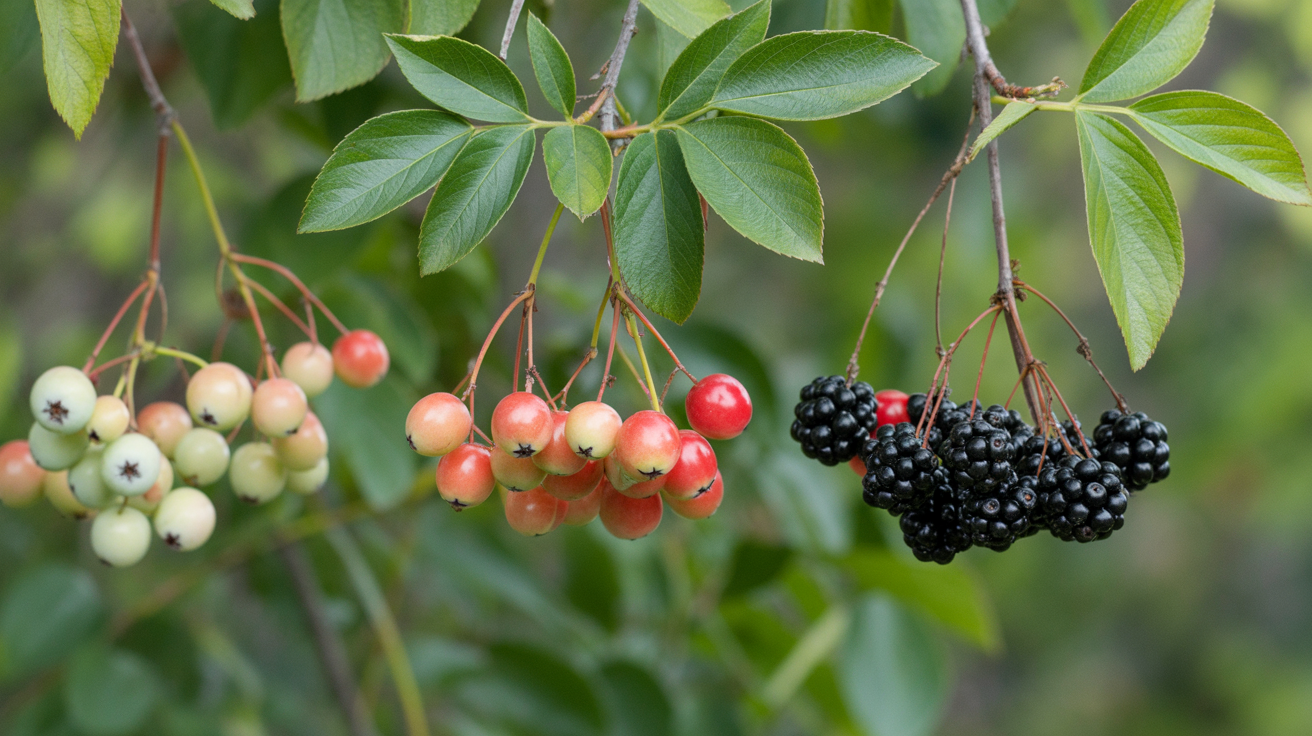
Planting berry-producing shrubs and trees is one of the most reliable ways to draw birds to your yard and keep them coming back across multiple seasons. A feeder brings birds in; a yard full of fruiting plants gives them a reason to stay.
Why Fruit and Berries Matter More Than Feeders Alone
Seeds are a convenience food for birds. Berries, fruit, and the insects that fruit-bearing plants support are closer to a complete diet. Many species that never visit a seed feeder will show up the moment serviceberries ripen or winterberry goes bright red. Waxwings, thrushes, bluebirds, robins, catbirds, and woodpeckers all depend heavily on fruit at certain points in the year.
Beyond the fruit itself, native berry-producing plants host far more insect life than non-natives. Native oaks support hundreds of caterpillar species; Carolina chickadees need roughly 6,000 to 9,000 caterpillars to raise a single clutch of young. A yard full of ornamental plants from other continents will not supply that. Native fruit-bearing plants do double duty: feeding birds directly through their berries, and indirectly by hosting the insects that form the base of most bird diets.
For more on building a full habitat from the ground up, see our guide on native plants that attract birds.
Best Native Berry Bushes for Birds
These are the workhorses. All are native to broad regions of North America, widely available at native plant nurseries, and genuinely productive for birds.
Serviceberry (Amelanchier spp.)
Serviceberry is one of the first plants to fruit in spring, typically late May to early June depending on your region. The berries look like small blueberries and taste mild and sweet. Birds know exactly when they ripen. Expect cedar waxwings, robins, catbirds, orioles, thrushes, and scarlet tanagers to strip the bush within days. Serviceberry grows as either a multi-stemmed shrub or a small tree, tolerates a range of soils, and handles part shade reasonably well. It is one of the best single investments for a bird-friendly yard.
Elderberry (Sambucus canadensis or S. nigra ssp. canadensis)
Elderberry produces large clusters of small dark-purple berries in late summer. Over 120 bird species have been recorded eating elderberries, including wood thrushes, great crested flycatchers, kingbirds, and rose-breasted grosbeaks. The shrubs grow fast, sometimes reaching 8 to 10 feet in a few seasons. They spread by root suckers, so give them space. They prefer moist soils and do well near a rain garden or low-lying area. Plant two plants for better fruit set.
Dogwood (Cornus spp.)
Flowering dogwood (Cornus florida) and silky dogwood (Cornus amomum) both produce fat, high-fat berries that birds prefer during fall migration. The fat content is critical: migratory birds need calorie-dense food to fuel long flights, and dogwood berries deliver more fat per gram than most other native fruits. Over 36 species eat dogwood fruit. Silky dogwood is shrubby and works well in wet edges; flowering dogwood is a classic understory tree that also provides spectacular spring bloom.
Viburnum (Viburnum spp.)
Arrowwood viburnum (Viburnum dentatum), blackhaw (V. prunifolium), and nannyberry (V. lentago) all produce dark berries in late summer and fall. The berries persist on the shrub well into winter, which matters in colder climates when other food has run out. Arrowwood is especially versatile: it tolerates shade, grows in a range of soils, and reaches 6 to 8 feet. Birds including cedar waxwings, bluebirds, and thrushes eat the fruit, while the dense branching provides cover year-round.
Winterberry Holly (Ilex verticillata)
Winterberry is a deciduous holly that drops its leaves in fall, leaving bare branches covered in brilliant red berries. Those berries often last from October through February or even March, making winterberry one of the most valuable cold-season food sources in the eastern United States. Robins, bluebirds, hermit thrushes, and woodpeckers rely on it when the ground is frozen and other food is scarce. It needs wet to moist soil and does best in full to part sun. You need at least one male plant for every few females to get fruit set, so check with your nursery.
Native Hollies and Inkberry
American holly (Ilex opaca) is evergreen and keeps its berries through winter. Inkberry (Ilex glabra) is a lower-growing native holly that tolerates wet conditions. Both produce berries that birds eat after the soft, sugar-rich fruits of fall have been consumed. Think of them as backup pantry items for the winter months.
Trees That Attract Birds Through Fruit and Caterpillars
Oaks (Quercus spp.)
Oaks do not produce berries, but they belong on this list because no other genus supports more bird life. A single mature oak can host over 500 caterpillar species. Acorns feed jays, woodpeckers, nuthatches, turkeys, and wood ducks. The insect biomass an oak produces in spring and early summer directly feeds nestlings across dozens of species. If you have room for one large tree, a native oak outperforms everything else for wildlife value.
Wild Cherry (Prunus serotina and P. virginiana)
Black cherry (Prunus serotina) is a medium to large native tree that produces clusters of small dark cherries in late summer. Over 90 bird species eat the fruit, and the tree also hosts tiger swallowtail and other moth and butterfly caterpillars. Chokecherry (Prunus virginiana) is a smaller, shrubby relative that fruits heavily and handles poor soils. Both are fast-growing and do well along woodland edges.
Hackberry (Celtis occidentalis)
Hackberry produces small, dark, sweet fruits that persist into winter. It is exceptionally tolerant of difficult urban soils, drought, and compaction. Mockingbirds, cedar waxwings, yellow-rumped warblers, and woodpeckers all feed on hackberry fruit. The tree also supports a suite of native butterfly species.
Hawthorns (Crataegus spp.)
Native hawthorns carry persistent red or orange berries from fall through late winter. The thorny structure also provides dense, safe nesting habitat. Cedar waxwings, robins, and thrushes are the most frequent visitors, but hawthorn can attract 30 or more species over a season.
For ideas on combining these plants into a full yard layout, the guide on how to make a bird-friendly garden walks through placement and layering.
Planting for Season-Long Fruit Production
No single plant feeds birds all year. The goal is overlap: something fruiting in spring, something in summer, something in fall, and something that holds berries through winter. Here is a rough planting calendar across the eastern and central United States:
| Season | Plant | Primary Birds |
|---|---|---|
| Late spring | Serviceberry | Waxwings, robins, tanagers, orioles |
| Midsummer | Elderberry, wild cherry | Flycatchers, thrushes, grosbeaks |
| Early fall | Dogwood, arrowwood viburnum | Thrushes, catbirds, bluebirds |
| Late fall to winter | Winterberry, American holly, hackberry | Robins, bluebirds, hermit thrush, woodpeckers |
| All year | Native oaks (insects + acorns) | Nearly everything |
Aim for at least one plant from each seasonal category. Even a small urban yard can fit a serviceberry, an arrowwood viburnum, and a winterberry holly without crowding.
A Note on Invasives
Some commonly sold shrubs produce berries that birds eat and spread, which is exactly what makes them invasive. Japanese barberry, multiflora rose, burning bush (Euonymus alatus), privet, and Autumn olive are all widely planted and all on invasive species lists in many states. Birds do eat the berries, but they excrete the seeds in wild areas, where these plants crowd out natives and reduce the habitat quality birds actually need. Replacing them with native alternatives is one of the highest-impact changes a backyard birder can make.
Check your state's invasive species list before buying any fruiting shrub you are unfamiliar with. Most native plant nurseries have already done this work and stock only appropriate regional plants.
Getting Started
You do not need a large property. A single serviceberry in a corner provides spring fruit and summer insect habitat. A winterberry in a low spot by a downspout delivers winter food. Start with two or three plants and observe which birds appear. Then fill gaps based on what your yard is missing seasonally.
How to attract more birds to your yard covers feeders and water alongside planting, if you want to build out the full picture.
Frequently Asked Questions
Which berry bush attracts the most bird species? Elderberry consistently draws the widest variety of birds, with over 120 recorded species eating the berries. Serviceberry comes close and has the advantage of fruiting earlier in the season when migrants are passing through.
How long does it take berry bushes to produce fruit? Serviceberry and elderberry can fruit within two to three years of planting a young nursery shrub. Arrowwood viburnum and winterberry typically take three to four years to produce a meaningful crop. Trees like oaks and wild cherry take longer but are worth planting early for the long-term benefit.
Do I need more than one plant for fruit production? Some species require separate male and female plants. Winterberry holly is the most common example: you need at least one male cultivar within 30 to 40 feet of your females for fruit set. Elderberry produces more fruit with cross-pollination but can fruit on its own. Serviceberry, viburnum, and dogwood are generally self-fertile.
Should I avoid planting non-native fruiting plants entirely? Not necessarily. A non-native plant that is not invasive in your region is not a problem. The issue is specifically with plants documented to spread aggressively into natural areas. Focus on replacing known invasives and adding natives where space allows. Every native plant you add improves the overall habitat.
What if my yard is mostly shade? Several native fruiting plants handle shade well. Spicebush (Lindera benzoin) is a shade-tolerant native shrub whose red berries are a favorite of wood thrushes and other migrants. Pagoda dogwood (Cornus alternifolia) is a small native tree that does well in dappled light. Serviceberry also tolerates part shade and fruits reasonably well with four or more hours of sun.